

Five policy planks to prepare U.S. workers for dislocation caused by artificial intelligence
Reports NOV 23, 2026
By: Jacob Leibenluft, Gene Sperling
MAR 16, 2017
By: Nick Bunker
Every month the U.S. Bureau of Labor Statistics releases data on hiring, firing, and other labor market flows from the Job Openings and Labor Turnover Survey, better known as JOLTS. Today, the BLS released the latest data for January 2017. This report doesn’t get as much attention as the monthly Employment Situation Report, but it contains useful information about the state of the U.S. labor market. Below are a few key graphs using data from the report.
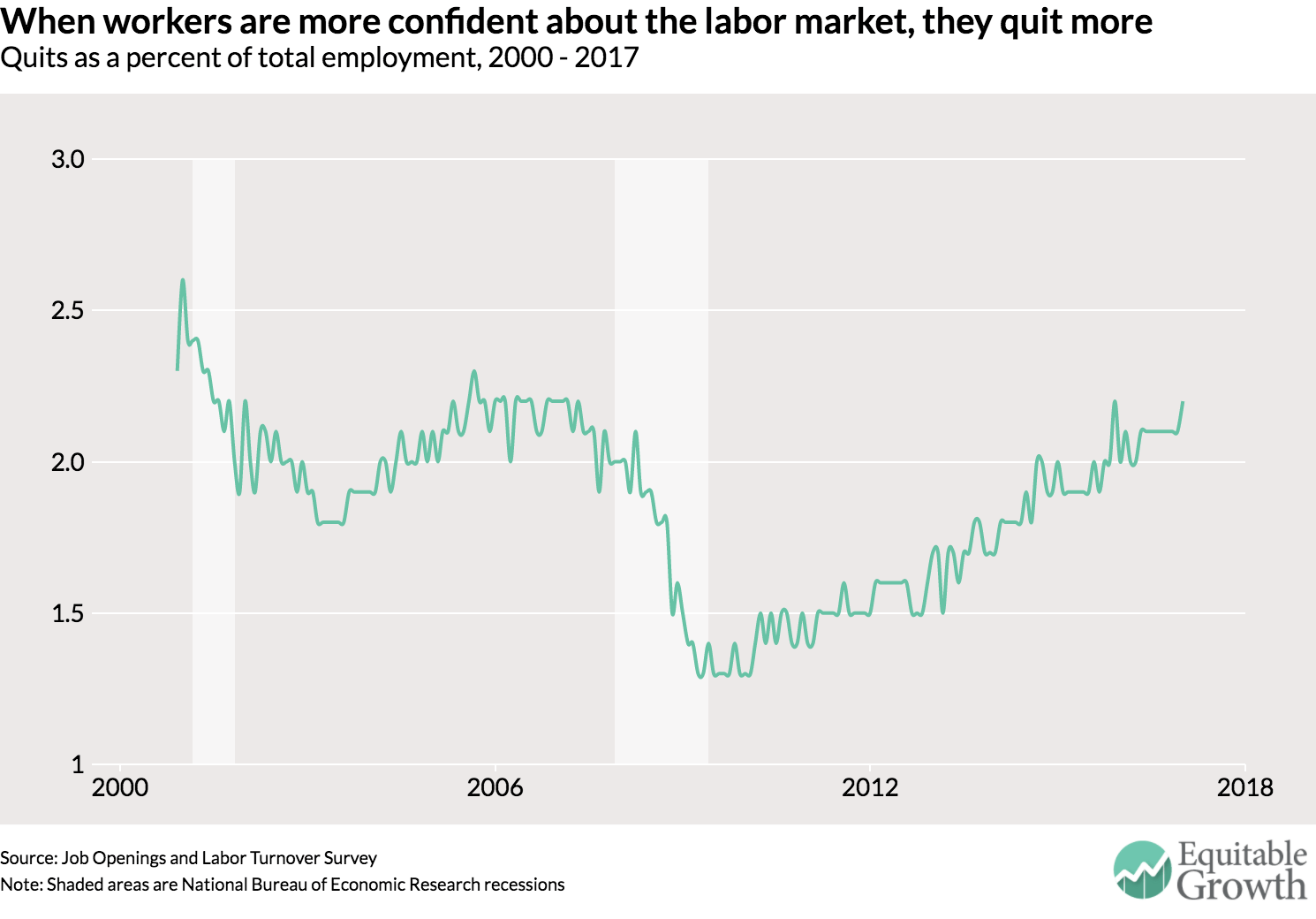
The rate at which U.S. workers are quitting their jobs increased in January to 2.2 percent. That’s close to pre-recession levels, but that might not be a good standard to judge job mobility.

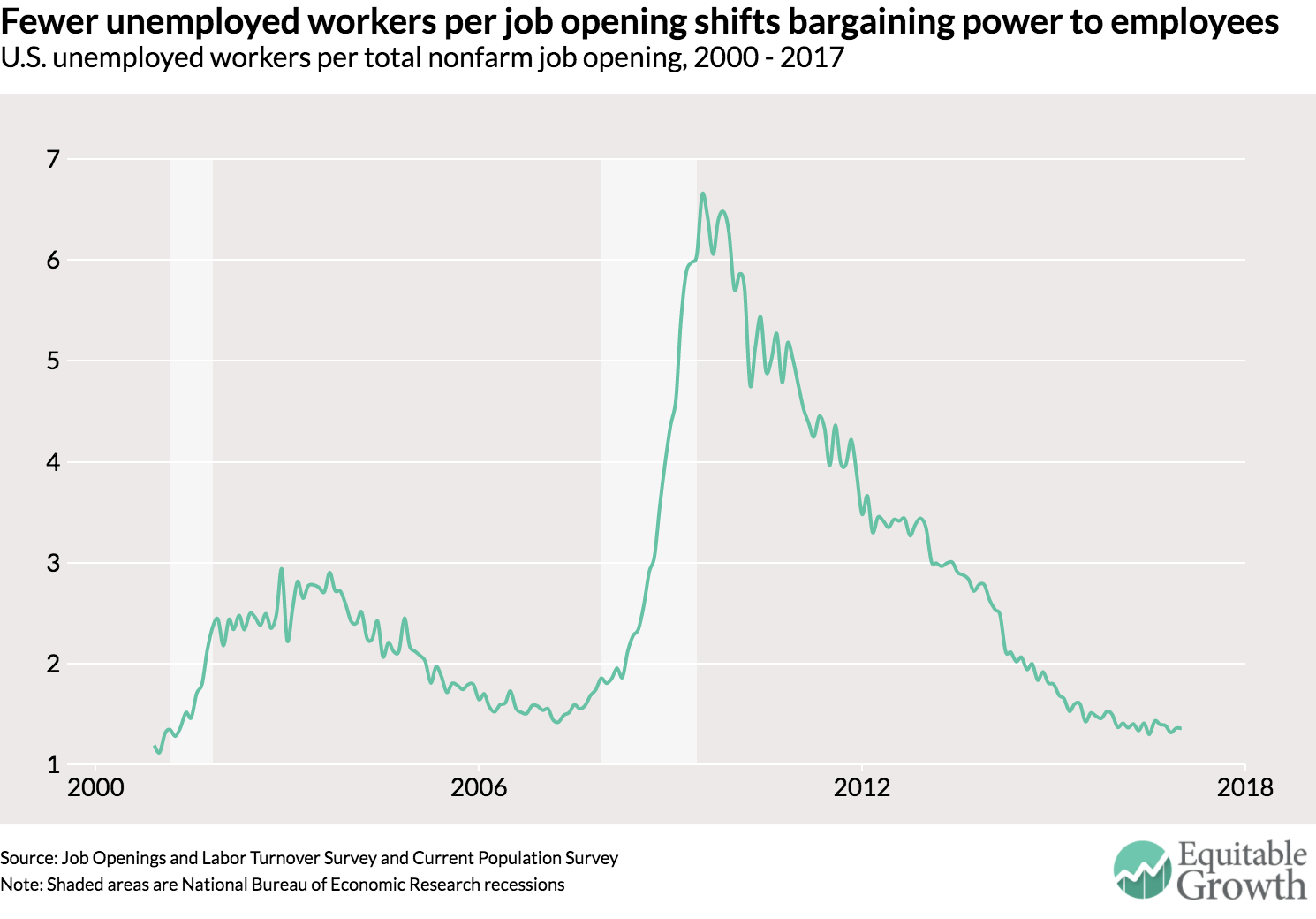
The lack of change in the unemployment-to-job opening ratio is due to both a slowdown in the growth of job openings and leveling of the number of unemployed. If the trend (opens in a new tab) of rising prime-age labor force participation increases, then this ratio could possibly increase.

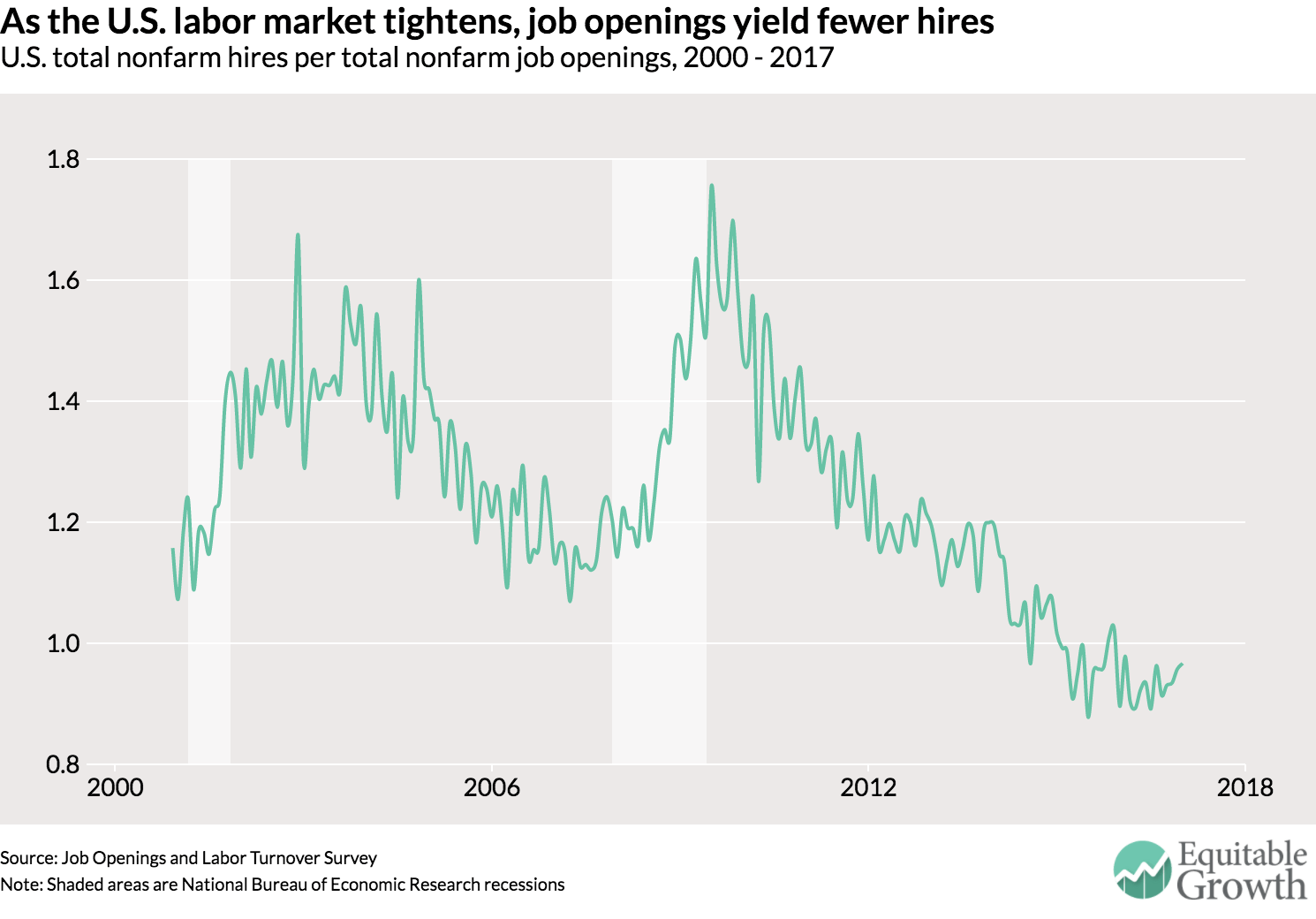
The vacancy yield, or the ratio of hires to job openings didn’t change much in January, perhaps a sign its decline has ended. The decline in hiring appears to be not of unemployed workers, or those out of the labor force, but rather workers already with jobs.

Reports NOV 23, 2026
By: Jacob Leibenluft, Gene Sperling
Essays NOV 20, 2026
By: Chris Clayton, Korin Davis
Essays OCT 30, 2026
By: Christopher Bangert-Drowns
Get updates on our latest research, event announcements, and policy insights delivered straight to your inbox. Stay connected with the leading voices on equitable growth.

