


Policy Resources
From in-depth analysis to evidence-backed policy insights, find resources that help explain how economic policy shapes outcomes for workers, families, and long-term growth.
Our Policy Areas of Focus
The Washington Center for Equitable Growth connects economic evidence and policy to promote shared prosperity and growth by translating evidence for policymakers, elevating scholars and their work, and funding policy-relevant research.

How Ideas Move Into Policy Decisions
AI, Tech & Energy
Equitable Growth advances research and policy analysis on how artificial intelligence, emerging technologies, and the energy transition affect workers, inequality, and broad-based economic growth.

We focus on:
- The effect of AI and the energy transition on employment levels, job quality, and regional labor markets
- The effect of AI and the energy transition on investment, productivity, inequality, and growth
- How supply chains and market structure affect the direction of the tech and energy industries
- The effect of technology on worker power, job quality, and the returns to work
Macroeconomics & Economic Measurement
Equitable Growth advances research and policy analysis on macroeconomic policies and better economic measurement that promote stable and broad-based economic growth.
We focus on:
- Measuring and reducing wealth inequality using novel data and analysis
- Tools to respond to recessions that limit scarring and quickly stabilize households and the macroeconomy
- Which trade-related policies, including tariffs or industrial policy, are most effective at supporting a stable and dynamic economy
Political Economy & Democracy
Equitable Growth supports research and policy analysis on how economic inequality shapes political power and democratic institutions, and how that in turn affects broad-based economic growth.

We focus on:
- Economic and cultural factors that contribute to rising support for authoritarian populism and policy solutions for a pro-growth, pro-democracy economy
- The role of social scientists in supporting the use of evidence in policymaking
Taxation
Equitable Growth advances research and policy analysis on how tax policies can generate revenue and promote policies for a fairer, more efficient tax code.

We focus on:
- Distributional analysis, including distributional weighting of benefit-cost analysis
- Pass-through and other business taxation
- Tax enforcement, especially related to trusts and large, complex partnerships
- Taxing wealth, including from new sources of wealth, such as artificial intelligence and cryptocurrency
Competition & Economic Dynamism
Equitable Growth advances research and policy analysis on how strong competition among U.S. businesses reduces inequality and creates broad-based economic growth.

We focus on:
- Monopsony and corporate consolidation
- The effectiveness of antitrust enforcement and regulatory policies
- The effect of market concentration on employment, wages, prices, and availability of services
- New approaches to antitrust that do not necessarily rely on prices
Household Economic Security
Equitable Growth advances research and policy analysis on how access to care, policies that balance work, life, and education create stable, broad-based economic growth.

We focus on:
- Care policy, including childcare, and paid leave
- Job quality, scheduling, and earnings stability
- Social insurance and public benefits, including unemployment insurance
- Income volatility, household economic security, and economic mobility
Economic Equity & Opportunity
Equitable Growth advances research and policy analysis on how trends in economic inequality and mobility and changes in the economy have affected the concentration of wealth, income, and earnings, and how these distributional shifts have affected the promise of economic security and opportunity.

We focus on:
- Gender and racial earnings gaps
- The distribution of income, wealth, and growth
- Intergenerational economic mobility
- Wealth-building and access to assets, including child savings accounts
Labor, Wages & Worker Power
Equitable Growth advances research and policy analysis on how inequalities in wages, bargaining power, and the evolving labor market affect workers’ economic security and opportunity as well as broad-based economic growth.

We focus on:
- Policies beyond the minimum wage to boost wages and non-wage amenities
- Policies that increase workers' bargaining power or inform labor strategies
- Policies to address occupational segregation and gender and racial income inequality
- Firm responses to policies intended to improve worker wages and well-being
- Policies that are most effective at supporting workers and/or regional labor markets to respond to transitions
How Ideas Move Into Policy Decisions

Translate evidence and engage decision makers
Diagnose policy challenges where evidence can make a difference
Train and equip academics to translate their research findings to inform policy solutions
Identify rigorous research evidence that provides actionable insights for policymakers

Equitable Growth
connects policy and research at every step

Progress depends on a continuous exchange between ideas and action.
Policy challenges shape the direction of research, and research shapes how policymakers understand those challenges and their solutions. When the two stay connected, evidence becomes more than insight. It becomes a tool for better decisions.

That connection is powered by people.
At the center of this work is a network of more than 400 researchers focusing on real policy questions—helping explain economic trends, evaluate solutions, and inform decision-making.
7 Results

Judging Big Tech (opens in a new tab)
Books DEC 1, 2022
The importance of digital information technology and communications giants to the U.S. economy and society today is undeniable. The business strategies of these companies are increasingly capturing the attention of…
Boosting Wages for U.S. Workers in the New Economy (opens in a new tab)
Books JAN 1, 2021
The U.S. labor market is shackled by decades of wage stagnation for the majority of workers, persistent wage disparities by race, ethnicity, and gender, and sluggish economic growth. The steady…
By: Equitable Growth (opens in a new tab)
Vision 2020: Evidence for a stronger economy (opens in a new tab)
Books FEB 1, 2020
To shape the 2020 policy debate and lead the charge for long-term structural change, the Washington Center for Equitable Growth has released Vision 2020: Evidence for a stronger economy. This…
By: Equitable Growth (opens in a new tab)
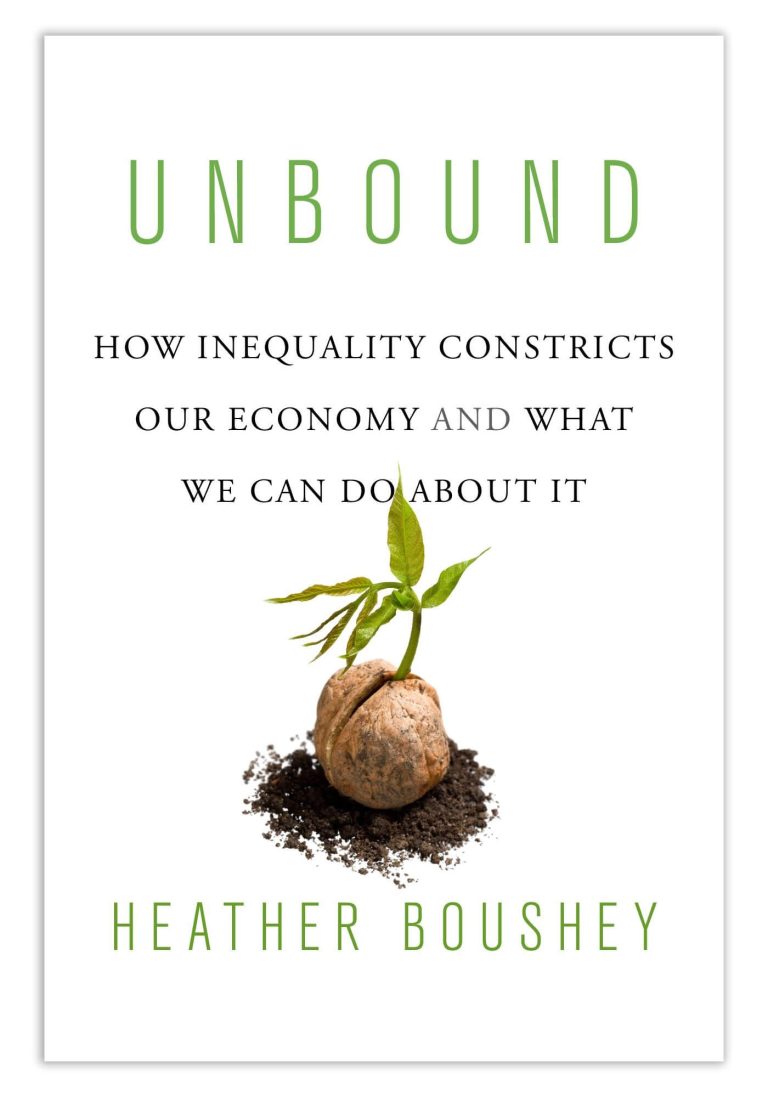
Unbound (opens in a new tab)
Books SEP 1, 2019
Do Americans really have to choose between equality and prosperity? Many economists argue that reducing economic inequality would require such heavy-handed interference with market forces that it would stifle economic…
By: Heather Boushey (opens in a new tab)
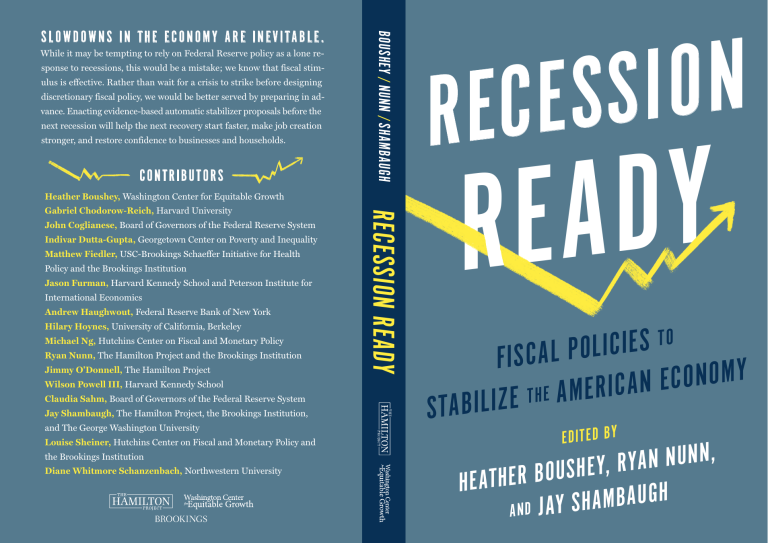
Recession Ready (opens in a new tab)
Books MAY 1, 2019
Economic recessions are inevitable and they are painful, with harsh short-term effects on families and businesses and potentially deep long-term impacts on the economy and society. But we can ameliorate…
By: Heather Boushey (opens in a new tab), Ryan Nunn, Jay Shambaugh
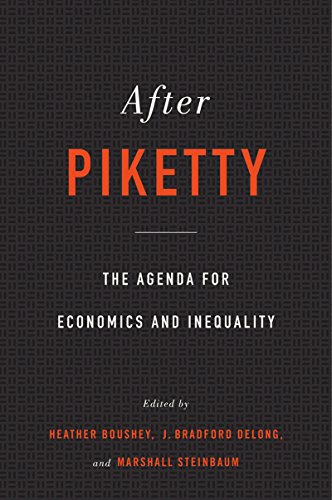
After Piketty (opens in a new tab)
Books MAY 1, 2017
Thomas Piketty’s Capital in the Twenty-First Century is the most widely discussed work of economics in recent history, selling millions of copies in dozens of languages. But are its analyses…
By: Heather Boushey (opens in a new tab), J. Bradford DeLong, Marshall Steinbaum (opens in a new tab)
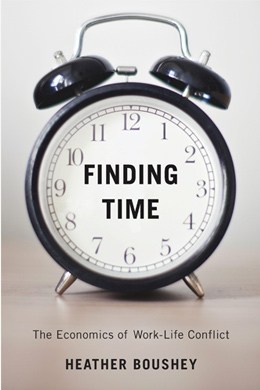
Finding Time (opens in a new tab)
Books MAR 1, 2016
In “Finding Time: The Economics of Work-Life Conflict,” author Heather Boushey argues that resolving work-life conflicts is as vital for individuals and families as it is essential for realizing the…
By: Heather Boushey (opens in a new tab)