



Academic
Request for Proposals: Research grants for early career scholars
Request for Proposals (RFPs) NOV 23, 2026
By: Equitable Growth
Economic Equity & Opportunity
 Browse All Resources
OCT 7, 2022

On October 7, the U.S. Bureau of Labor Statistics released new data on the U.S. labor market during the month of September. Below are five graphs compiled by Equitable Growth staff highlighting important trends in the data.
The employment rate for prime-age workers declined to 80.2 percent in September 2022 from 80.3 percent in August, with total nonfarm employment rising by 263,000.
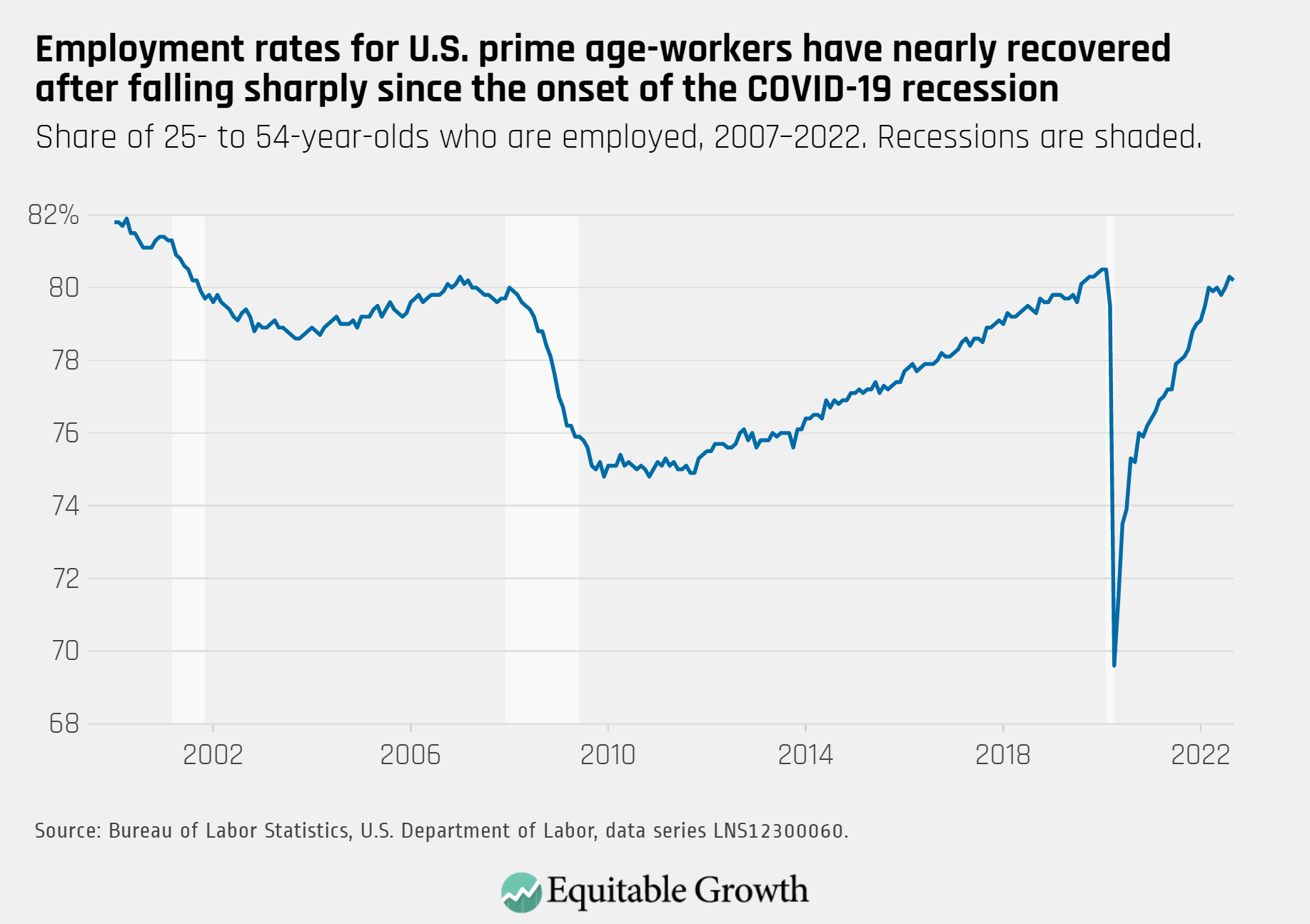
Employment rates for U.S. prime age-workers have nearly recovered after falling sharply since the onset of the COVID-19 recession
The unemployment rate decreased to 3.5 percent in September and remains higher for Black workers (5.8 percent) and Latino workers (3.8 percent), compared to White workers (3.1 percent) and Asian American workers (2.5 percent).
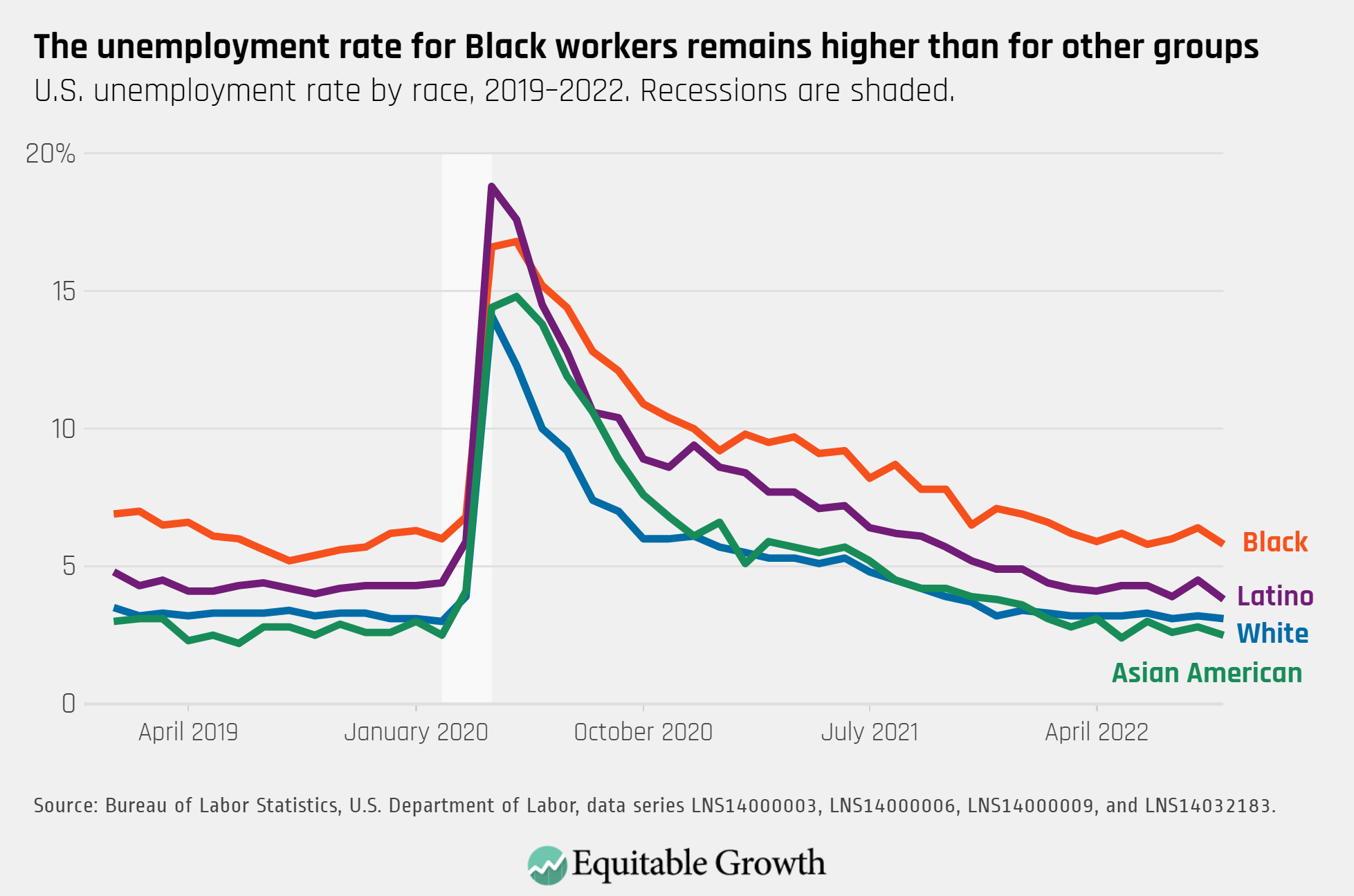
The unemployment rate for Black workers remains higher than for other groups
Private-sector employment continued to rise in September, while public-sector employment declined slightly and remains below pre-pandemic levels.
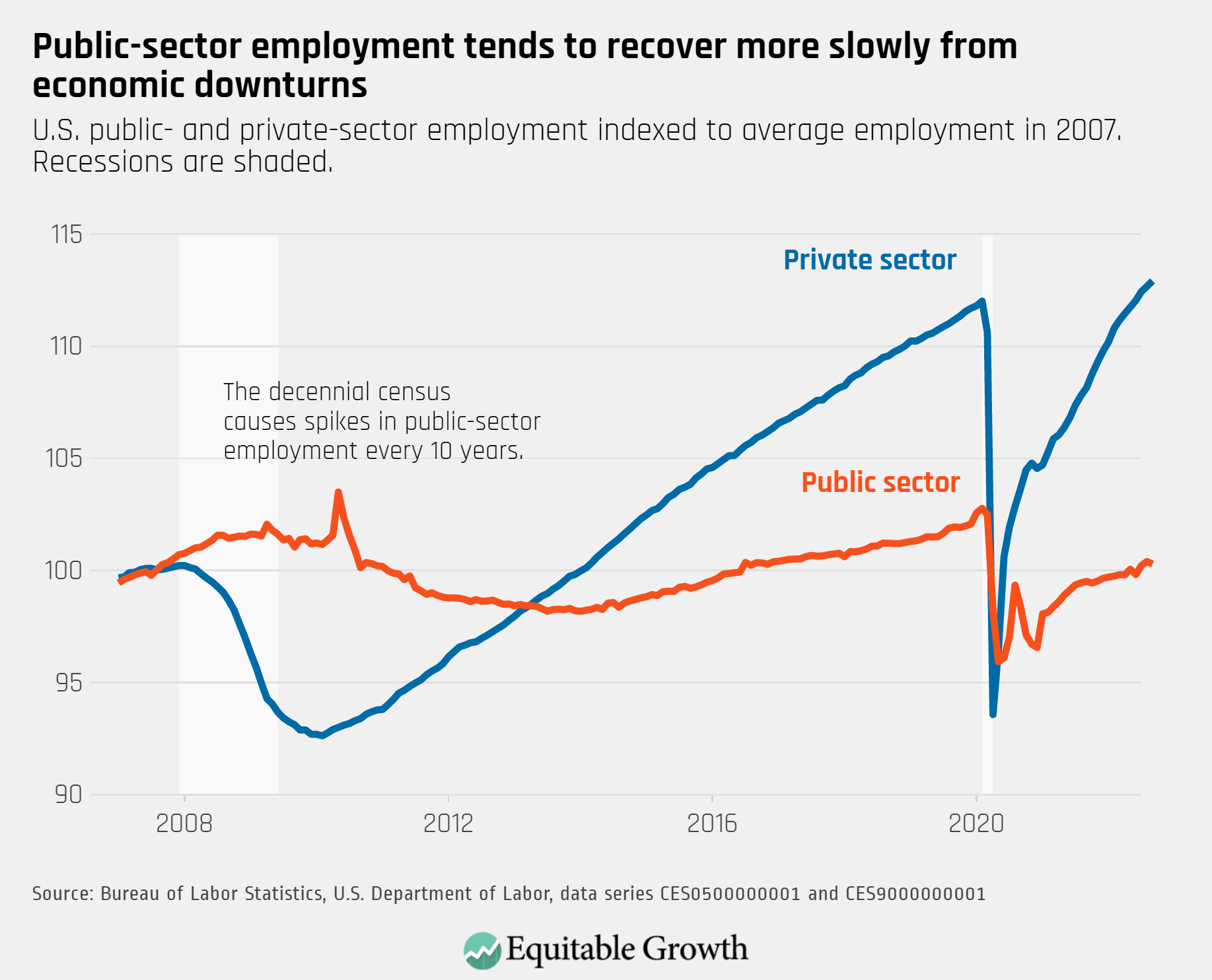
Public-sector employment tends to recover more slowly from economic downturns
Nominal wage growth (not accounting for inflation) cooled in September, with average hourly earnings growth at 5 percent over the past 12 months.
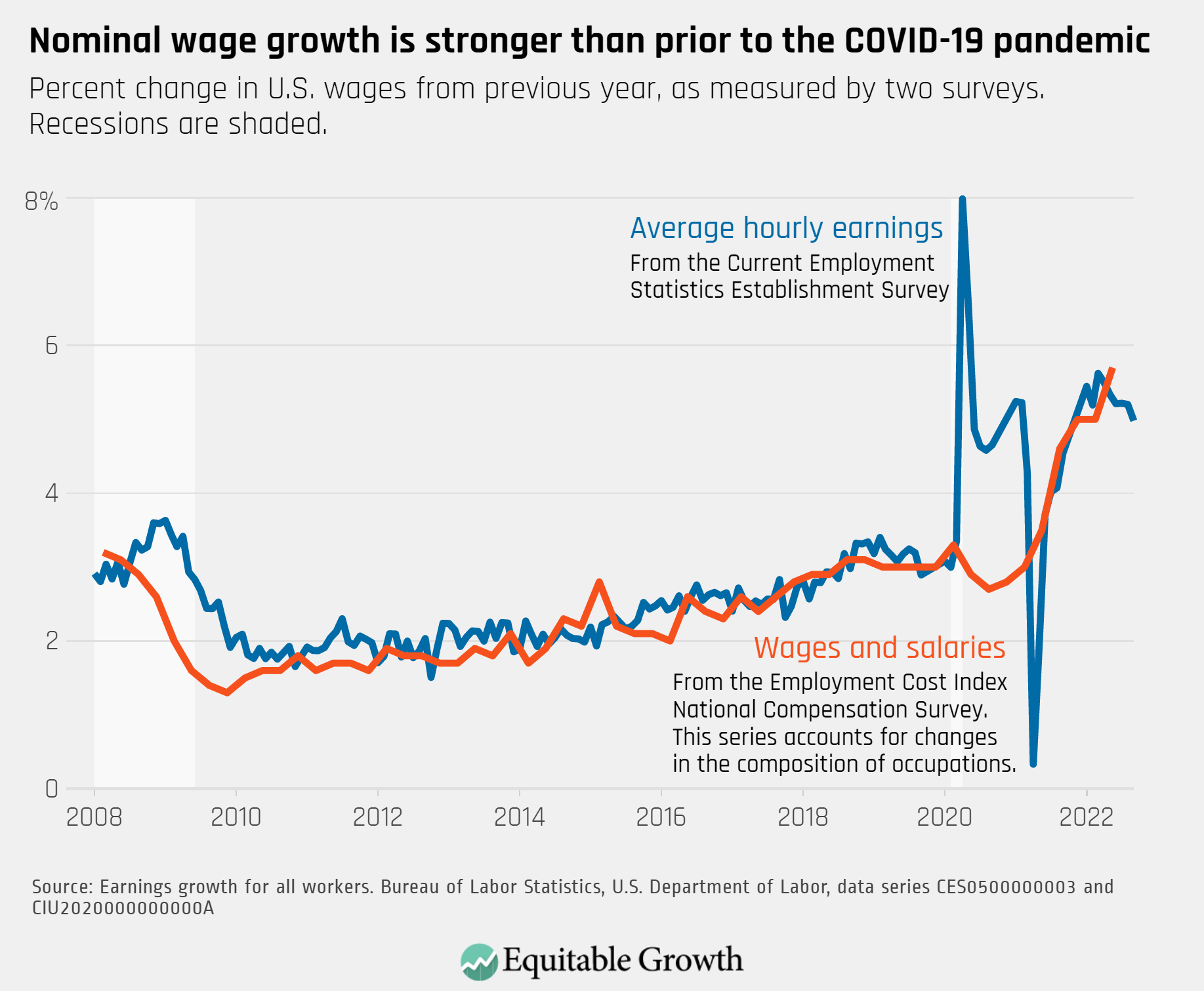
Nominal wage growth is stronger than prior to the pandemic
The number of unemployed workers decreased in September. The share who are unemployed due to job loss fell to 30.5 percent, and 13.3 percent have been temporarily laid off; 15.9 percent left their jobs, 32.4 percent are re-entering the labor force, and 7.9 percent are new entrants.
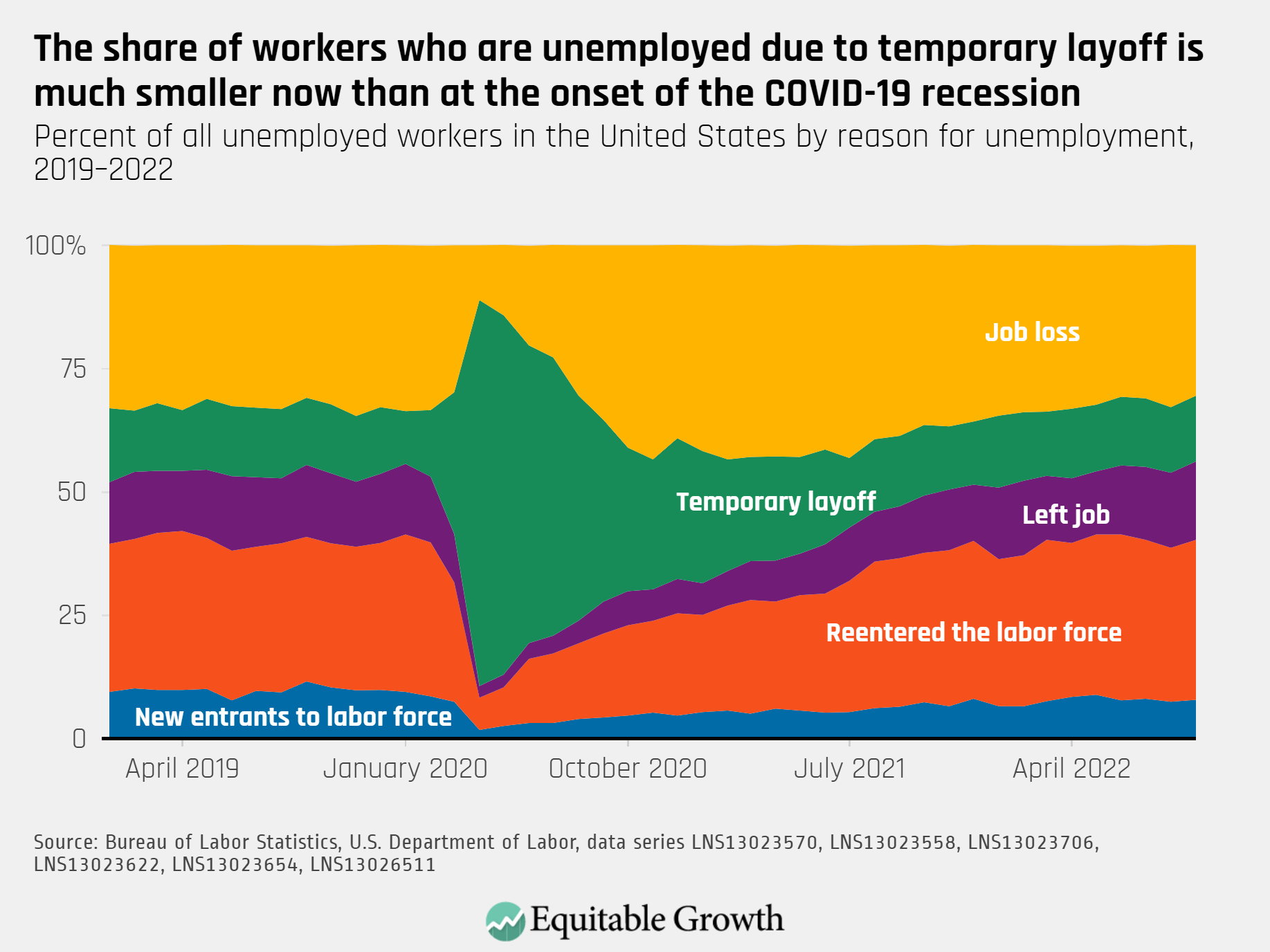
The share of workers who are unemployed due to temporary layoff is much smaller now than at the onset of the COVI-19 recession
Request for Proposals (RFPs) NOV 23, 2026
By: Equitable Growth

Reports NOV 23, 2026
By: Jacob Leibenluft, Gene Sperling

Essays NOV 20, 2026
By: Chris Clayton, Korin Davis
Get updates on our latest research, event announcements, and policy insights delivered straight to your inbox. Stay connected with the leading voices on equitable growth.


