



Academic
Request for Proposals: Research grants for early career scholars
Request for Proposals (RFPs) NOV 23, 2026
By: Equitable Growth
Economic Equity & Opportunity
 Browse All Resources
APR 1, 2022

On April 1, the U.S. Bureau of Labor Statistics released new data on the U.S. labor market during the month of March. Below are five graphs compiled by Equitable Growth staff highlighting important trends in the data.
Total nonfarm employment rose by 431,000 in March, and the employment rate for prime-age workersincreased to 80.0 percent.
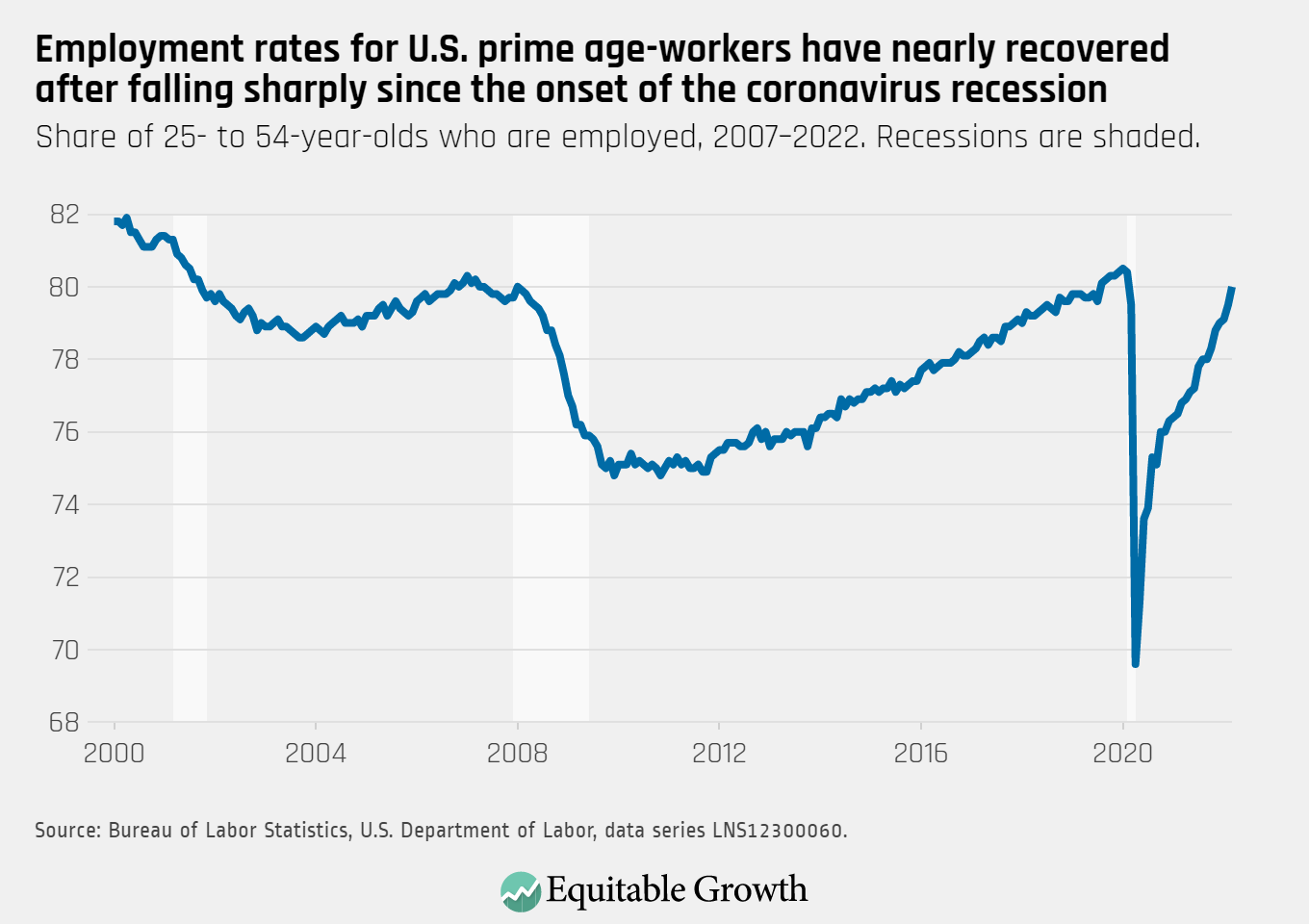
Employment rates for U.S. prime age-workers have nearly recovered after falling sharply since the onset of the coronavirus recession
The unemployment rate fell to 3.6 percent. It remains higher for Black workers (6.2 percent) and Latino workers (4.2 percent) compared to White workers (3.2 percent) and Asian American workers (2.8 percent), but declined for all groups.
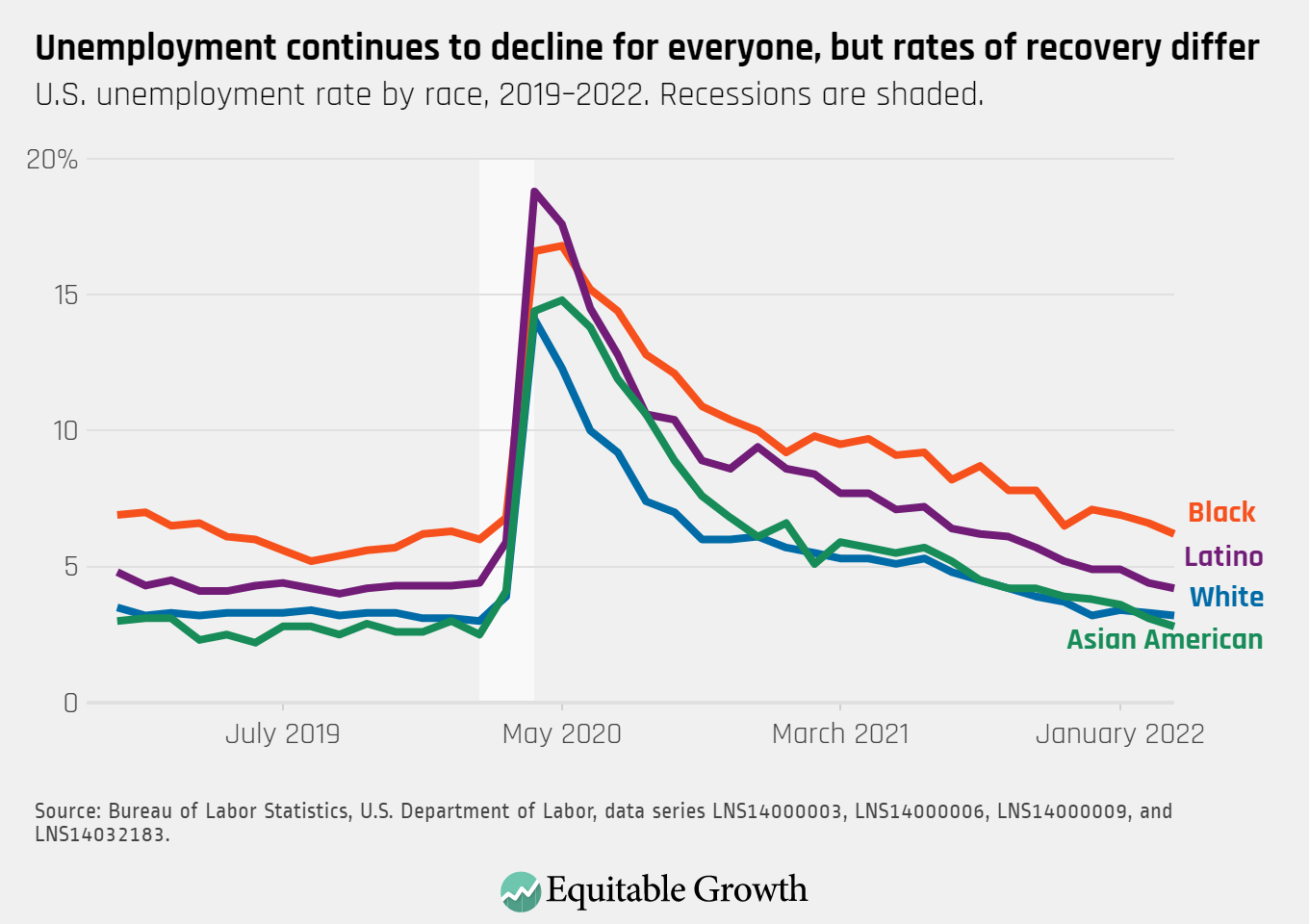
Unemployment continues to decline for everyone, but rates of recovery differ
The overall employment rate rose in March to 65.8 percent for men and 54.8 percent for women, remaining below pre-pandemic levels for both groups.
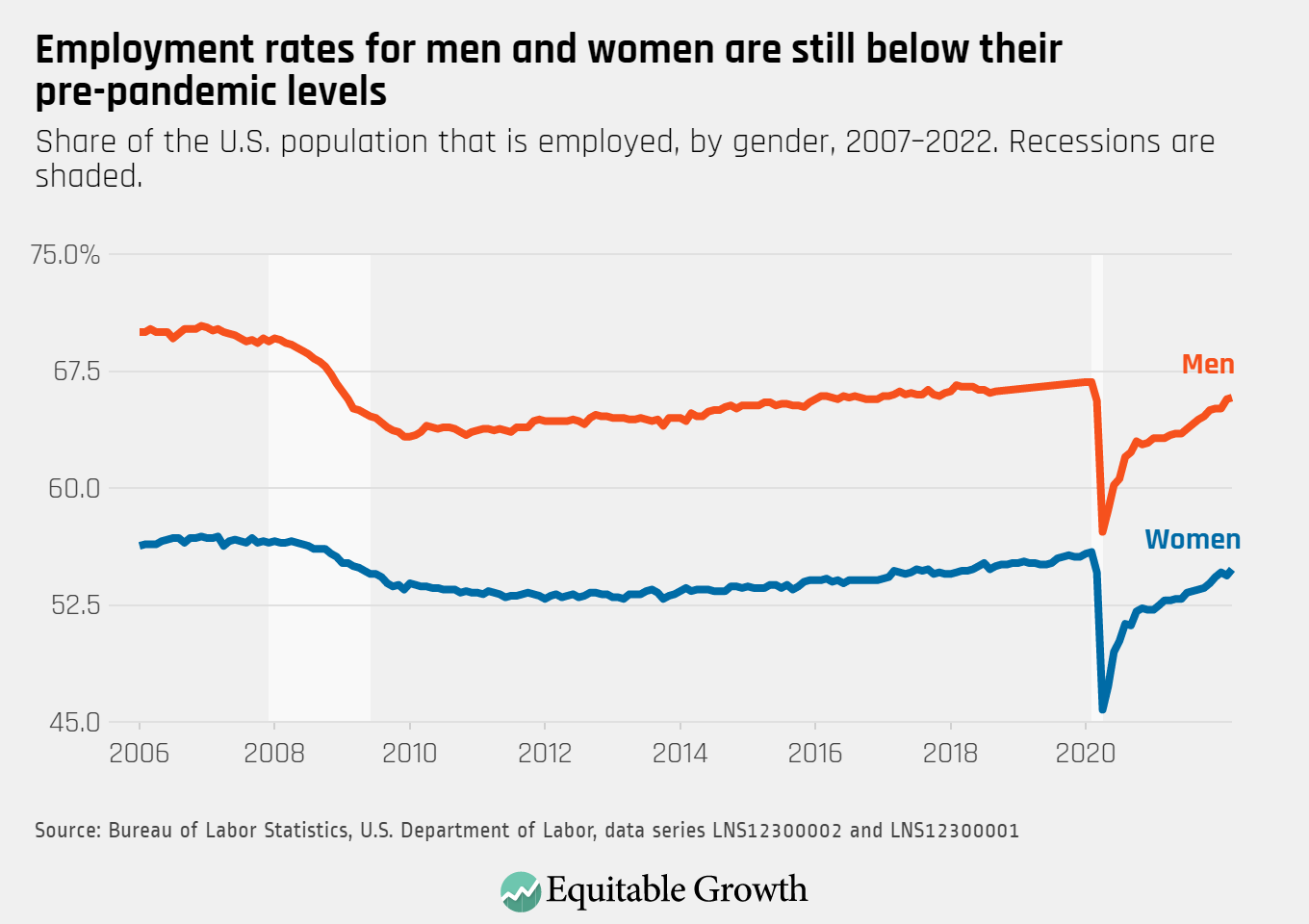
Employment rates for men and women are still below their pre-pandemic levels
Employment in many major industries, such as retail and construction, is now back to or approaching pre-pandemic levels, but employment in leisure and hospitality has yet to recover.
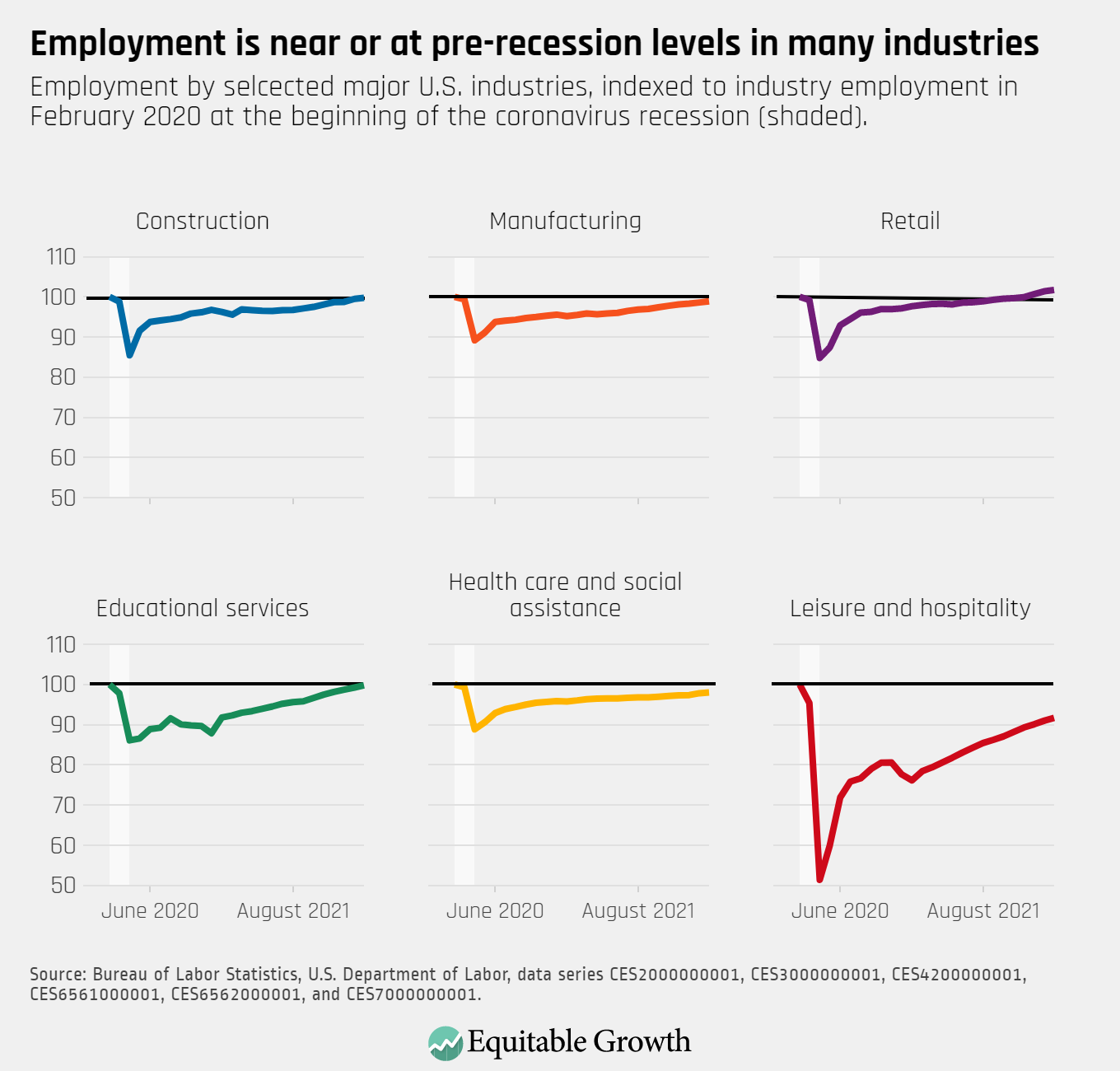
Employment is near or at pre-recession levels in many industries
The number of unemployed workers fell by 318,000. One-third (33.7 percent) are unemployed due to job loss, and another third (32.7 percent) re-entered the labor force; 13.0 percent left their jobs, 13.0 percent are on temporary layoff, and 7.6 percent are new entrants.
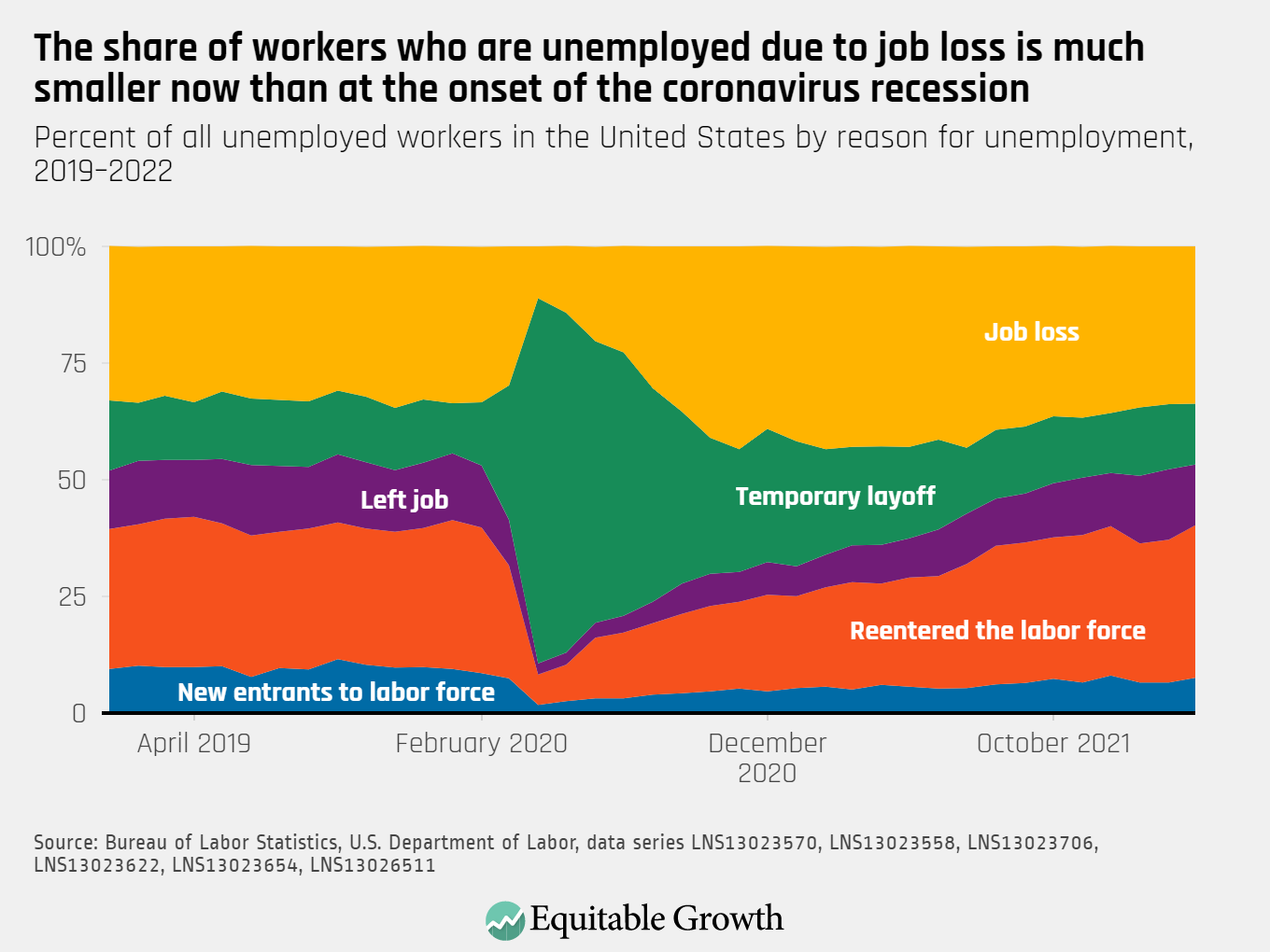
The share of workers who are unemployed due to job loss is much smaller now than at the onset of the coronavirus recession
Request for Proposals (RFPs) NOV 23, 2026
By: Equitable Growth

Reports NOV 23, 2026
By: Jacob Leibenluft, Gene Sperling

Essays NOV 20, 2026
By: Chris Clayton, Korin Davis
Get updates on our latest research, event announcements, and policy insights delivered straight to your inbox. Stay connected with the leading voices on equitable growth.


