


Issue Areas
The Washington Center for Equitable Growth focuses on a number of policy-relevant issues to advance shared prosperity and economic growth.

121 Results


Five policy planks to prepare U.S. workers for dislocation caused by artificial intelligence (opens in a new tab)
Reports Nov 23, 2026
The rise of artificial intelligence and the potential for new technology to spark widespread job dislocation reflects a unique challenge for policymakers because of how wide the range of scenarios…
AI-related inputs drove U.S. businesses’ import growth in 2025 (opens in a new tab)
Essays Nov 18, 2026
The enduring question of last year’s tariff rollercoaster is whether the economic pain was worth reshoring U.S. supply chains. A preliminary answer came in a September data release from the…

An end to summer tariff peace threatens U.S. economic growth (opens in a new tab)
Essays Oct 30, 2026
The summer months of relative tranquility in U.S. trade policy could be shattered as announced tariff escalations with Canada take effect, translating into higher costs for U.S. businesses and consumers,…
Assessing proposed legislation to expand Unemployment Insurance to protect U.S. workers amid AI-related disruptions (opens in a new tab)
Essays Oct 23, 2026
The adoption of advanced artificial intelligence tools in the workplace has led to widespread concerns about the degradation of work and potential job displacements. While research is mixed on AI’s current labor…
What Work Does Generative AI Do? (opens in a new tab)
Essays Sep 8, 2026
Since August 2024, our Real-Time Population Survey (RPS), a nationally representative survey of U.S. adults ages 18 to 64, has tracked how many Americans use generative artificial intelligence (AI). The adoption…
What Work Does Generative AI Do? (opens in a new tab)
Working Papers Sep 8, 2026
We measure how workers use genAI for their jobs in a nationally representative survey linking genAI adoption to detailed occupations and tasks. Our data provide the first task-level genAI adoption…
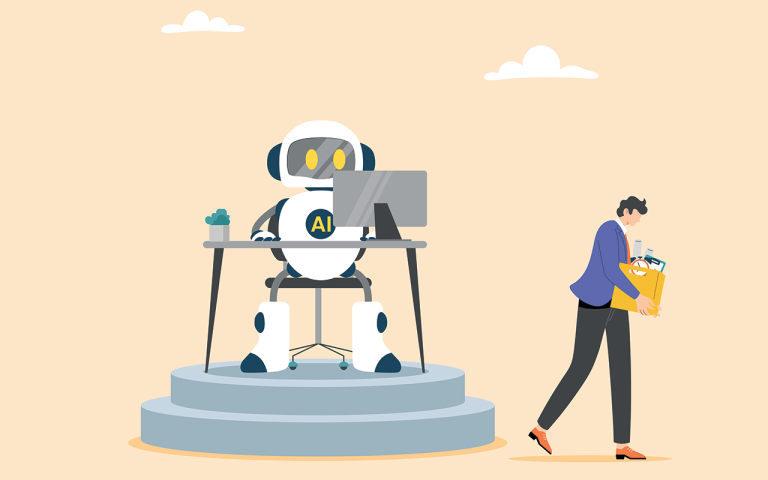
What happens to U.S. workers without access to Unemployment Insurance amid economic downturns or disruptions related to AI? (opens in a new tab)
Essays Sep 2, 2026
The adoption of artificial intelligence in the workplace has led to predictions of U.S. labor market disruptions. In response, policymakers have increased attention on the fitness of the nation’s social…
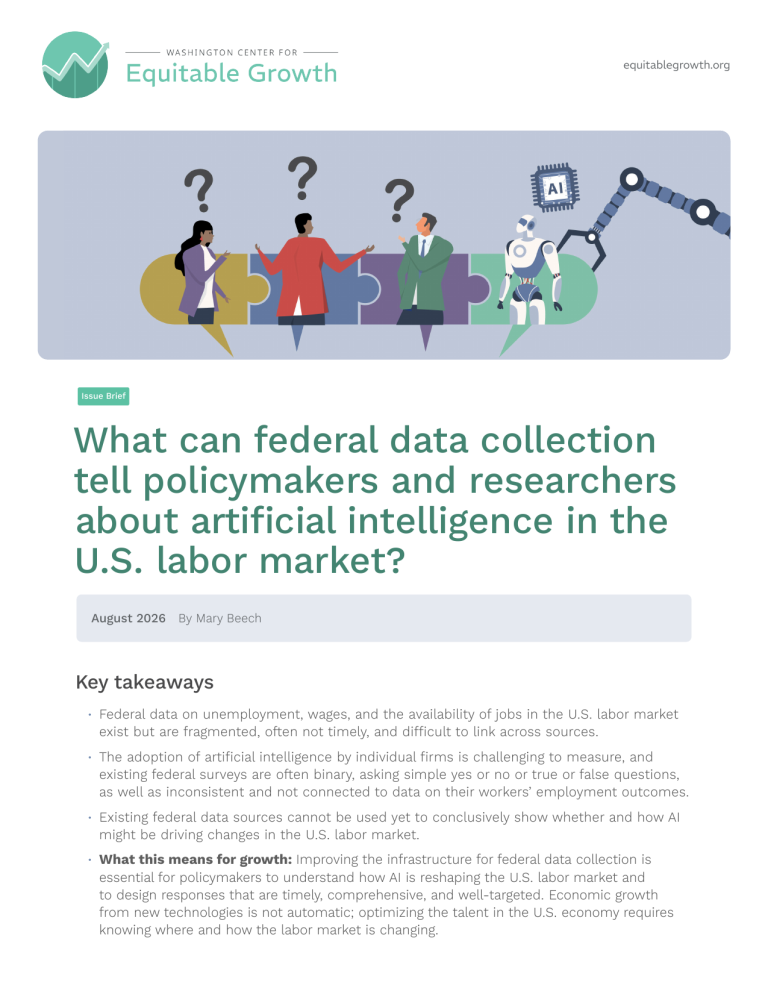
What can federal data collection tell policymakers and researchers about artificial intelligence in the U.S. labor market? (opens in a new tab)
Issue Briefs Aug 24, 2026
It is impossible to perfectly predict how artificial intelligence will affect the U.S. labor market. Policymakers and researchers are grappling with important questions around this topic, including what new opportunities…
Terms and conditions for generative AI users outline a new legal framework that puts U.S. consumers at risk (opens in a new tab)
Essays Aug 20, 2026
Generative AI, or genAI, is a form of artificial intelligence that produces content in response to prompts and includes large language model chatbots such as OpenAI’s ChatGPT or Anthropic’s Claude.…
The Terms and Conditions of Generative AI (opens in a new tab)
Working Papers Aug 20, 2026
Generative AI raises pressing questions for myriad doctrinal areas. Policymakers and scholars have responded rapidly, devoting substantial attention to these difficult legal and policy questions. But, as a practical matter,…
Estimating AI exposure is useful for research but cannot yet tell policymakers the whole story of AI’s impact on the labor market (opens in a new tab)
Essays Aug 7, 2026
Artificial intelligence has the potential to substantially change the nature and availability of work. To effectively manage the transitions this technology might bring to the U.S. economy, policymakers need information…
Tracking new research on artificial intelligence and its impact on the U.S. labor market (opens in a new tab)
Essays Aug 5, 2026
Headlines often paint extreme and dissonant pictures of the future impact of AI on the U.S. economy and labor market, with workers themselves echoing the conflicting feelings of optimism and…
Why Unemployment Insurance Alone Is Not Enough in the AI Era (opens in a new tab)
Essays Jul 8, 2026
Since the large language model ChatGPT was rolled out in November 2022, artificial intelligence has captured the public’s attention and generated myriad debates over the emerging technology’s potential impacts on…
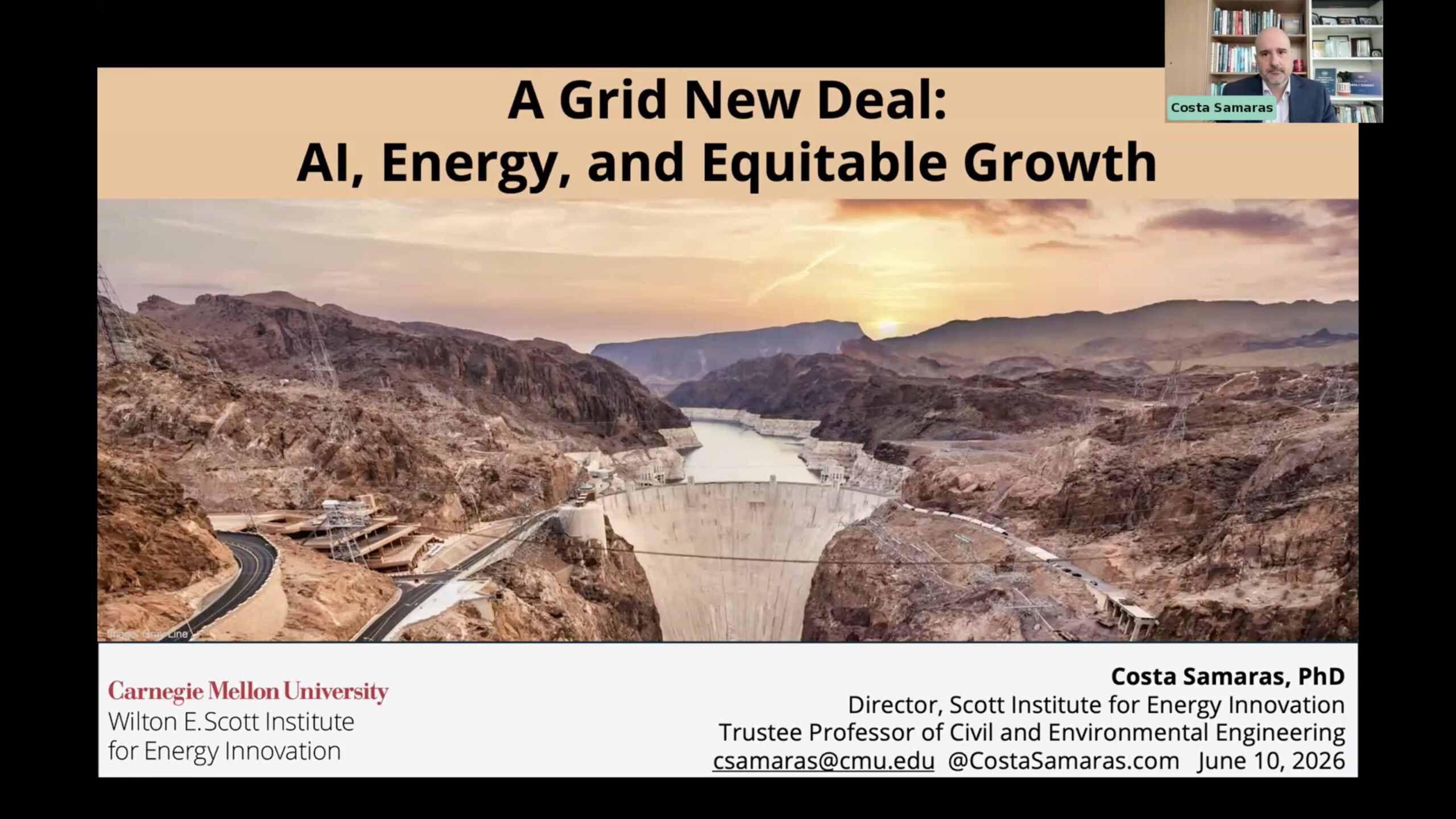
The United States can simultaneously foster an equitable AI boom and a clean energy economy (opens in a new tab)
Videos Jun 12, 2026
The Washington Center for Equitable Growth recently hosted a timely discussion exploring how the rapid expansion of artificial intelligence is colliding with—and reshaping—the clean energy transition. Bringing together researchers and…

In Conversation with Costa Samaras (opens in a new tab)
In Conversation Jun 2, 2026
Equitable Growth in Conversation is a recurring series where we talk with economists and other academics to help us better understand whether and how economic inequality affects economic growth and…
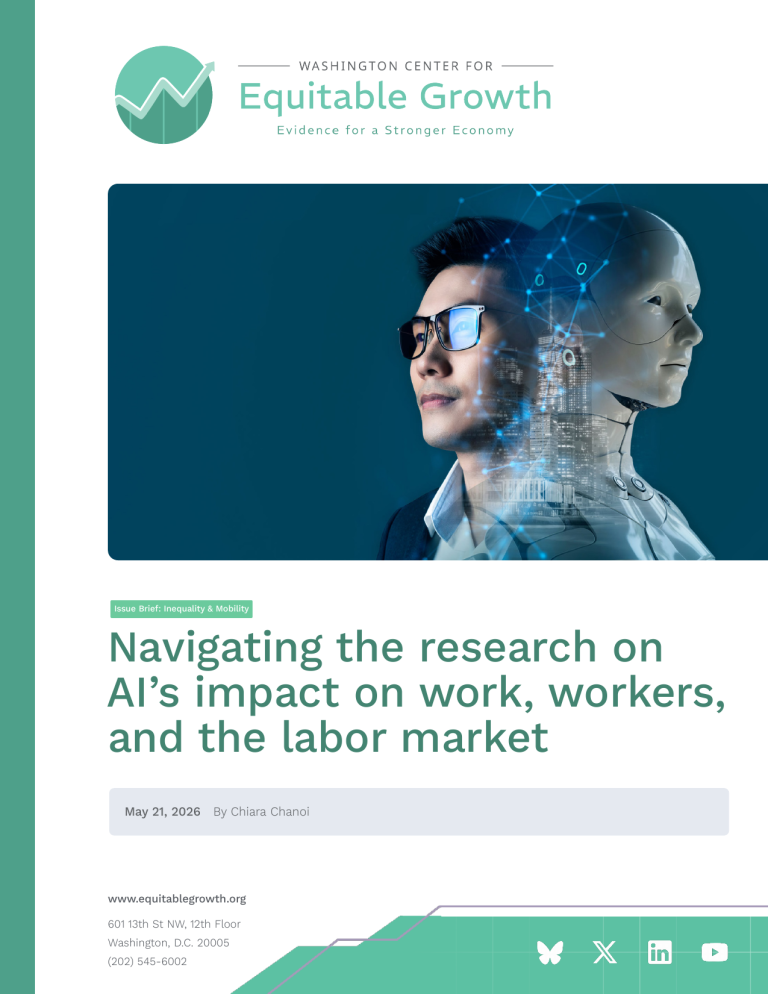
Navigating the research on the impacts of AI on work, workers, and the labor market (opens in a new tab)
Research Databases May 21, 2026
Artificial intelligence will have a largely unpredictable but potentially profound effect on the labor market. Individuals have speculated how AI will affect the workforce since its earliest developments. But public…
What is the relationship between inflation, interest rates, and economic growth, and what does it mean for the new Federal Reserve chair? (opens in a new tab)
Issue Briefs May 18, 2026
Since regaining the Oval Office in early 2025, President Donald Trump has repeatedly called for lower interest rates and severely criticized former Federal Reserve Board Chair Jerome Powell’s cautious approach…
Research shows unions dampen support for right-wing populism and help workers navigate technological transitions (opens in a new tab)
Essays May 1, 2026
On May 1, much of the world—though not the United States—celebrates International Workers Day to honor the social and economic contributions of workers and labor unions. The May Day holiday began in large part to mark…

Research on climate change’s impact on U.S. workers underscores the benefits of workplace heat standards (opens in a new tab)
Essays Apr 22, 2026
This year’s Earth Day follows a record-breaking heat wave across much of the East Coast, which followed a record-breaking heat wave that took hold in much of the West and…

The unintended macroeconomic effects of U.S. climate policy uncertainty (opens in a new tab)
Essays Mar 17, 2026
Recent policy developments in the United States highlight just how quickly climate policies can change. In January 2026, the U.S. Environmental Protection Agency announced that it would stop considering lives…
The Macroeconomic Effects of Climate Policy Uncertainty (opens in a new tab)
Working Papers Mar 17, 2026
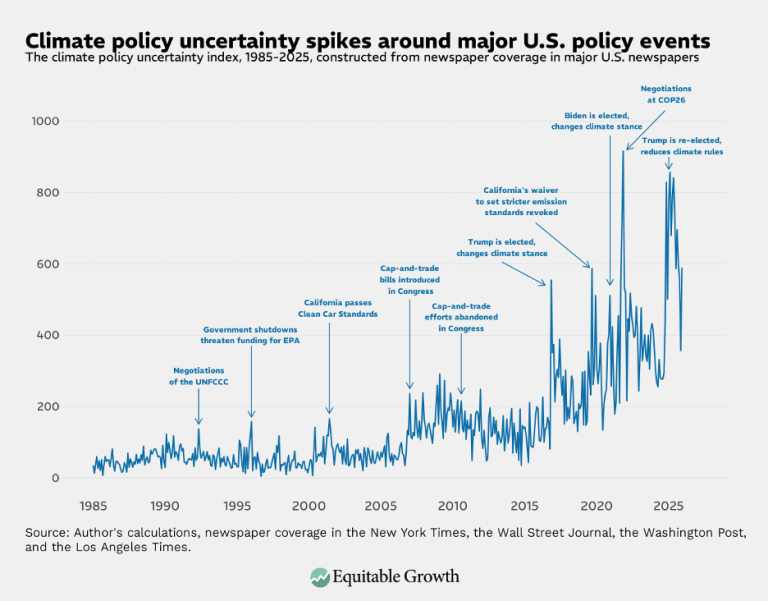
We develop a novel measure of climate policy uncertainty based on newspaper coverage. Our index spikes during key U.S. climate policy events—including presidential announcements on international agreements, congressional debates, and…
 View Chart
(opens in a new tab)
Climate policy uncertainty spikes around major U.S. policy events (opens in a new tab)
Visualizations Mar 17, 2026
 View Chart
(opens in a new tab)
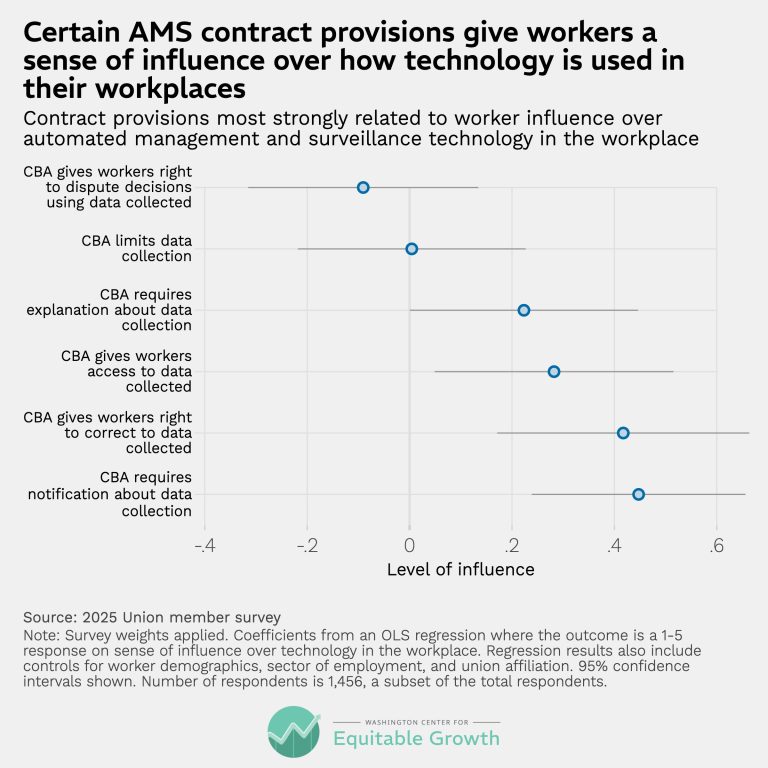
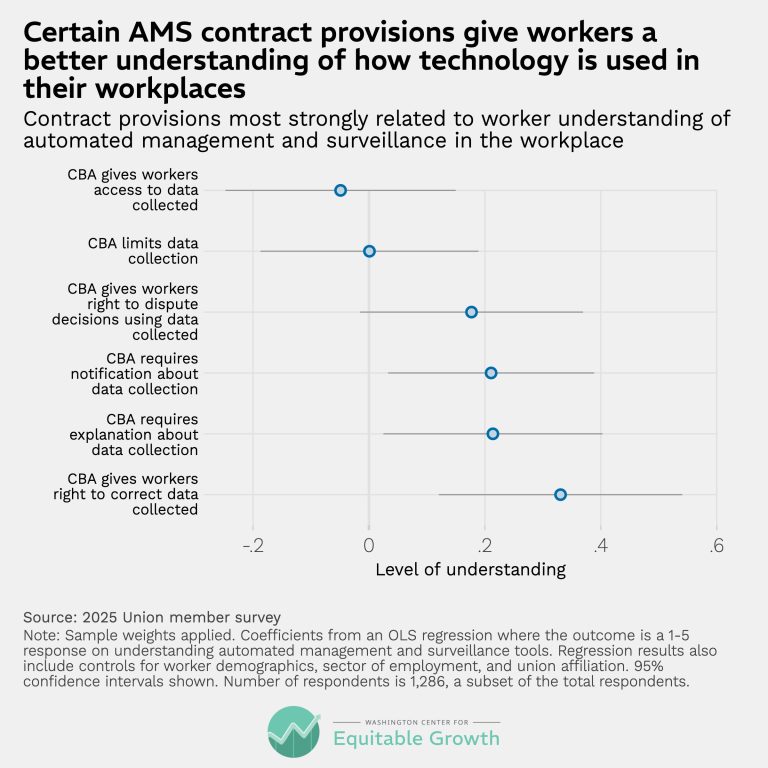
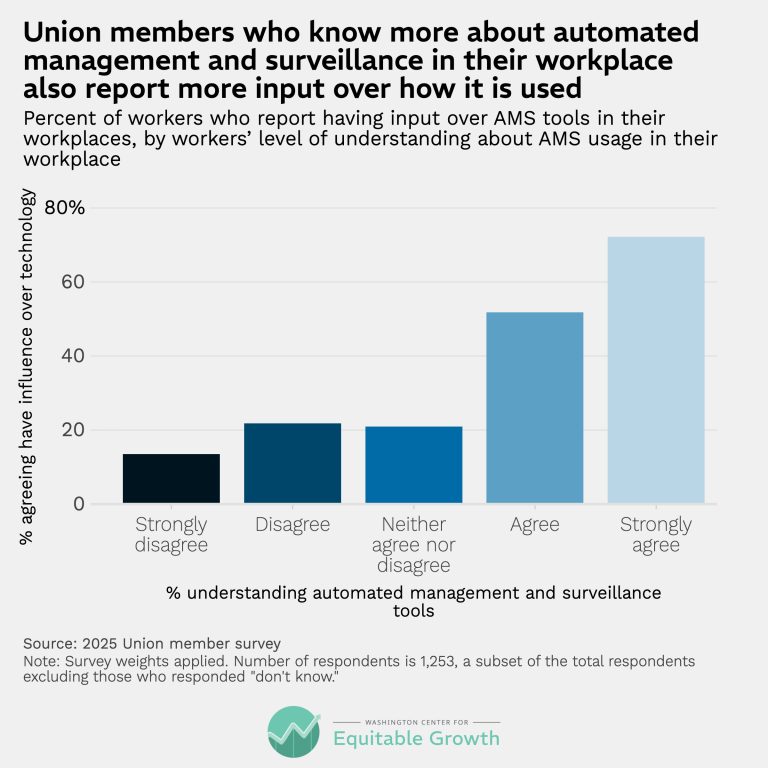
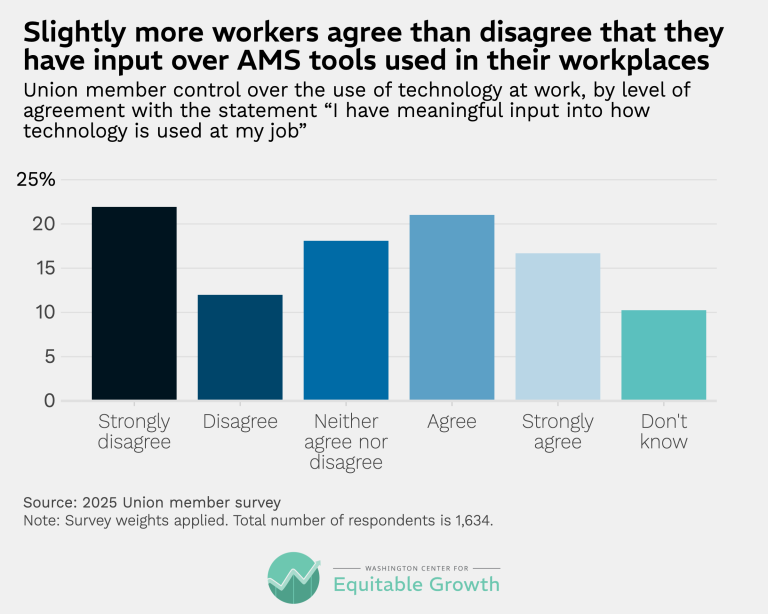
Certain AMS contract provisions give workers a sense of influence over how technology is used in their workplaces (opens in a new tab)
Visualizations Mar 12, 2026
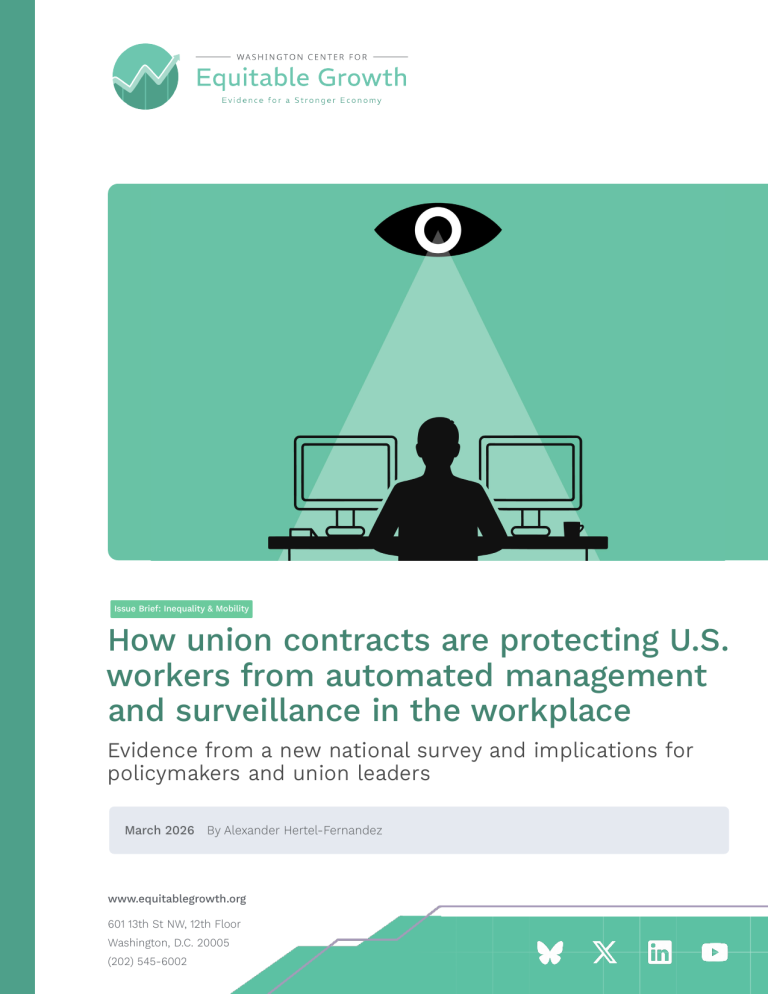
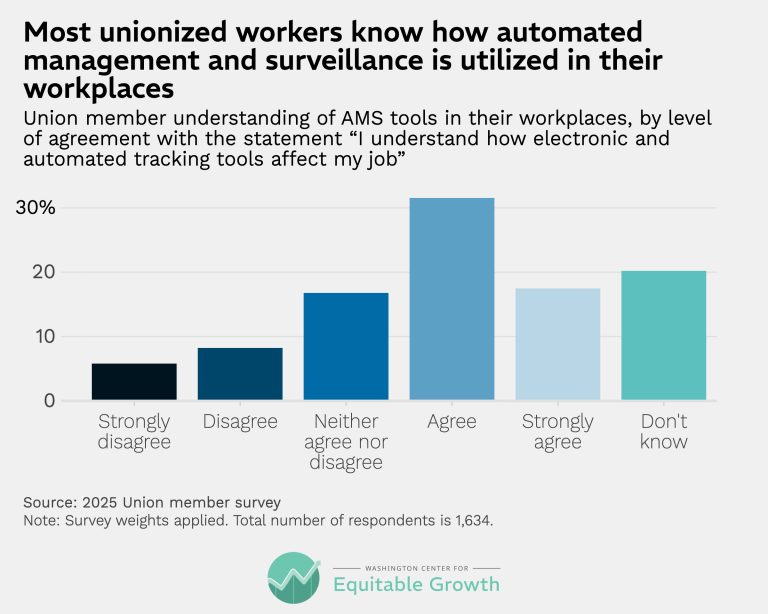
How union contracts are protecting U.S. workers from automated management and surveillance in the workplace (opens in a new tab)
Reports Mar 12, 2026
Employers are increasingly using electronic and automated tools to collect data on their workers on and off the job and then using that data to inform decisions about workers’ pay,…







































Your Source for the Latest Insights
Get updates on our latest research, event announcements, and policy insights delivered straight to your inbox. Stay connected with the leading voices on equitable growth.