


Issue Areas
The Washington Center for Equitable Growth focuses on a number of policy-relevant issues to advance shared prosperity and economic growth.

0 Results
No results match your criteria. Try clearing the search or adjusting your filters.

AI, Tech & Energy
Equitable Growth advances research and policy analysis on how artificial intelligence, emerging technologies, and the energy transition affect workers, inequality, and broad-based economic growth.

Taxation
Equitable Growth advances research and policy analysis on how tax policies can generate revenue and promote policies for a fairer, more efficient tax code.
Macroeconomics & Economic Measurement
Equitable Growth advances research and policy analysis on macroeconomic policies and better economic measurement that promote stable and broad-based economic growth.

Political Economy & Democracy
Equitable Growth supports research and policy analysis on how economic inequality shapes political power and democratic institutions, and how that in turn affects broad-based economic growth.

Competition & Economic Dynamism
Equitable Growth advances research and policy analysis on how strong competition among U.S. businesses reduces inequality and creates broad-based economic growth.

Household Economic Security
Equitable Growth advances research and policy analysis on how access to care, policies that balance work, life, and education create stable, broad-based economic growth.

Economic Equity & Opportunity
Equitable Growth advances research and policy analysis on how trends in economic inequality and mobility and changes in the economy have affected the concentration of wealth, income, and earnings, and how these distributional shifts have affected the promise of economic security and opportunity.

Labor, Wages & Worker Power
Equitable Growth advances research and policy analysis on how inequalities in wages, bargaining power, and the evolving labor market affect workers’ economic security and opportunity as well as broad-based economic growth.
121 Results
 (opens in a new tab)

Five policy planks to prepare U.S. workers for dislocation caused by artificial intelligence (opens in a new tab)
Reports Nov 23, 2026
The rise of artificial intelligence and the potential for new technology to spark widespread job dislocation reflects a unique challenge for policymakers because of how wide the range of scenarios…
(opens in a new tab)
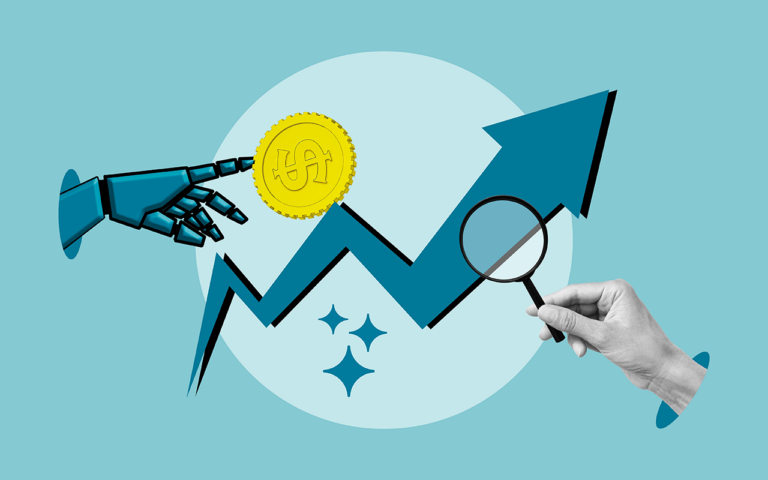
AI-related inputs drove U.S. businesses’ import growth in 2025 (opens in a new tab)
Essays Nov 18, 2026
The enduring question of last year’s tariff rollercoaster is whether the economic pain was worth reshoring U.S. supply chains. A preliminary answer came in a September data release from the…
(opens in a new tab)

An end to summer tariff peace threatens U.S. economic growth (opens in a new tab)
Essays Oct 30, 2026
The summer months of relative tranquility in U.S. trade policy could be shattered as announced tariff escalations with Canada take effect, translating into higher costs for U.S. businesses and consumers,…
(opens in a new tab)
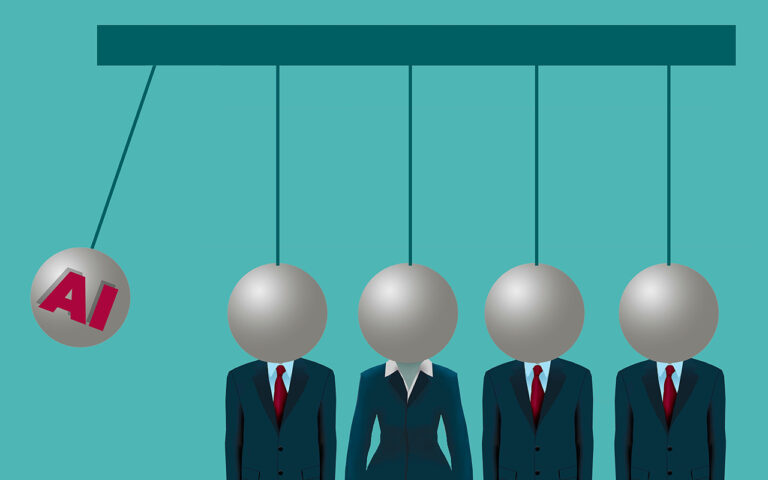
Assessing proposed legislation to expand Unemployment Insurance to protect U.S. workers amid AI-related disruptions (opens in a new tab)
Essays Oct 23, 2026
The adoption of advanced artificial intelligence tools in the workplace has led to widespread concerns about the degradation of work and potential job displacements. While research is mixed on AI’s current labor…
(opens in a new tab)
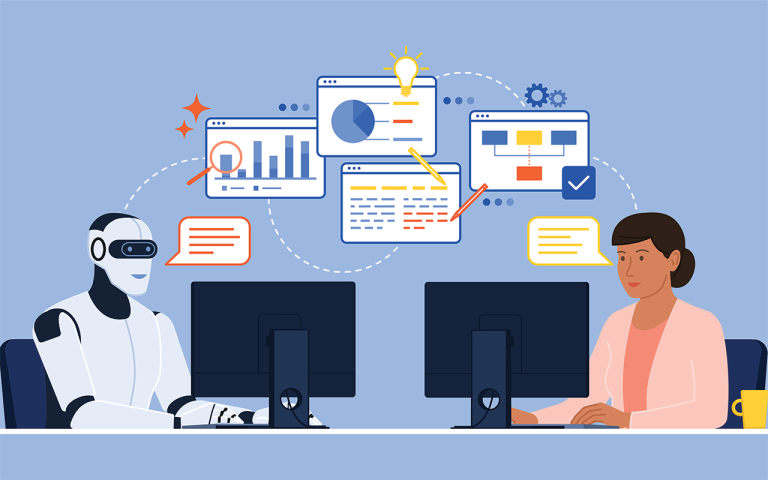
What Work Does Generative AI Do? (opens in a new tab)
Essays Sep 8, 2026
Since August 2024, our Real-Time Population Survey (RPS), a nationally representative survey of U.S. adults ages 18 to 64, has tracked how many Americans use generative artificial intelligence (AI). The adoption…
(opens in a new tab)
What Work Does Generative AI Do? (opens in a new tab)
Working Papers Sep 8, 2026
We measure how workers use genAI for their jobs in a nationally representative survey linking genAI adoption to detailed occupations and tasks. Our data provide the first task-level genAI adoption…
46 Results
-
 David Autor (opens in a new tab)
Daniel and Gail Rubenfeld Professor of Economics
Massachusetts Institute of Technology
-
 Alex Xi He (opens in a new tab)
Assistant Professor of Finance
University of Maryland
-
 Nathan Wilmers (opens in a new tab)
Associate Professor
Massachusetts Institute of Technology
-
 Jason Furman (opens in a new tab)
Professor of the Practice of Economic Policy
Harvard Kennedy School
-
 Daron Acemoglu (opens in a new tab)
Institute Professor
Massachusetts Institute of Technology
-
 Rohini Kosoglu (opens in a new tab)
Former Visiting Fellow
Washington Center for Equitable Growth
-
 Veena Dubal (opens in a new tab)
Professor of Law
University of California Irvine
-
 Derek Lemoine (opens in a new tab)
Associate Professor
University of Arizona
-
 Ivan Rudik (opens in a new tab)
Associate Professor
Cornell University
-
 Alexander Bick (opens in a new tab)
Senior Economic Policy Advisor
Federal Reserve Bank of St. Louis
-
 Adam Blandin (opens in a new tab)
Assistant Professor
Vanderbilt University
-
 Brian Justie (opens in a new tab)
Senior Research Analyst
University of California, Los Angeles
-
 John Newman (opens in a new tab)
Professor
University of Memphis
-
 Andres Sawicki (opens in a new tab)
Professor
University of Miami
-
 Saba Waheed (opens in a new tab)
UCLA Labor Center Director
University of California, Los Angeles
-
 Diego Känzig (opens in a new tab)
Assistant Professor
Northwestern University
-
 Whitney Zhang (opens in a new tab)
Ph.D. Candidate
Massachusetts Institute of Technology
-
 Todd Gerarden (opens in a new tab)
Assistant Professor
Cornell University
-
 Mokshda Kaul (opens in a new tab)
Postdoctoral Research Associate
University of Wisconsin, Madison
-
 Morgan Edwards (opens in a new tab)
Assistant Professor
University of Wisconsin, Madison
-
 Corbett Grainger (opens in a new tab)
Professor
University of Wisconsin, Madison
-
 Joshua Linn (opens in a new tab)
Professor
University of Maryland, College Park
-
 Louis Preonas (opens in a new tab)
Associate Professor
University of Maryland, College Park
-
 Ekkehard Ernst (opens in a new tab)
Chief Macroeconomist
International Labour Organization








Your Source for the Latest Insights
Get updates on our latest research, event announcements, and policy insights delivered straight to your inbox. Stay connected with the leading voices on equitable growth.