


Issue Areas
The Washington Center for Equitable Growth focuses on a number of policy-relevant issues to advance shared prosperity and economic growth.

515 Results


Reimagining and rebuilding the federal government: the role of social scientists in evidence-backed U.S. policymaking (opens in a new tab)
Essays Nov 20, 2026
The Washington Center for Equitable Growth earlier this month convened a panel of scholars and former senior officials at the Association for Public Policy Analysis and Management’s Fall Research Conference…

AI-related inputs drove U.S. businesses’ import growth in 2025 (opens in a new tab)
Essays Nov 18, 2026
The enduring question of last year’s tariff rollercoaster is whether the economic pain was worth reshoring U.S. supply chains. A preliminary answer came in a September data release from the…

An economic statistical agenda for the next presidential administration and U.S. Congress (opens in a new tab)
Reports Nov 17, 2026
This report argues that policymakers in the next presidential administration should adopt an economic statistical agenda to save an essential statistical system that is imperiled by decades of neglect and…

An end to summer tariff peace threatens U.S. economic growth (opens in a new tab)
Essays Oct 30, 2026
The summer months of relative tranquility in U.S. trade policy could be shattered as announced tariff escalations with Canada take effect, translating into higher costs for U.S. businesses and consumers,…

Applying a debt-to-wealth lens internationally reveals subtle differences between countries’ fiscal capacities (opens in a new tab)
Essays Sep 24, 2026
In late August, investor demand for government bonds weakened, sending yields (the interest rate governments must offer to attract investors) soaring. Yields on 10-year U.S. bonds, which were just 4…
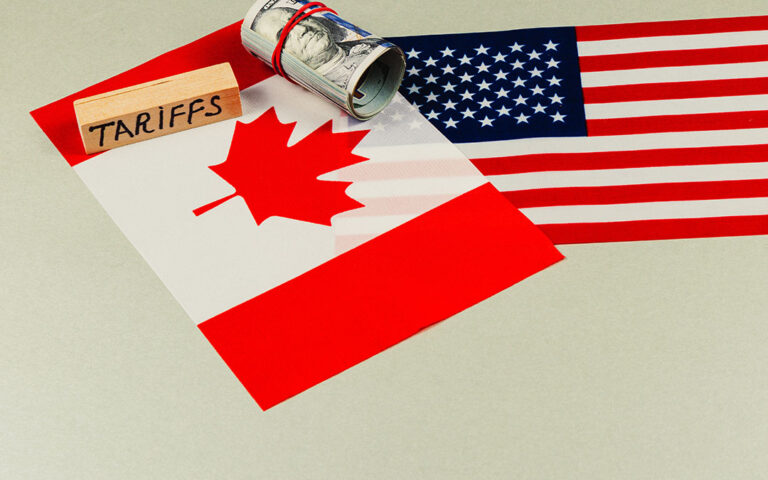
Trump’s trade war with Canada grows increasingly costly as Section 338 tariffs harm both economies (opens in a new tab)
Essays Sep 22, 2026
President Donald Trump continues to escalate his administration’s perplexing trade spat with Canada through the expanded use of novel tariff powers in Section 338 of the Tariff Act of 1930.…

New research shows how U.S. homeownership and the accumulation of housing wealth are linked to political participation (opens in a new tab)
Essays Aug 14, 2026
Persistent affordability pressures have driven up housing costs for millions of U.S. families in recent years. Home prices remain near record highs relative to incomes, mortgage rates and associated costs…
Housing Wealth Accumulation and Electoral Representation (opens in a new tab)
Working Papers Aug 14, 2026
We document that housing wealth accumulation systematically differs among homeowners by their political participation. Using a nationwide voter-property dataset, we find that realized housing appreciation increases monotonically the more a…

Defining extreme wealth is more complicated than it looks (opens in a new tab)
Videos Aug 13, 2026
Facing high levels of income and wealth inequality and shrinking tax revenues, U.S. policymakers are showing increased interest in proposals to tax the richest households. Yet determining which households fall into that category is complex and changes based…
The debt-to-wealth ratio: A missing lens on the U.S. government’s fiscal capacity (opens in a new tab)
Reports Jul 30, 2026
Few statistics shape the fiscal debate in the United States as powerfully as the ratio of federal debt-to-Gross Domestic Product. Debt held by the public recently surpassed 100 percent of…
 View Chart
(opens in a new tab)
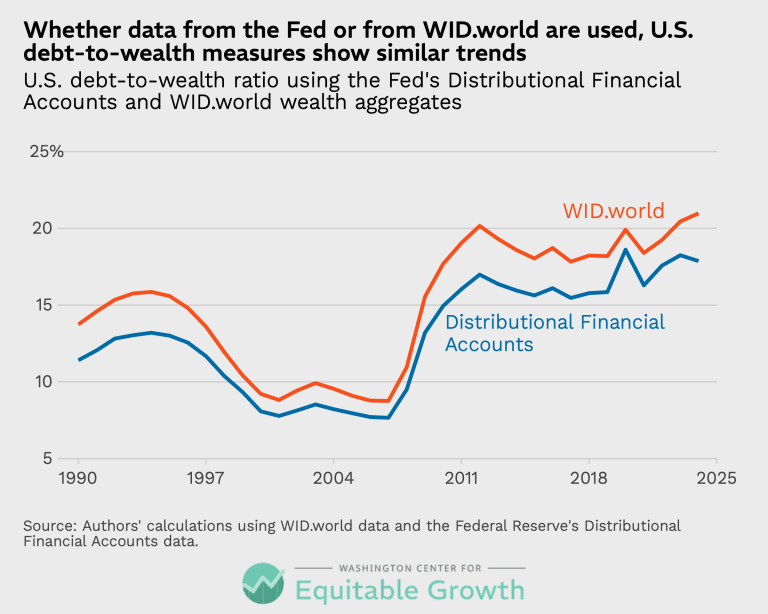
Whether data from the Fed or from WID.world are used, U.S. debt-to-wealth measures show similar trends (opens in a new tab)
Visualizations Jul 22, 2026
 View Chart
(opens in a new tab)
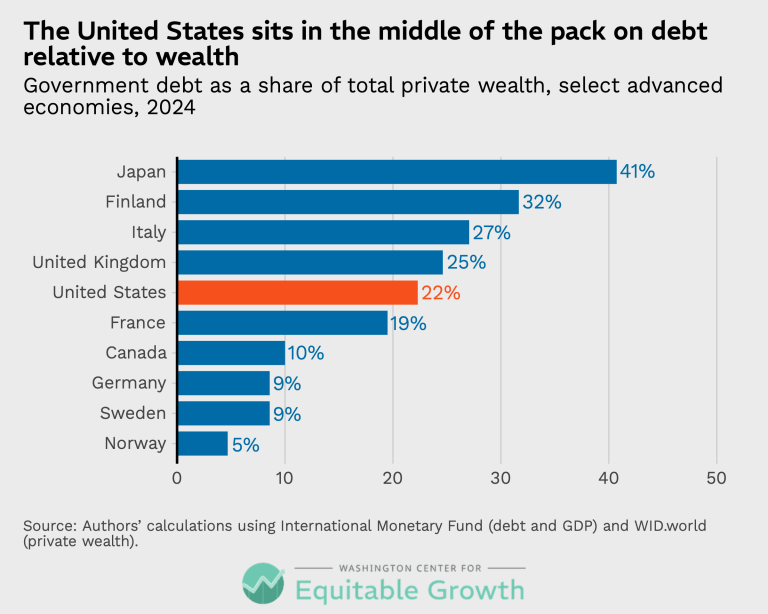
The United States sits in the middle of the pack on debt relative to wealth (opens in a new tab)
Visualizations Jul 22, 2026
 View Chart
(opens in a new tab)
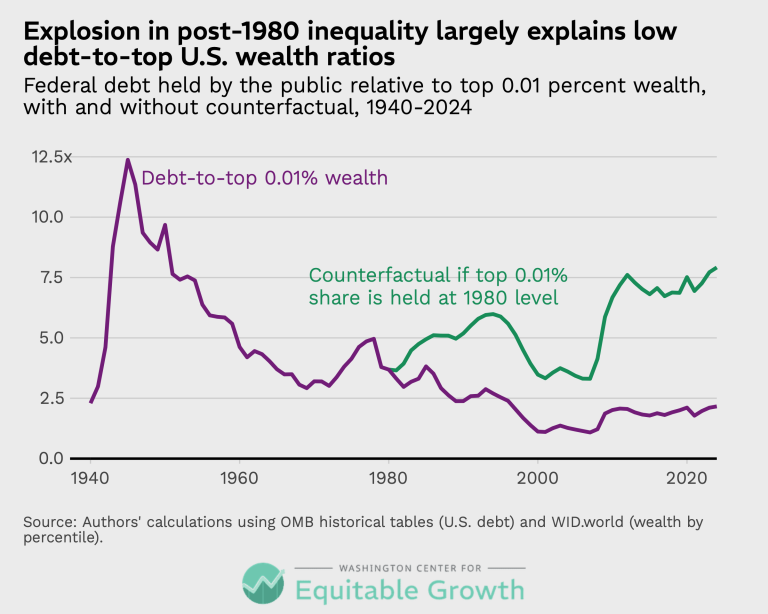
Explosion in post-1980 inequality largely explains low debt-to-top U.S. wealth ratios (opens in a new tab)
Visualizations Jul 22, 2026
 View Chart
(opens in a new tab)
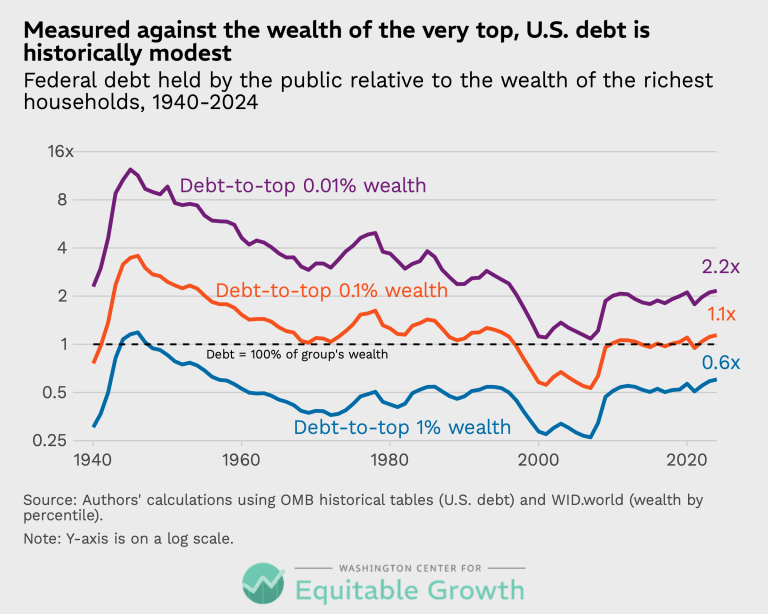
Measured against the wealth of the very top, U.S. debt is historically modest (opens in a new tab)
Visualizations Jul 22, 2026
 View Chart
(opens in a new tab)
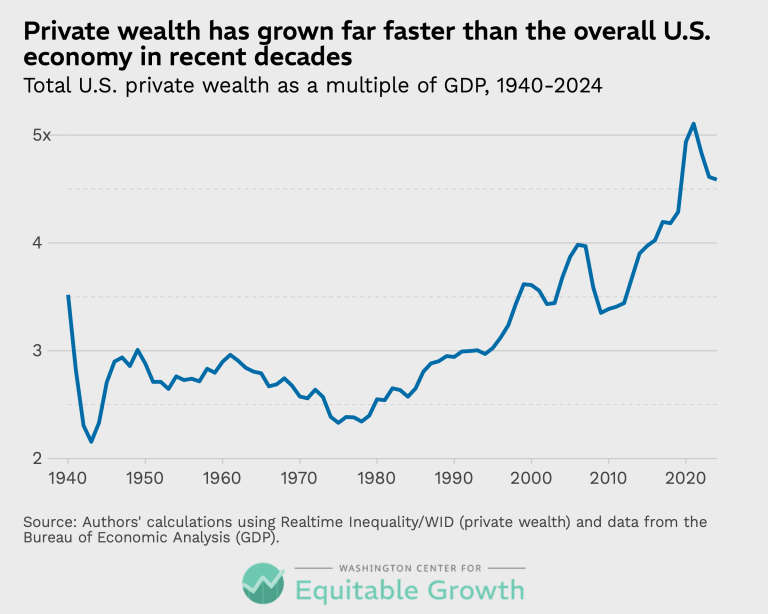
Private wealth has grown far faster than the overall U.S. economy in recent decades (opens in a new tab)
Visualizations Jul 22, 2026
 View Chart
(opens in a new tab)
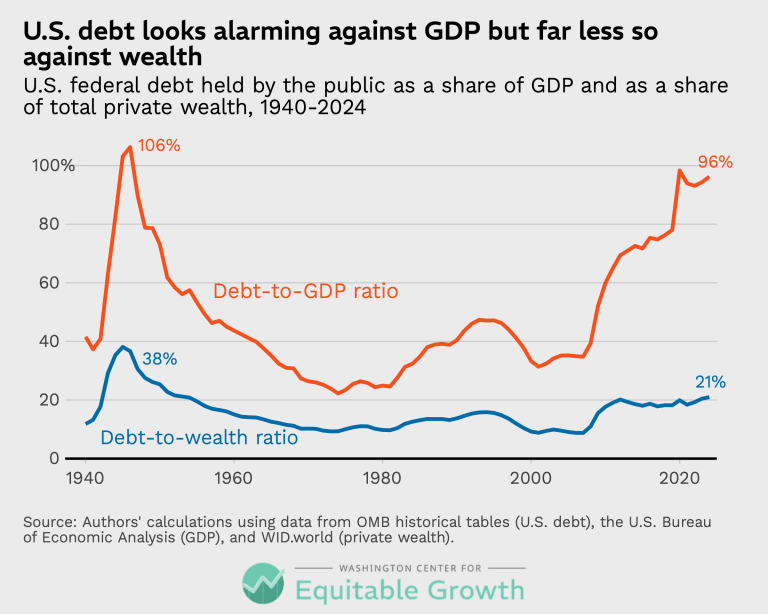
U.S. debt looks alarming against GDP but far less so against wealth (opens in a new tab)
Visualizations Jul 22, 2026

The costs of the Trump administration’s tariffs diverge for countries and industries so far in 2026 (opens in a new tab)
Essays Jul 14, 2026
The first 4 months of 2026 saw continued seismic changes in U.S. trade policy. In late February, the U.S. Supreme Court struck down the Trump administration’s use of the International…
 View Chart
(opens in a new tab)
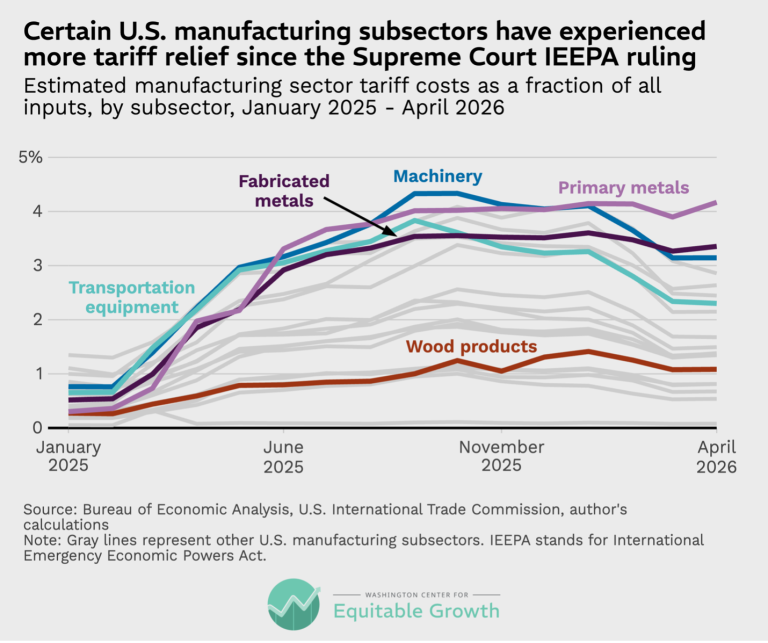
Certain U.S. manufacturing subsectors have experienced more tariff relief since the Supreme Court IEEPA ruling (opens in a new tab)
Visualizations Jul 13, 2026






































Your Source for the Latest Insights
Get updates on our latest research, event announcements, and policy insights delivered straight to your inbox. Stay connected with the leading voices on equitable growth.