


Issue Areas
The Washington Center for Equitable Growth focuses on a number of policy-relevant issues to advance shared prosperity and economic growth.

0 Results
No results match your criteria. Try clearing the search or adjusting your filters.

AI, Tech & Energy
Equitable Growth advances research and policy analysis on how artificial intelligence, emerging technologies, and the energy transition affect workers, inequality, and broad-based economic growth.

Taxation
Equitable Growth advances research and policy analysis on how tax policies can generate revenue and promote policies for a fairer, more efficient tax code.
Macroeconomics & Economic Measurement
Equitable Growth advances research and policy analysis on macroeconomic policies and better economic measurement that promote stable and broad-based economic growth.

Political Economy & Democracy
Equitable Growth supports research and policy analysis on how economic inequality shapes political power and democratic institutions, and how that in turn affects broad-based economic growth.

Competition & Economic Dynamism
Equitable Growth advances research and policy analysis on how strong competition among U.S. businesses reduces inequality and creates broad-based economic growth.

Household Economic Security
Equitable Growth advances research and policy analysis on how access to care, policies that balance work, life, and education create stable, broad-based economic growth.

Economic Equity & Opportunity
Equitable Growth advances research and policy analysis on how trends in economic inequality and mobility and changes in the economy have affected the concentration of wealth, income, and earnings, and how these distributional shifts have affected the promise of economic security and opportunity.

Labor, Wages & Worker Power
Equitable Growth advances research and policy analysis on how inequalities in wages, bargaining power, and the evolving labor market affect workers’ economic security and opportunity as well as broad-based economic growth.
515 Results
 (opens in a new tab)

Reimagining and rebuilding the federal government: the role of social scientists in evidence-backed U.S. policymaking (opens in a new tab)
Essays Nov 20, 2026
The Washington Center for Equitable Growth earlier this month convened a panel of scholars and former senior officials at the Association for Public Policy Analysis and Management’s Fall Research Conference…
(opens in a new tab)
AI-related inputs drove U.S. businesses’ import growth in 2025 (opens in a new tab)
Essays Nov 18, 2026
The enduring question of last year’s tariff rollercoaster is whether the economic pain was worth reshoring U.S. supply chains. A preliminary answer came in a September data release from the…
(opens in a new tab)
An economic statistical agenda for the next presidential administration and U.S. Congress (opens in a new tab)
Reports Nov 17, 2026
This report argues that policymakers in the next presidential administration should adopt an economic statistical agenda to save an essential statistical system that is imperiled by decades of neglect and…
(opens in a new tab)
An end to summer tariff peace threatens U.S. economic growth (opens in a new tab)
Essays Oct 30, 2026
The summer months of relative tranquility in U.S. trade policy could be shattered as announced tariff escalations with Canada take effect, translating into higher costs for U.S. businesses and consumers,…
(opens in a new tab)

Applying a debt-to-wealth lens internationally reveals subtle differences between countries’ fiscal capacities (opens in a new tab)
Essays Sep 24, 2026
In late August, investor demand for government bonds weakened, sending yields (the interest rate governments must offer to attract investors) soaring. Yields on 10-year U.S. bonds, which were just 4…
(opens in a new tab)
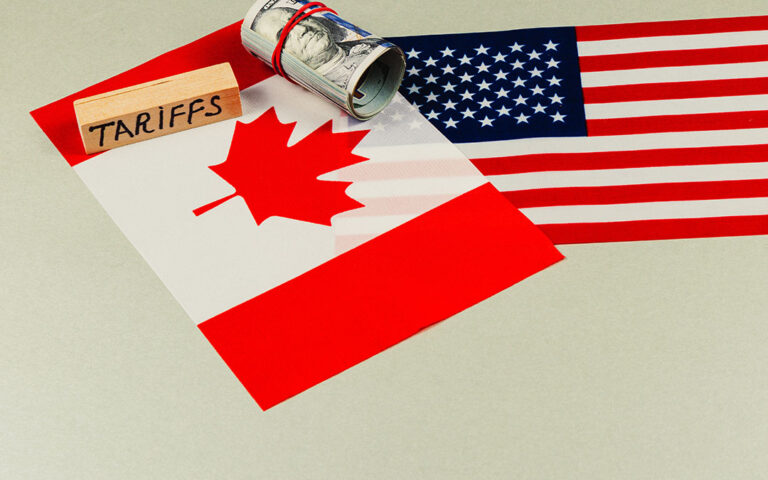
Trump’s trade war with Canada grows increasingly costly as Section 338 tariffs harm both economies (opens in a new tab)
Essays Sep 22, 2026
President Donald Trump continues to escalate his administration’s perplexing trade spat with Canada through the expanded use of novel tariff powers in Section 338 of the Tariff Act of 1930.…
66 Results
-
 Daniel Reck (opens in a new tab)
Assistant Professor of Economics
University of Maryland
-
 Max Risch (opens in a new tab)
Assistant Professor
Carnegie Mellon University
-
Tal Gross (opens in a new tab) Associate Professor
Boston University
-
 Scott Nelson (opens in a new tab)
Assistant Professor of Finance
University of Chicago
-
 Shayak Sarkar (opens in a new tab)
Acting Professor of Law
University of California, Davis
-
 Juliana Londoño-Vélez (opens in a new tab)
Assistant Professor of Economics
University of California, Los Angeles
-
 Vanessa Williamson (opens in a new tab)
Senior Fellow
Brookings Institution
-
 Xavier Jaravel (opens in a new tab)
Associate Professor
London School of Economics
-
 Eric Zwick (opens in a new tab)
Associate Professor of Finance and Fama Faculty Fellow
University of Chicago
-
 Eric Ohrn (opens in a new tab)
Associate Professor
Grinnell College
-
David Kamin (opens in a new tab) Deputy Director
National Economic Council
-
 Emmanuel Saez (opens in a new tab)
Professor of Economics
University of California, Berkeley
-
 Greg Leiserson (opens in a new tab)
Senior Economist
Council of Economic Advisers
-
 Heather Boushey (opens in a new tab)
Senior Research Fellow
Harvard University
-
 Gabriel Zucman (opens in a new tab)
Associate Professor of Economics and Director of the Stone Center on Wealth and Income Inequality
University of California, Berkeley
-
 Adrien Auclert (opens in a new tab)
Assistant Professor
Stanford University
-
 Daniel Carpenter (opens in a new tab)
Allie S. Freed Professor of Government
Harvard University
-
 Michael Reich (opens in a new tab)
Professor of Economics
University of California, Berkeley
-
 Nathan Jensen (opens in a new tab)
Professor of Government
University of Texas at Austin
-
 Mi Luo (opens in a new tab)
Assistant Professor
Emory University
-
 Reuven S. Avi-Yonah (opens in a new tab)
Irwin I. Cohn Professor of Law
University of Michigan, Ann Arbor
-
 Robert Lynch (opens in a new tab)
The Young Ja Lim Professor in Economics
Washington College
-
 Nisha Chikhale (opens in a new tab)
Ph.D. Candidate
University of Wisconsin-Madison
-
 Owen Zidar (opens in a new tab)
Professor of Economics and Public Affairs
Princeton University







Your Source for the Latest Insights
Get updates on our latest research, event announcements, and policy insights delivered straight to your inbox. Stay connected with the leading voices on equitable growth.