Equitable Growth’s “Econ 101” convening on Capitol Hill busts debt myths and charts a path ahead for the incoming 120th U.S. Congress
Blog NOV 24, 2026
By: Christopher Bangert-Drowns
FEB 21, 2024
By: Austin Clemens
On March 7, President Joe Biden will deliver the 2024 State of the Union address to the U.S. Congress and the American public, in which he will tout his economic and other policy achievements. This charticle preemptively assesses the state of the U.S. economy by looking at some of the key indicators of aggregate economic health. Overall, the data suggest that the U.S. economy is strong and poised to continue growing.
First, let’s look at scarring, or the permanent damage to the economy caused by recessions. The economic recovery from the COVID-19 pandemic has been rocky at times, but 3.5 years after the official end of the recession, the U.S. economy accomplished a remarkable feat: It completely avoided scarring (which economists also call hysteresis).
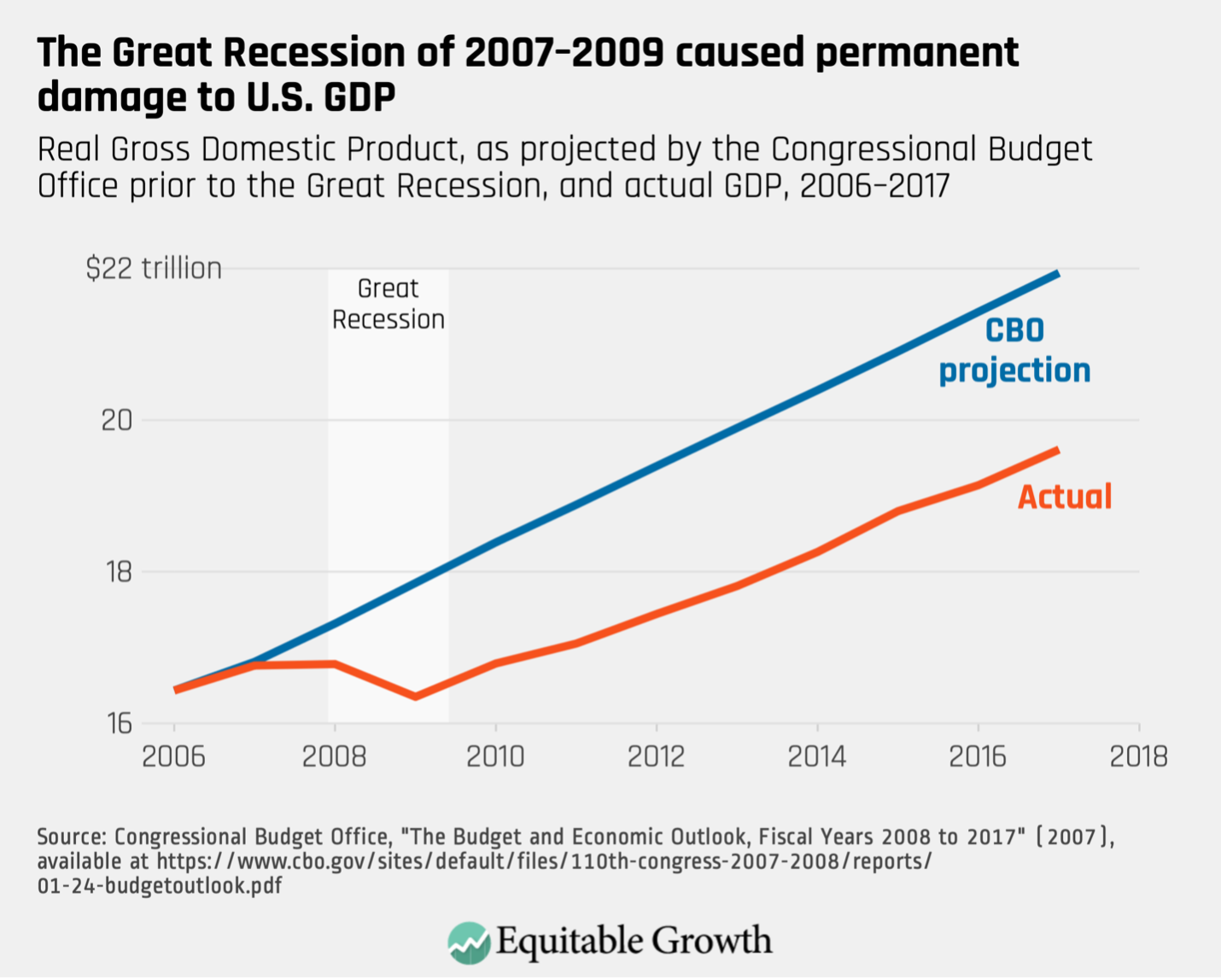
By contrast, the Great Recession of 2007–2009 caused lasting damage to the U.S. economy. Figure 1 shows how the U.S. economy contracted to well below levels forecasted by the Congressional Budget Office (opens in a new tab) before the recession and stayed depressed for the length of the recovery. (See Figure 1.)

The Great Recession of 2007-2009 caused permanent damage to U.S. GDP
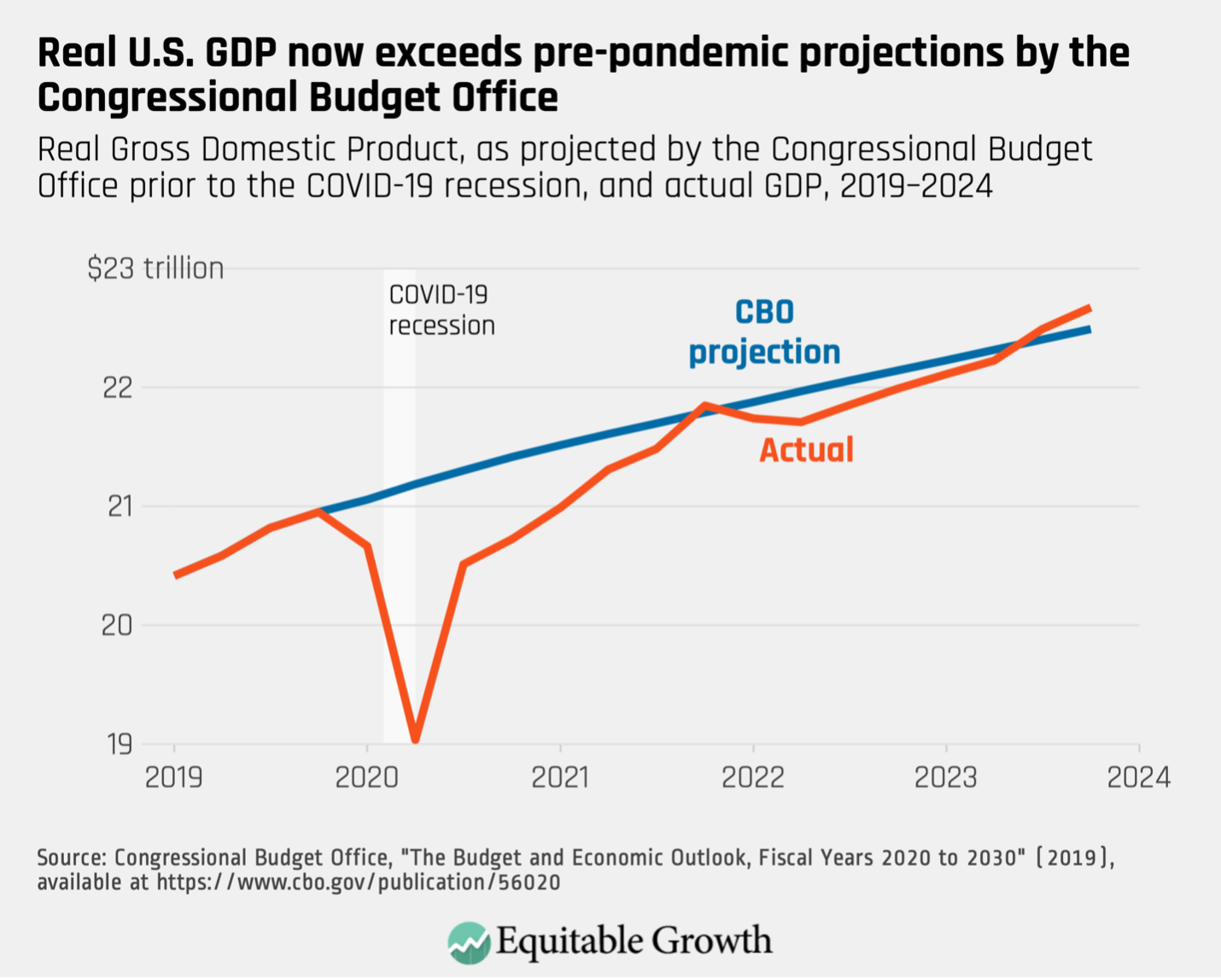
Meanwhile, the post-pandemic U.S. economy has now caught up to—and exceeded—CBO projections of Gross Domestic Product (opens in a new tab) from before the COVID-19 recession. (See Figure 2.)

Real U.S. GDP now exceeds pre-pandemic projections by the Congressional budget Office
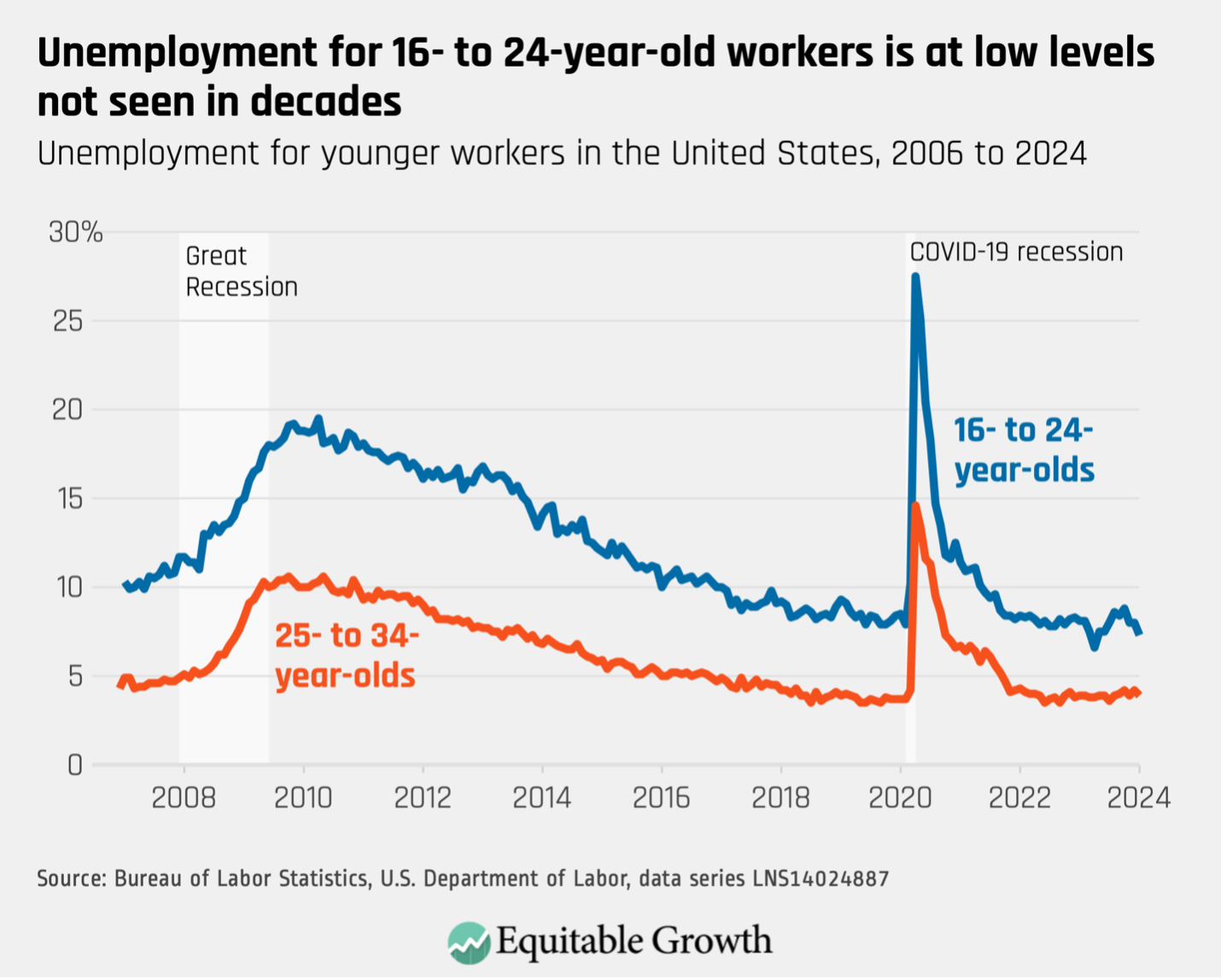
Scarring can be particularly harmful for young workers who are looking for employment for the first time. Research shows that these workers face long-lasting negative impacts from graduating into a poor labor market. Even 10 years later, these workers have lower wages, higher chances of unemployment, and worse health outcomes than their peers. So, it’s especially encouraging that young U.S. workers have fared well in the post-pandemic economic recovery: Unemployment for 16- to 24-year-olds is at its lowest level in decades. (See Figure 3.)

Unemployment for 16- to 24-year-old workers is at low levels not seen in decades
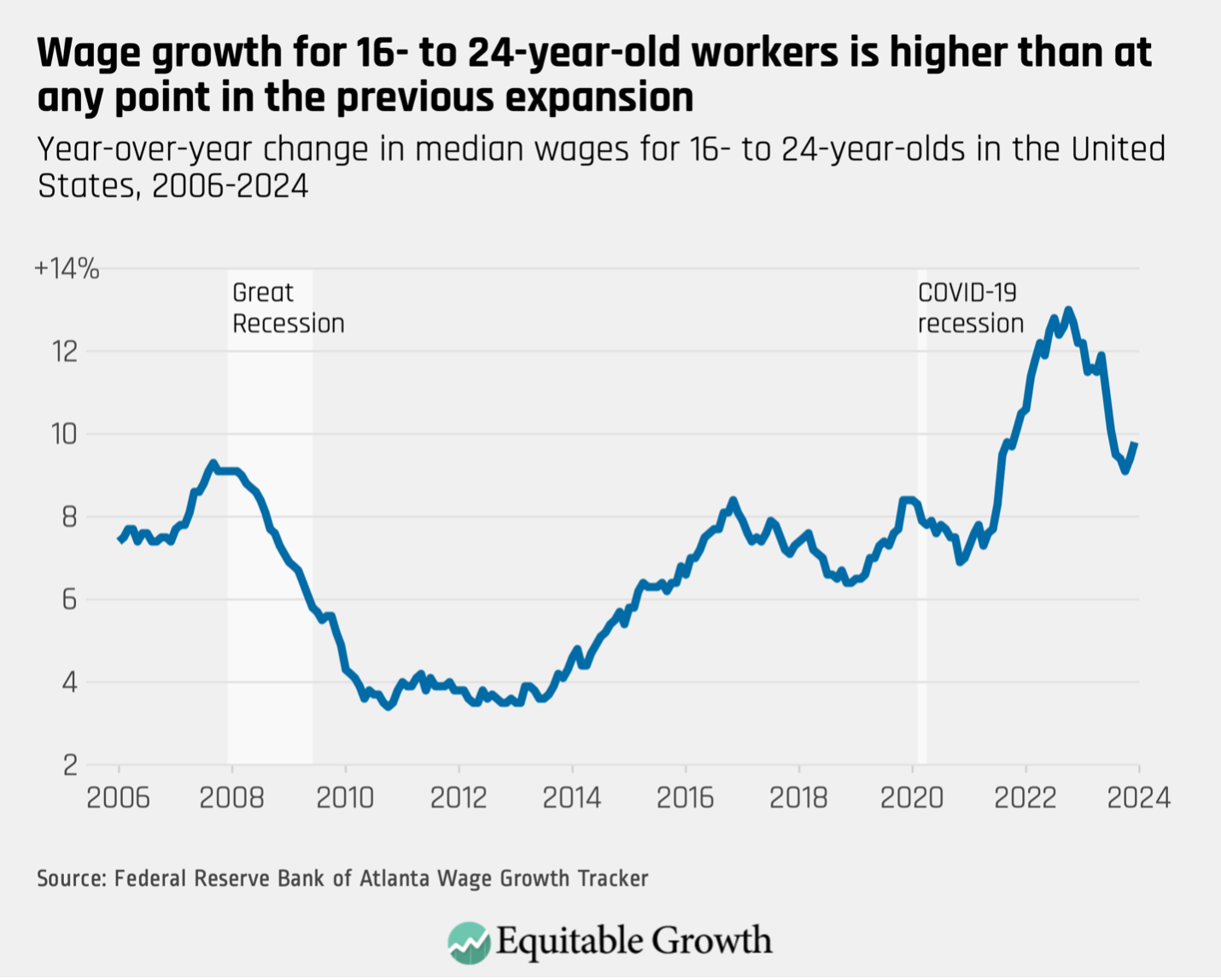
Moreover, the Atlanta Federal Reserve finds that these same workers saw significant wage increases after the pandemic. Strong wage growth for these workers suggests they have avoided the labor market scarring that usually impacts young workers after a recession. (See Figure 4.)

Wage growth for 16- to 24-year-old workers is higher than at any point in the previous expansion
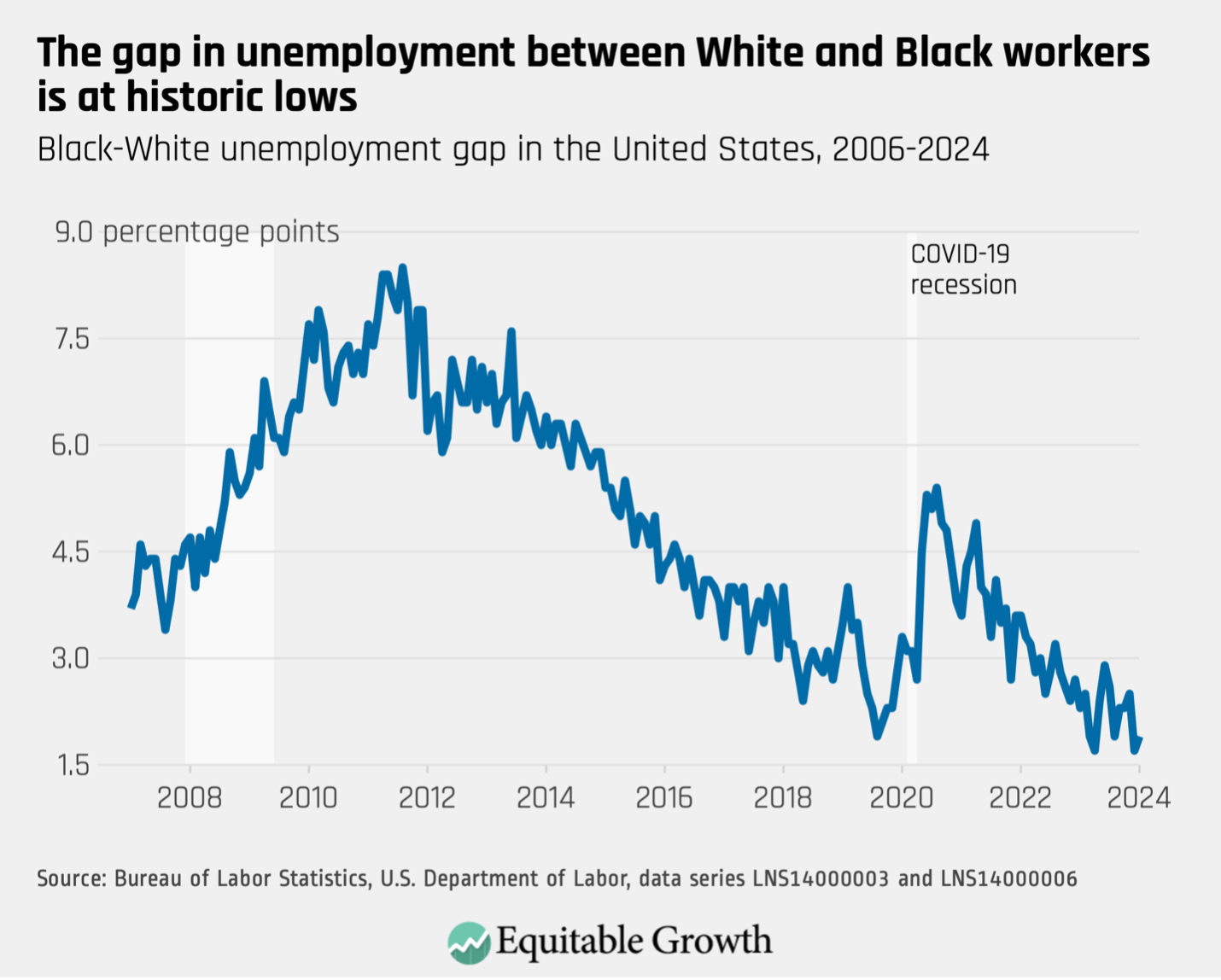
These wage gains are primarily attributable to a tight U.S. labor market that has pulled more workers into the labor market. Prime-age women’s labor force participation rates are at historic highs, for example. Additionally, the gap in unemployment between White and Black workers is at its lowest point since both rates have been measured (opens in a new tab). (See Figure 5.)

The gap in unemployment between White and Black workers is at historic lows
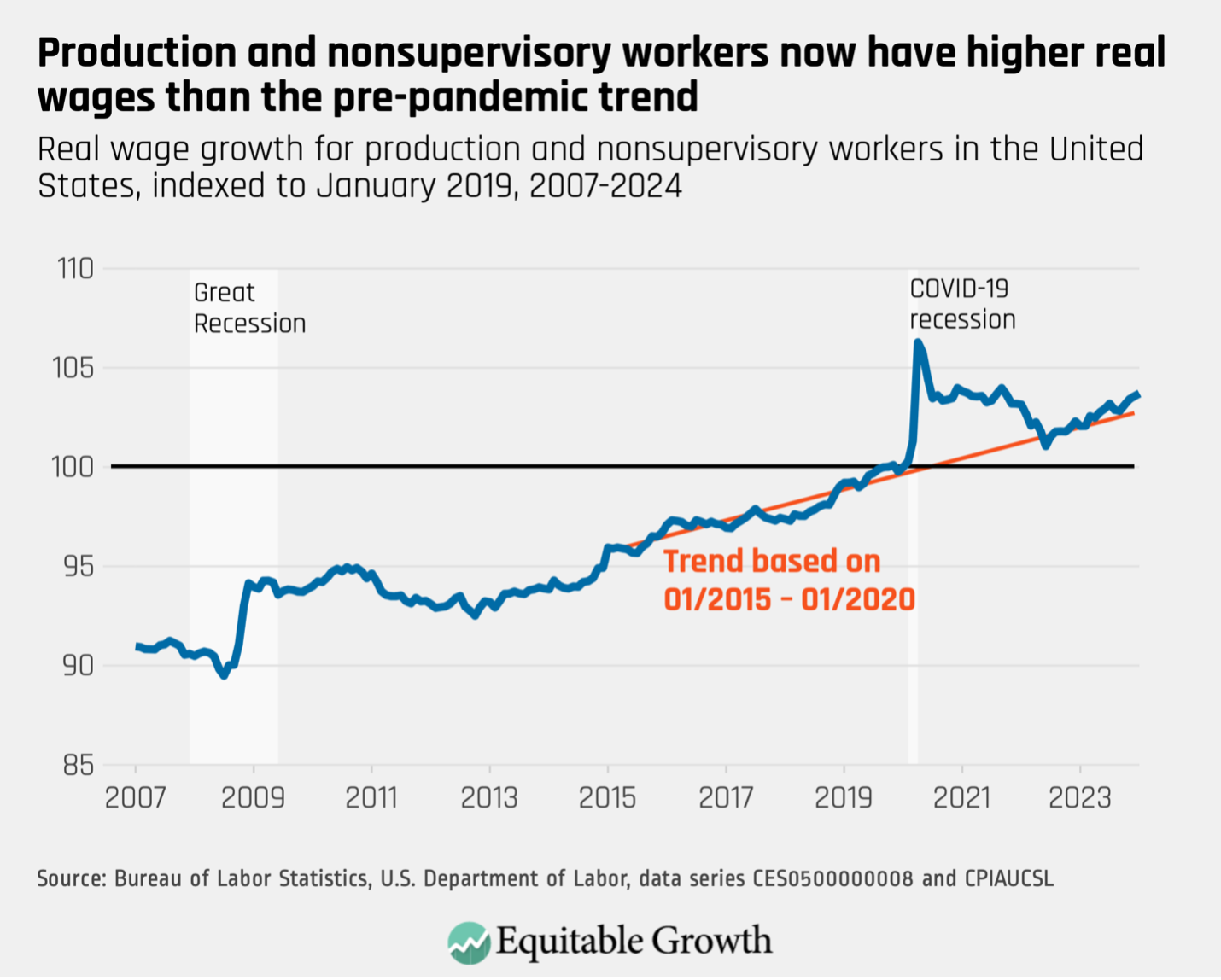
Much of this success can be attributed to the strength of consumption in the U.S. economy. Thanks in large part to aggressive fiscal policy during the pandemic (opens in a new tab), Americans emerged from lockdown with money to spend—and they are spending it (opens in a new tab). Consumption should remain strong as wage growth is now outpacing inflation for most workers. (See Figure 6.)

Production and nonsupervisory workers now have higher real wages than the pre-pandemic trend
According to the New York Federal Reserve, consumer debt also remains low (opens in a new tab) by historical standards. Although credit card delinquency has crept up lately, it is within normal levels historically, and delinquencies for other types of debt are at extremely low levels. (See Figure 7.)

Personal loan delinquency is low or within normal levels for all major loan types
Taken together, the aggregate data paints the picture of a strong economy, with relatively few threats on the horizon. After months of erroneous recession speculation over the past couple of years, the indicators clearly show that the state of the U.S. economy is strong.
Blog NOV 24, 2026
By: Christopher Bangert-Drowns
Request for Proposals (RFPs) NOV 23, 2026
By: Equitable Growth
Reports NOV 23, 2026
By: Jacob Leibenluft, Gene Sperling
Get updates on our latest research, event announcements, and policy insights delivered straight to your inbox. Stay connected with the leading voices on equitable growth.