
Skip to content
Browse All Resources
Blog

OCT 7, 2020

Equitable Growth’s Household Pulse graphs: September 16–28 Edition

Equitable Growth’s Household Pulse graphs: October 14 – 26

Abstract

On October 7, the U.S. Census Bureau released new data on the effects of the coronavirus pandemic on workers and households. Below are five graphs compiled by Equitable Growth staff highlighting important trends in the data.
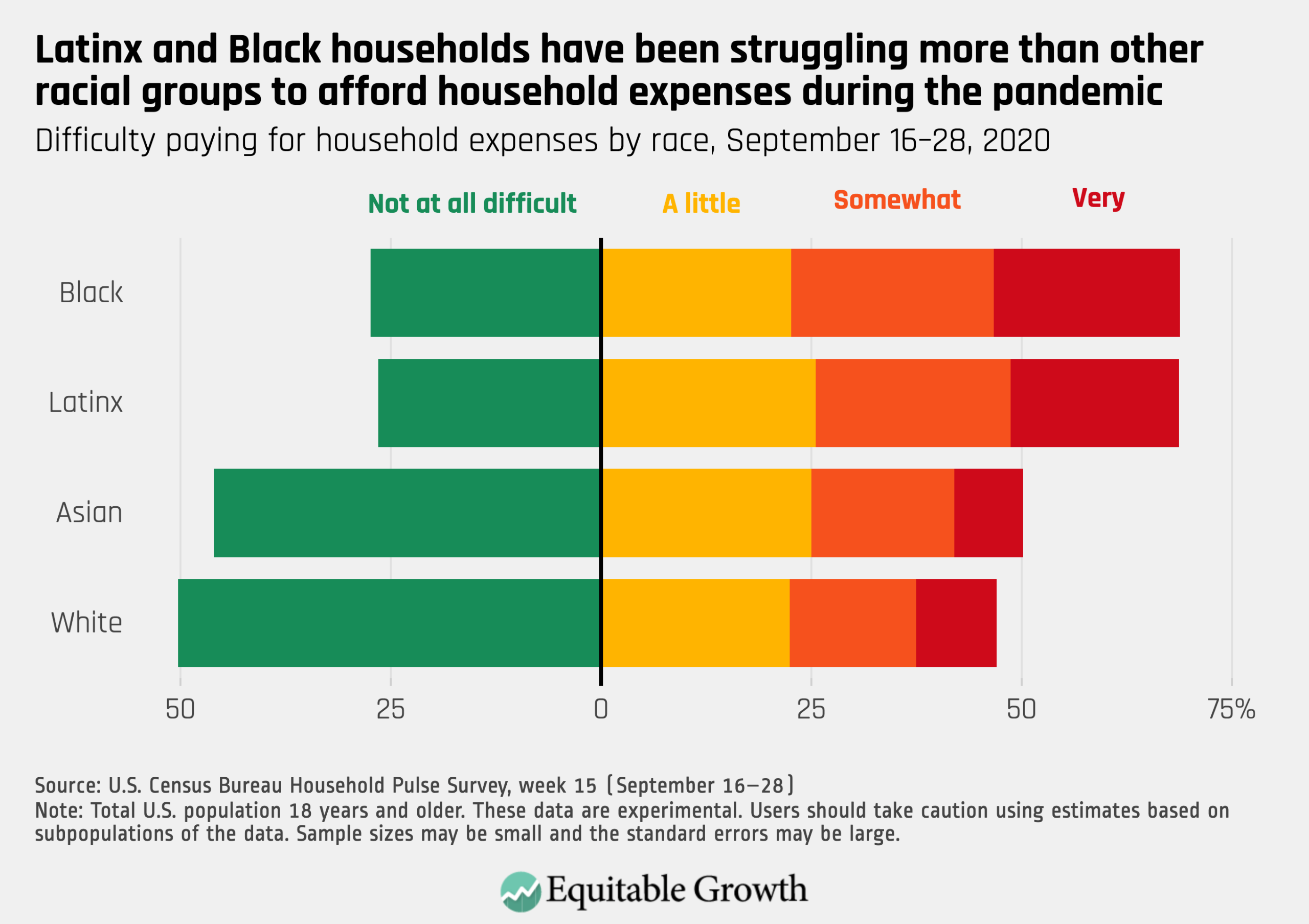
While continued progress on extending economic relief has stalled, a majority of Black and Latinx households reported having difficulty paying household expenses as of the last two weeks of September.

Difficulty paying for household expenses by race, September 16–28, 2020

Latinx and Black households have been struggling more than other racial groups to afford household expenses during the pandemic
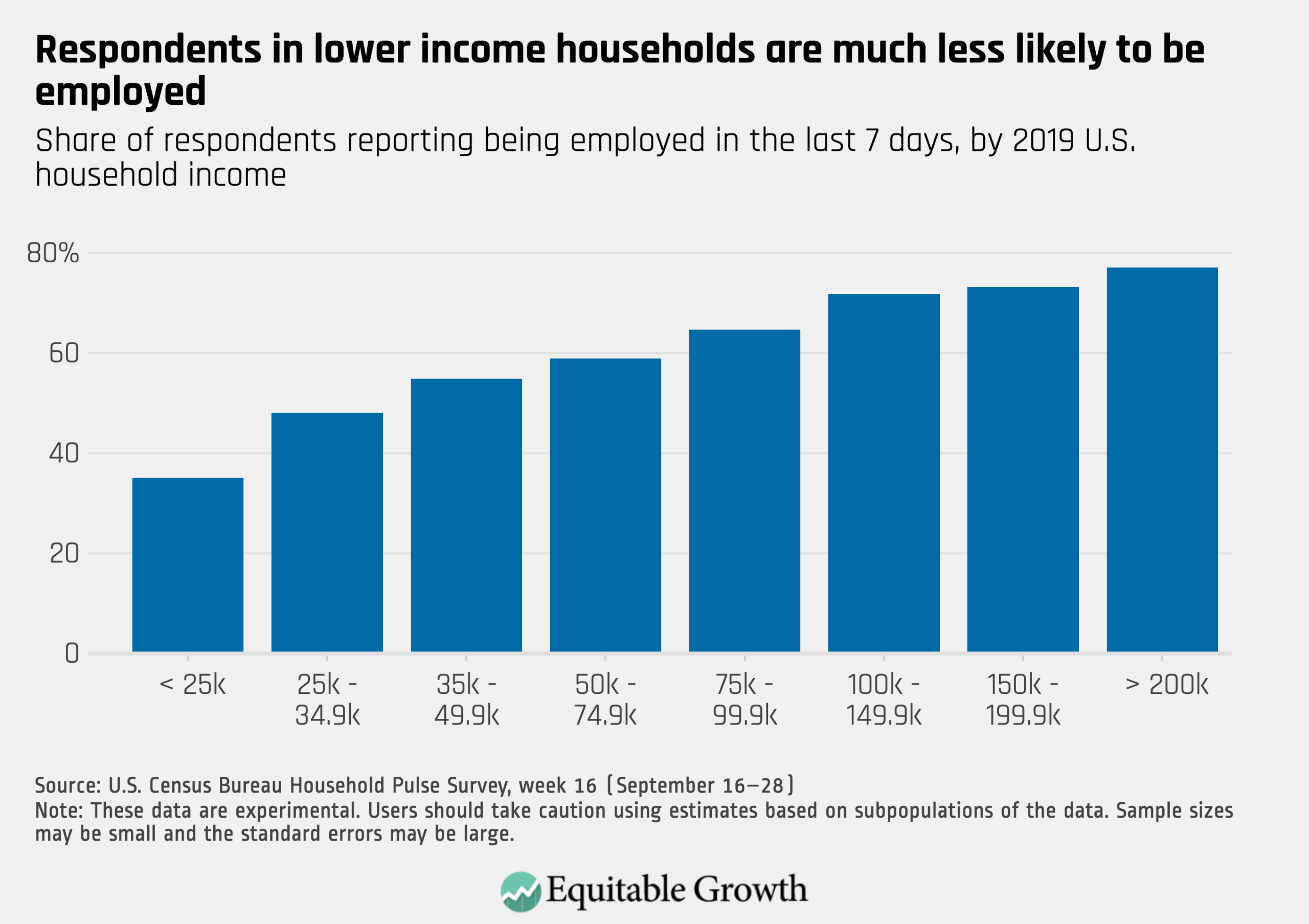
Job losses are concentrated among low- and middle-income workers, who are much less likely to be employed compared to high-income workers as of the end of September.

Share of respondents reporting being employed in the last 7 days, by 2019 U.S. household icome

Respondents in lower income households are much less likely to be employed
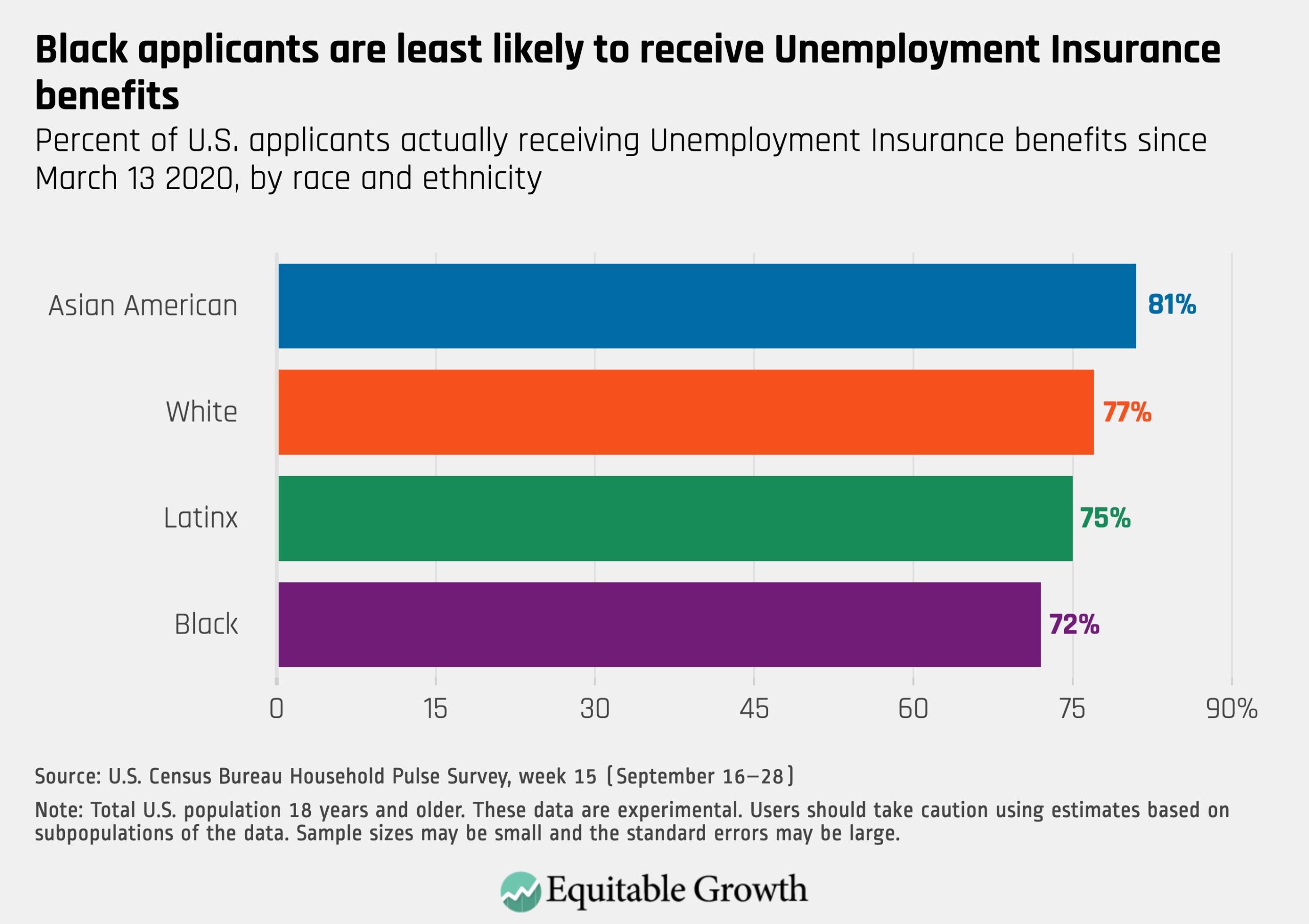
One-quarter of Latinx workers and 28 percent of Black workers who have applied for Unemployment Insurance have not received benefits since the start of the Coronavirus Recession.

Percent of U.S. applicants actually receiving Unemployment Insurance benefits since March 13, 2020, by race and ethnicity

Black applicants are least likely to receive Unemployment Insurance benefits
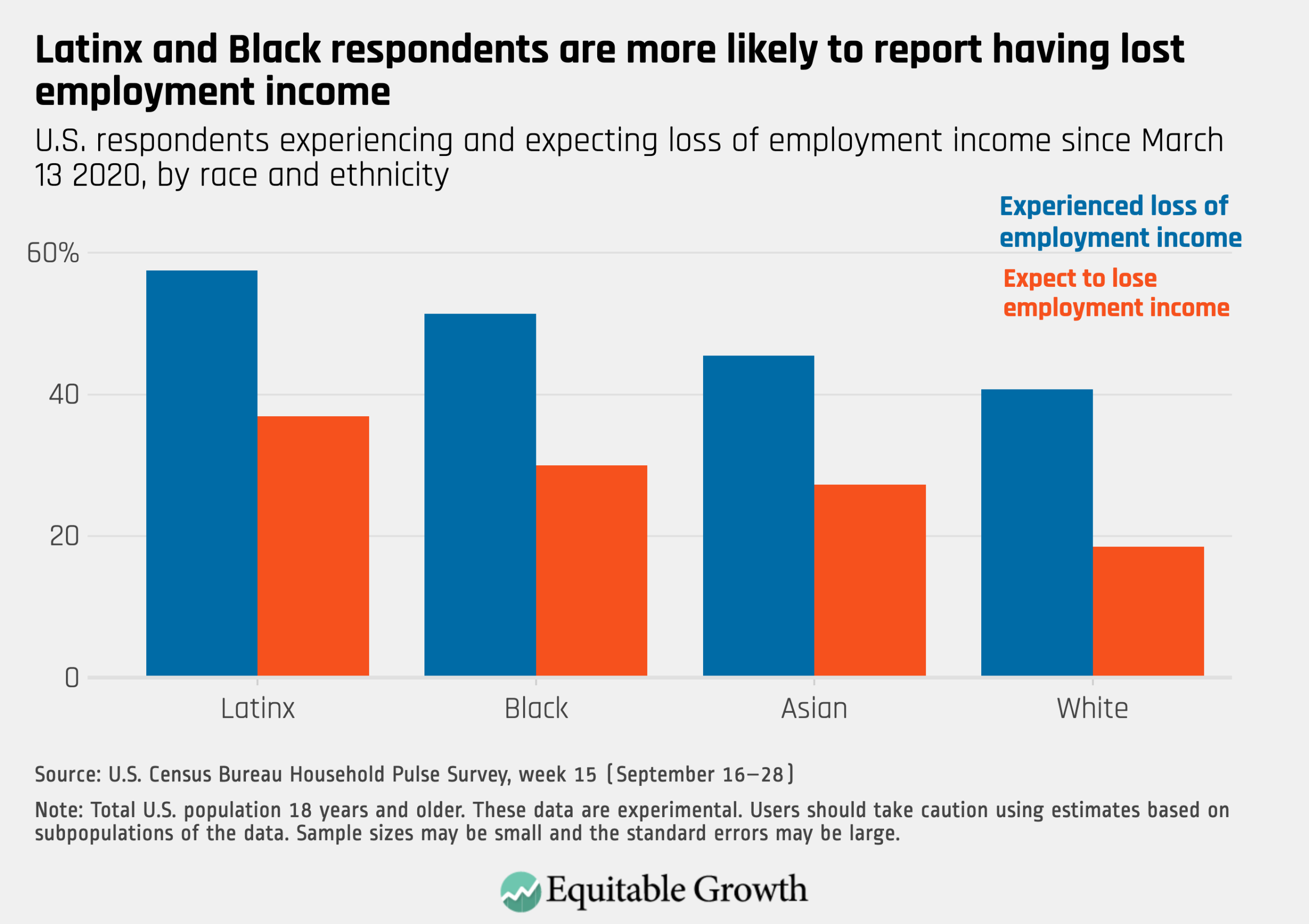
More than half of Latinx and Black survey respondents reported they have lost income since the beginning of the Coronavirus Recession and roughly a third expect to lose income in the coming month.

U.S. respondents experiencing and expecting loss of employment income since March 13, 2020, by race and ethnicity

Latinx and Black respondents are more likely to report having lost employment income
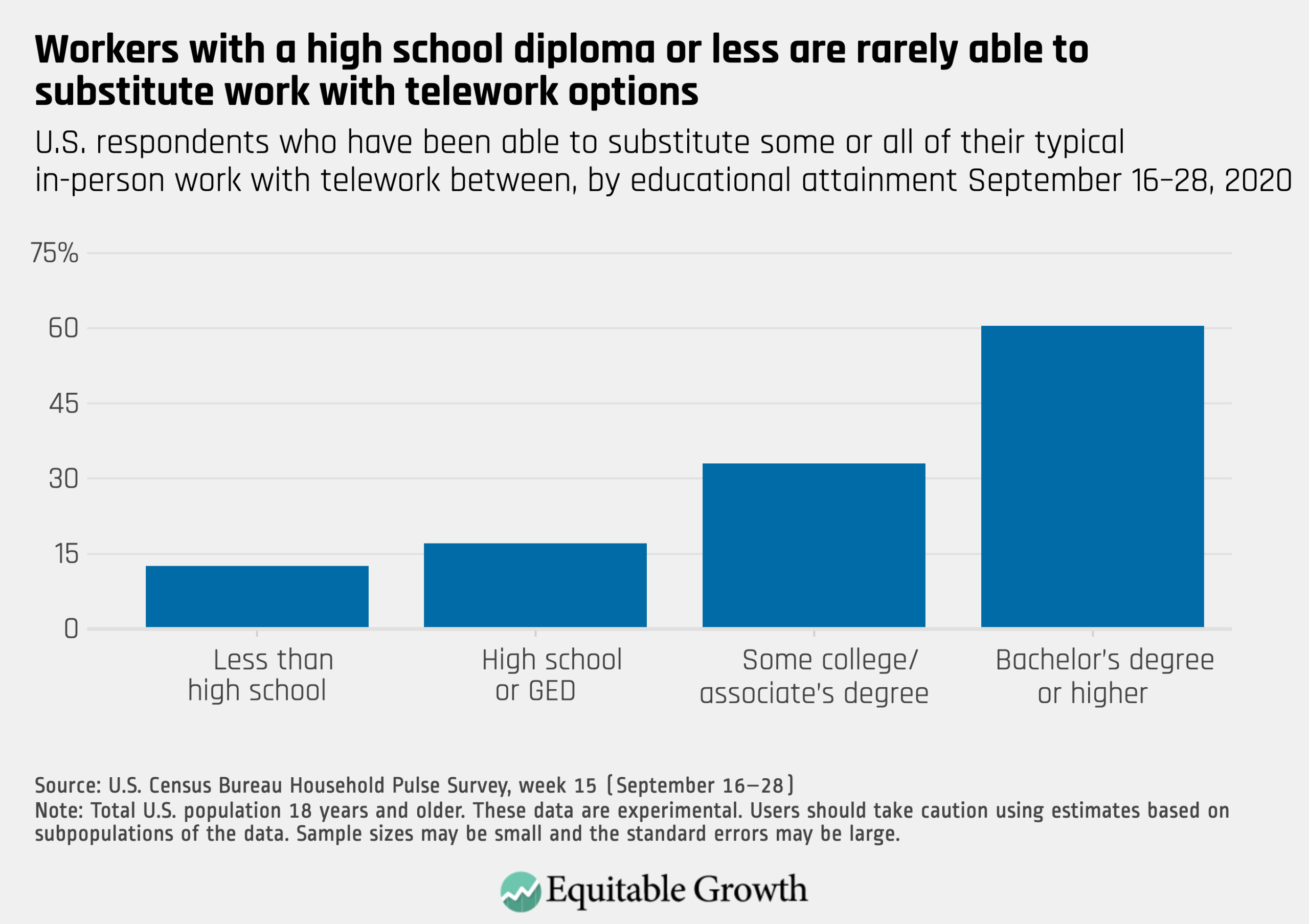
Most workers without a college degree are not able to work remotely from the safety of their homes, exacerbating the polarization of job quality by education level.

U.S. respondents who have been able to substitute some or all of their typical in-person work with telework, by educational attainment between September 16-29, 2020

Workers with a high school diploma or less are rarely able to substitute work with telework options

Related

Your Direct Line to Cutting-Edge Research

Get updates on our latest research, event announcements, and policy insights delivered straight to your inbox. Stay connected with the leading voices on equitable growth.