



Academic
Request for Proposals: Research grants for early career scholars
Request for Proposals (RFPs) NOV 23, 2026
By: Equitable Growth
Economic Equity & Opportunity
 Browse All Resources
MAY 7, 2021
By: Kate Bahn and Carmen Sanchez Cumming

On May 7, the U.S. Bureau of Labor Statistics released new data on the U.S. labor market during the month of April. Below are five graphs compiled by Equitable Growth staff highlighting important trends in the data.
With fewer jobs added than expected in April, prime-age employment increased only slightly to 76.9 percent from 76.8 percent in March.
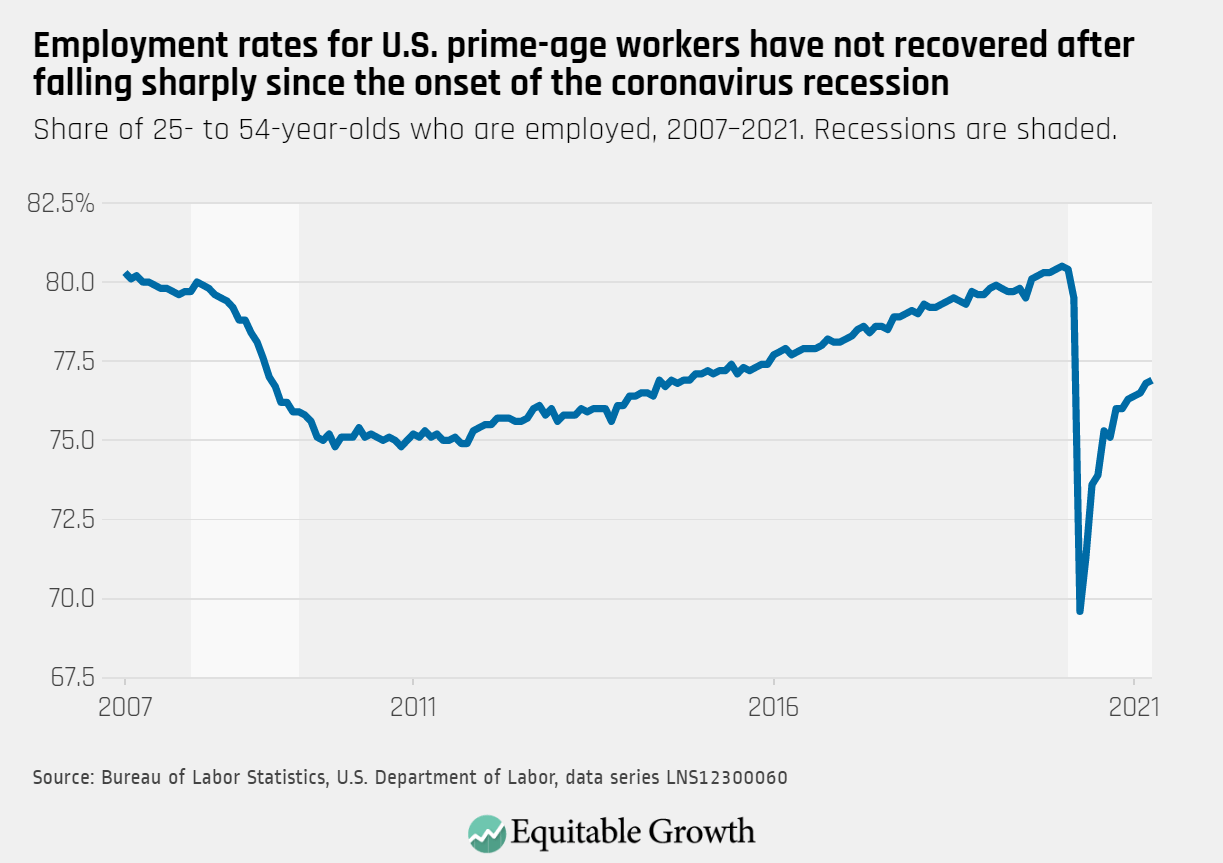
Employment rates for U.S. prime-age workers have not recovered after falling sharply since the onset of the coronavirus recession
Unemployment rates were little changed among most racial and ethnic groups and remain persistently high for Black and Latinx workers.
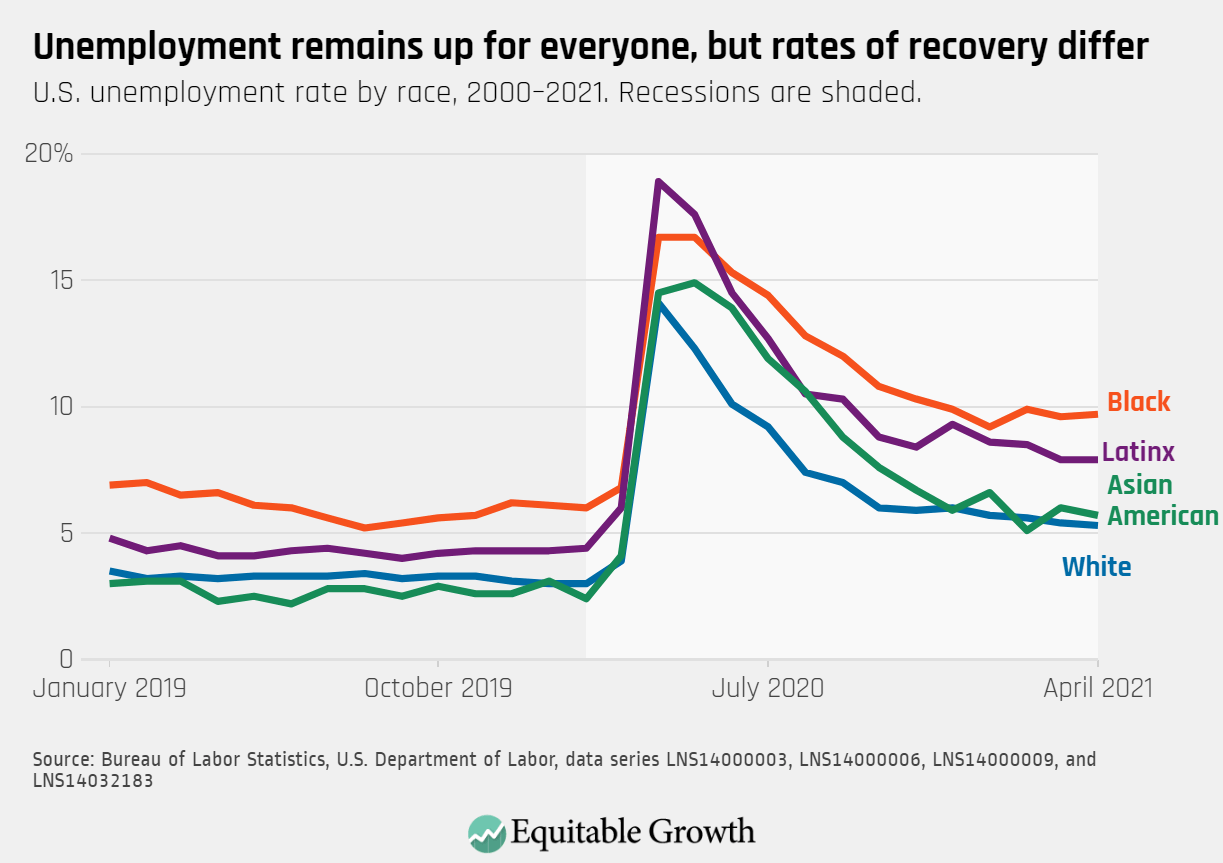
Unemployment remains up for everyone, but rates of recovery differ
After stark declines in employment rates for both women and men amid the pandemic, men made small gains in April with no change to women’s employment rate.
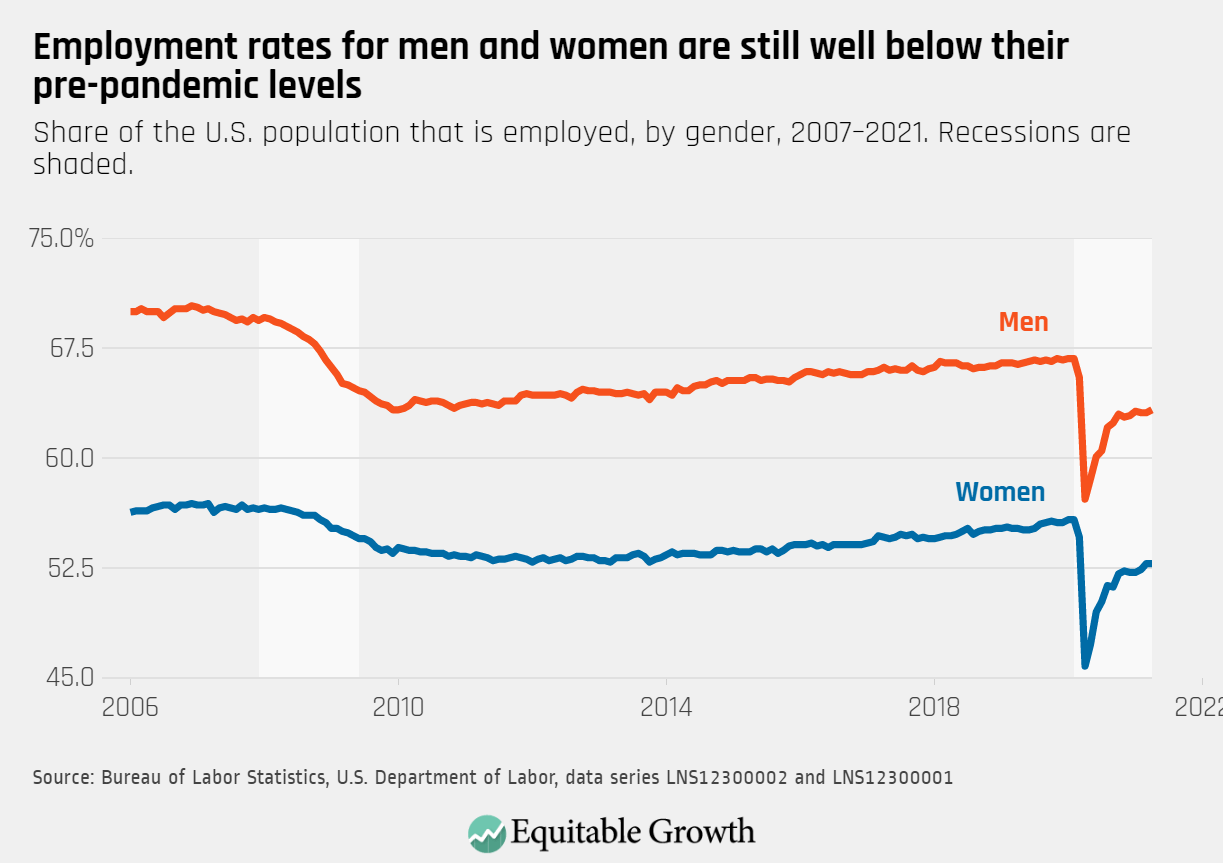
Employment rates for men and women are still well below their pre-pandemic levels
The unemployment rate for workers with less than a high school degree increased to 9.3 percent in April from 8.2 percent in March, while labor force participation also declined for this group of workers.
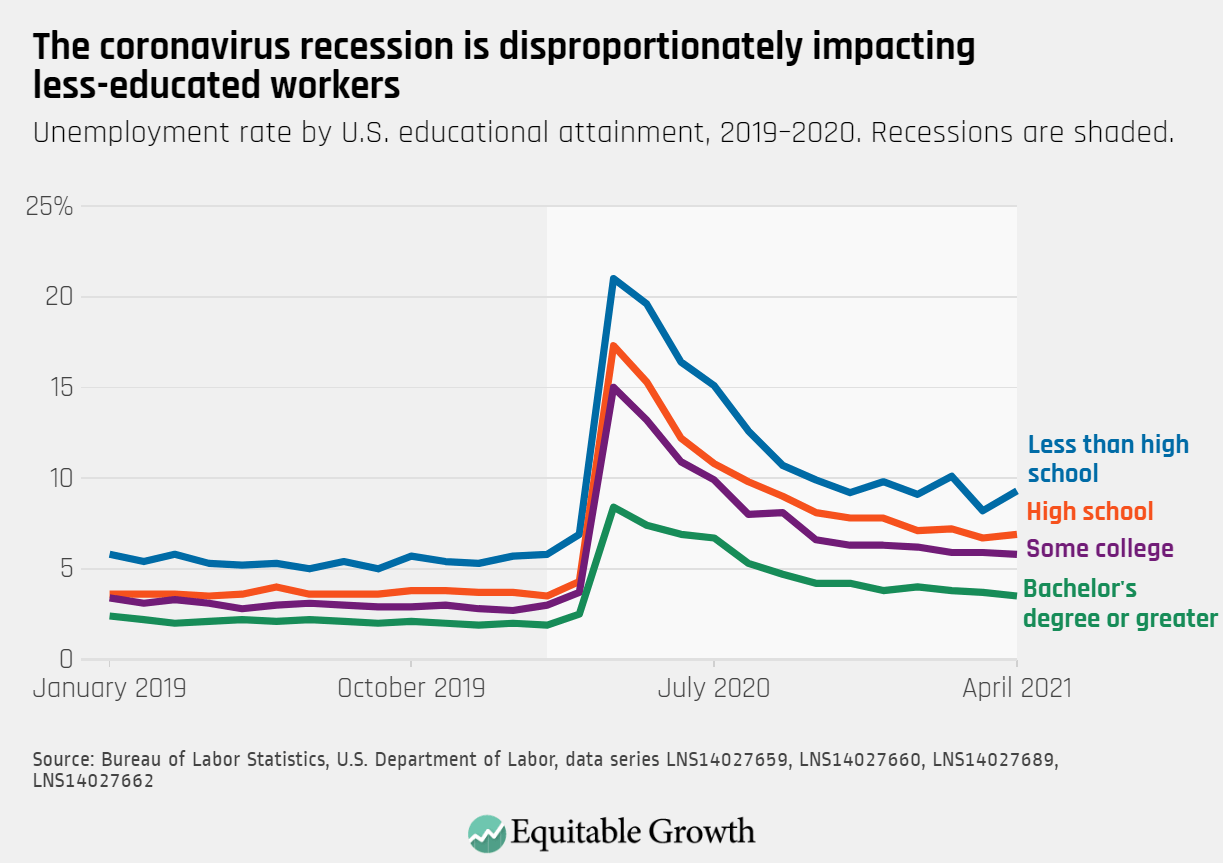
The coronavirus recession is disproportionately impacting less-educated workers
The proportion of unemployed workers who were out of work for fewer than 5 weeks increased in April, offsetting the recent trend of increasing long-term unemployment.
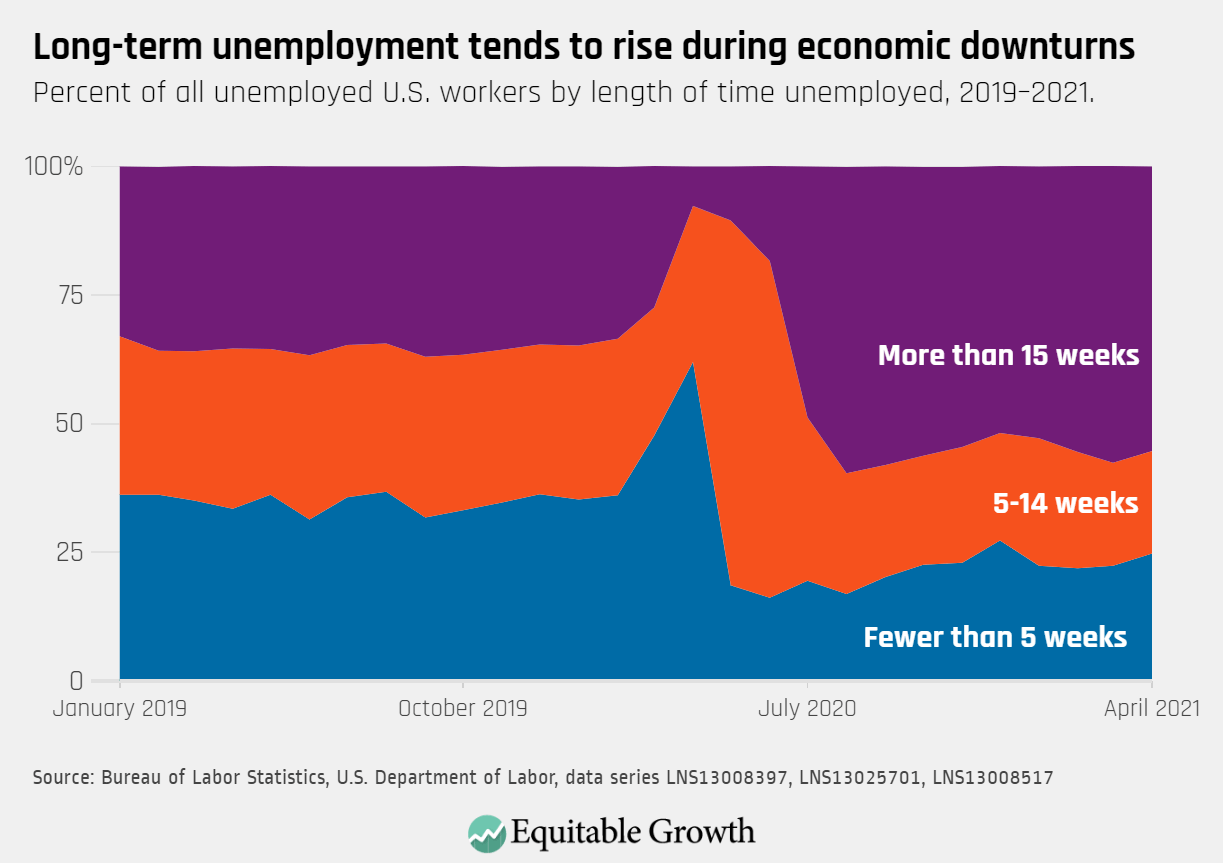
Long-term unemployment tends to rise during economic downturns
As the unemployment rate was little changed in April, an increasing proportion of those out of work were on temporary layoff, left their job, or were new entrants to the labor force.
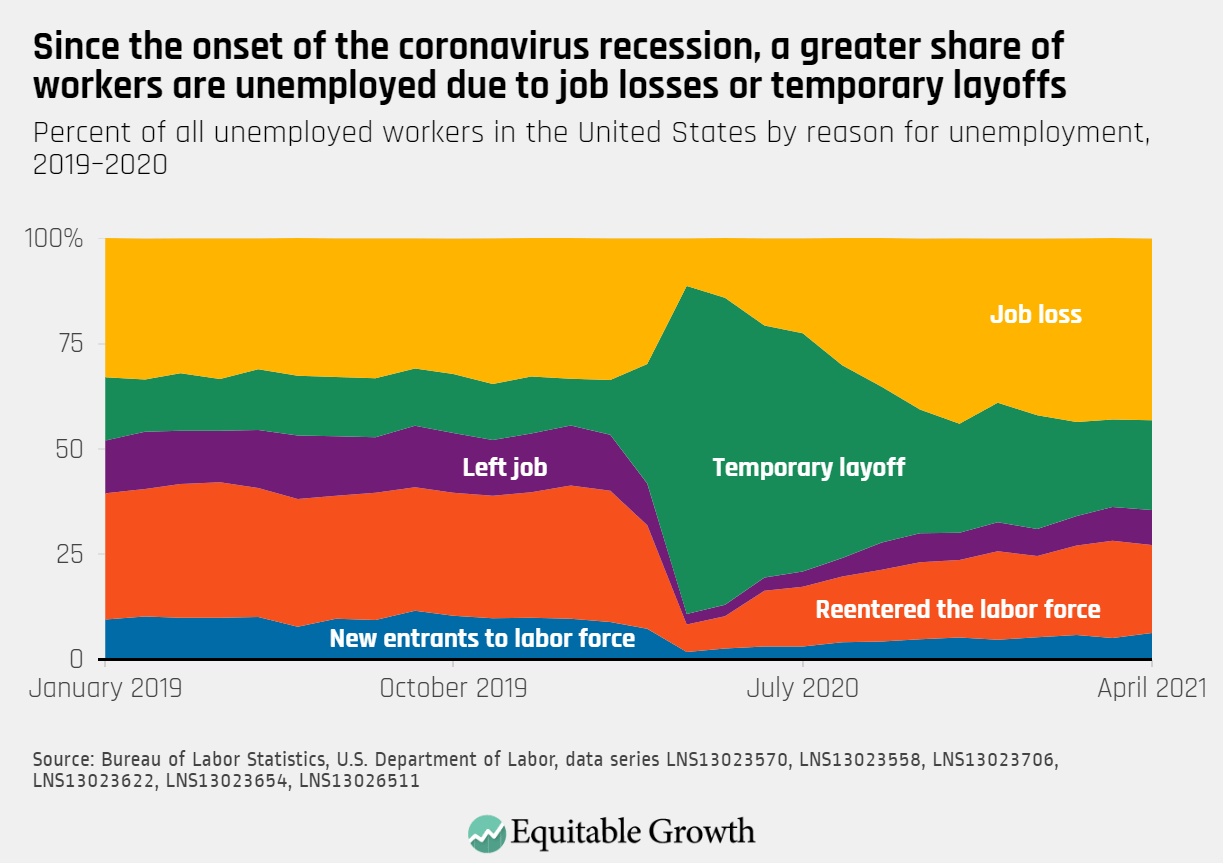
Since the onset of the coronavirus recession, a greater share of workers are unemployed due to job losses or temporary layoffs
Request for Proposals (RFPs) NOV 23, 2026
By: Equitable Growth

Reports NOV 23, 2026
By: Jacob Leibenluft, Gene Sperling

Essays NOV 20, 2026
By: Chris Clayton, Korin Davis
Get updates on our latest research, event announcements, and policy insights delivered straight to your inbox. Stay connected with the leading voices on equitable growth.


