



Academic
Request for Proposals: Research grants for early career scholars
Request for Proposals (RFPs) NOV 23, 2026
By: Equitable Growth
Economic Equity & Opportunity
 Browse All Resources
SEP 3, 2021

On September 3, the U.S. Bureau of Labor Statistics released new data on the U.S. labor market during the month of August. Below are five graphs compiled by Equitable Growth staff highlighting important trends in the data.
The prime-age employment rate for prime-age workers increased slightly in August from 77.8 percent to 78.0 percent, but remains below pre-recession levels.
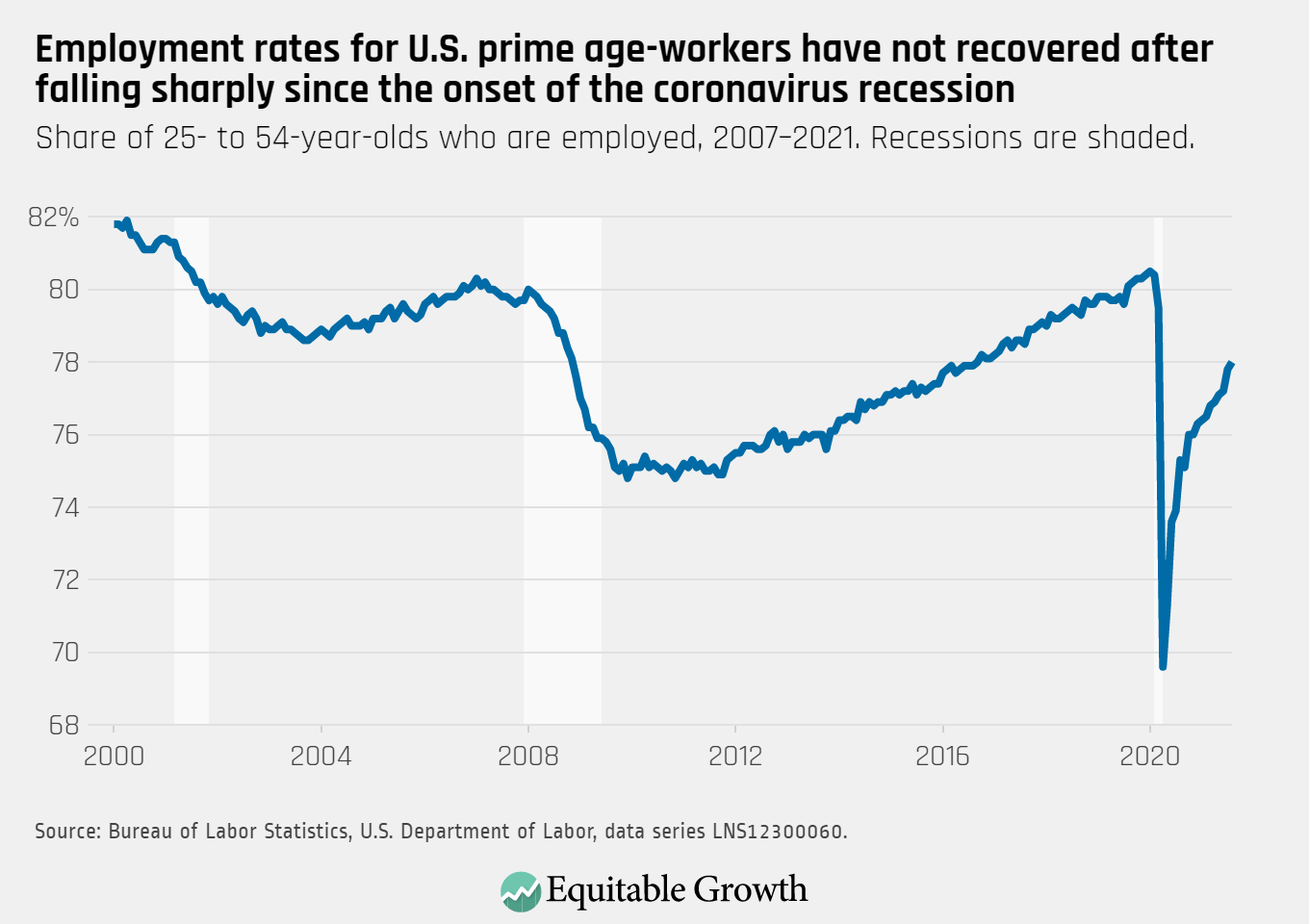
Employment rates for prime-age workers have not recovered after falling sharply since the onset of the coronavirus recession
The unemployment rate declined for White workers (4.5 percent) but did not change notably for Black workers (8.8 percent), the highest group, or for Latinx workers (6.4 percent) or Asian workers (4.6 percent).
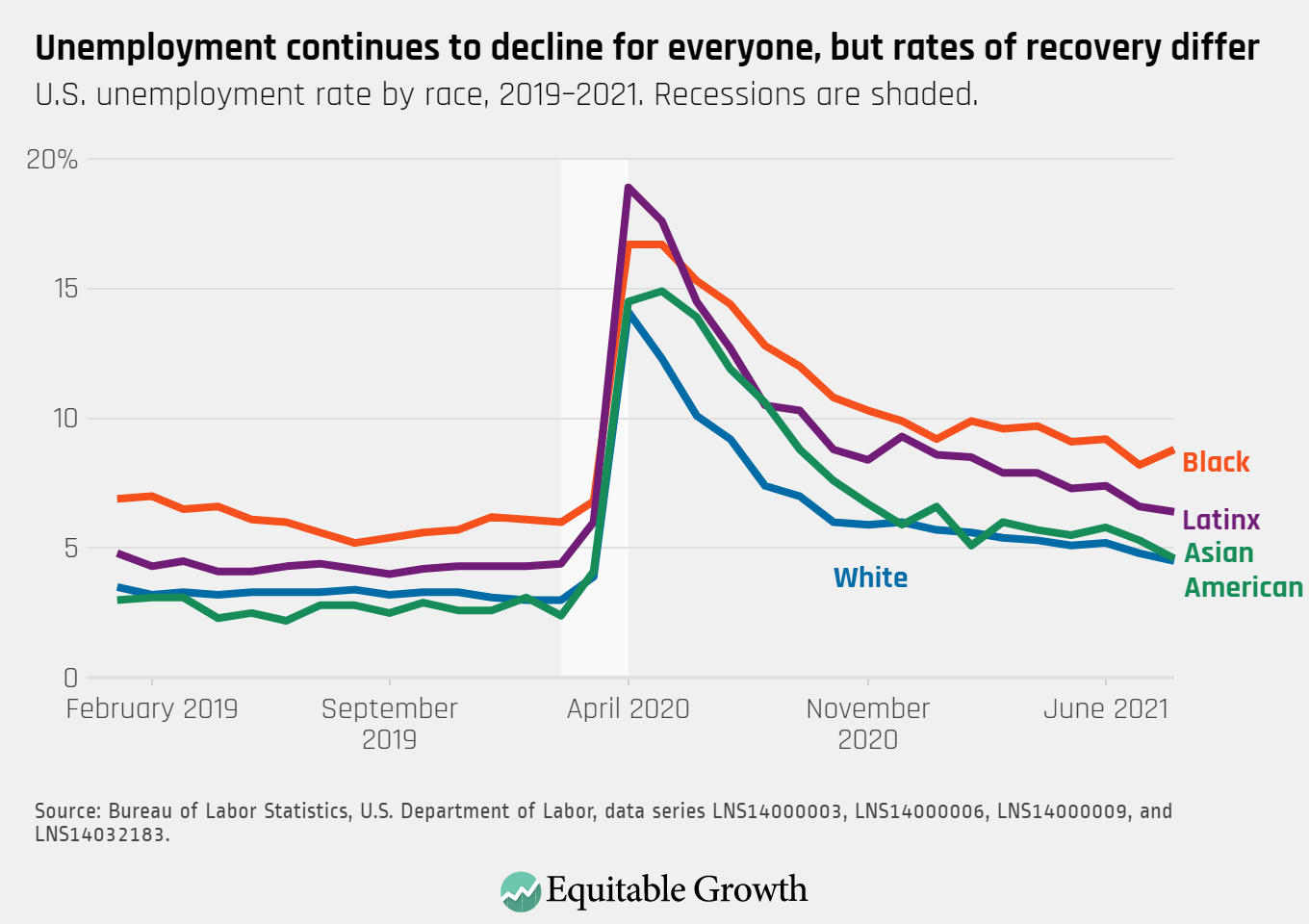
Unemployment continues to decline for everyone, but rates of recovery differ
The prime-age employment rate for both men and women rose in August, though neither rate has approached its level from immediately before the coronavirus recession.
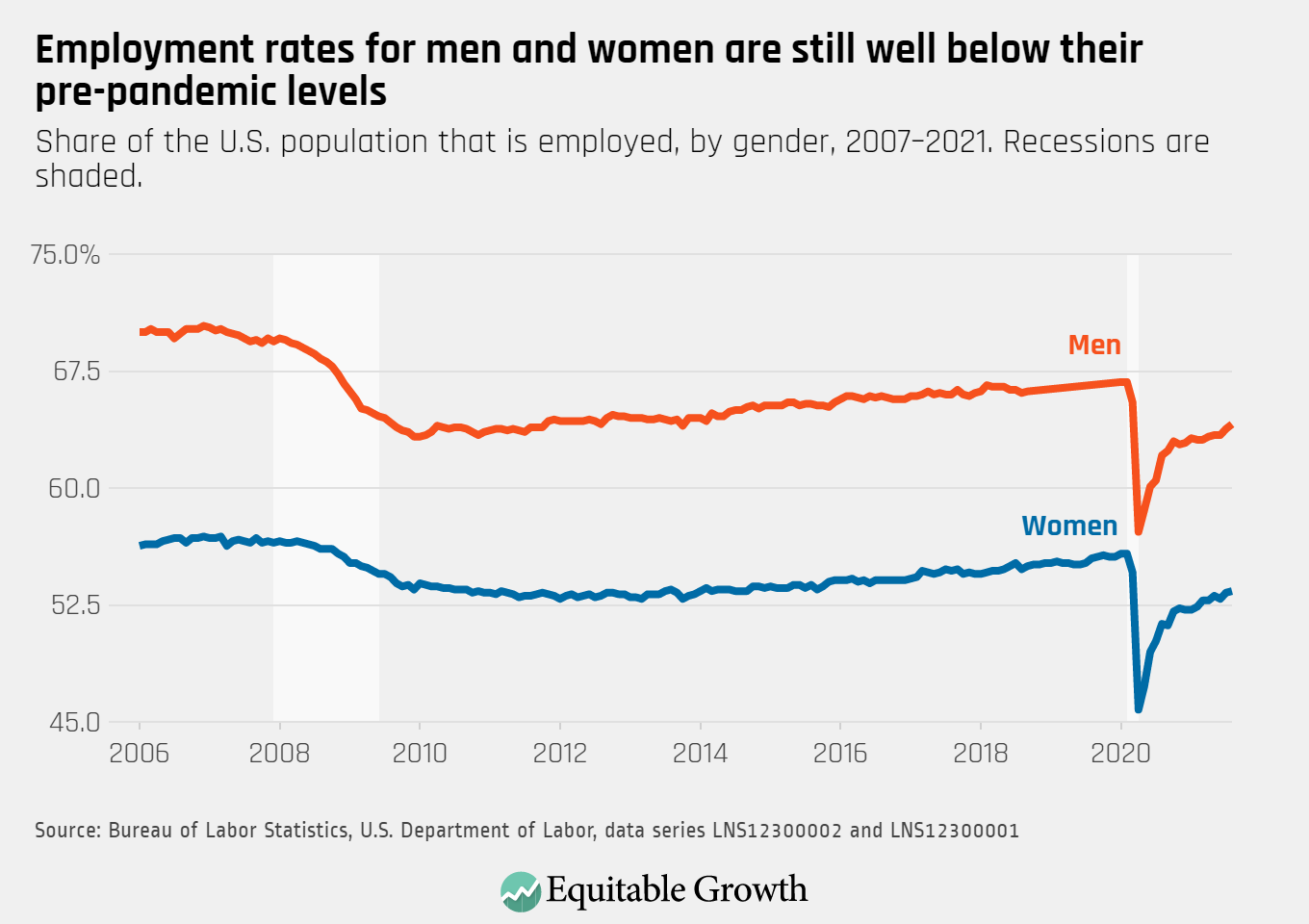
Employment rates for men and women are still well below their pre-pandemic levels
Top-line unemployment, also known as U-3, and a broader measure of labor underutilization, known as U-6, declined in August, as both overall unemployment and underemployment trended downward.
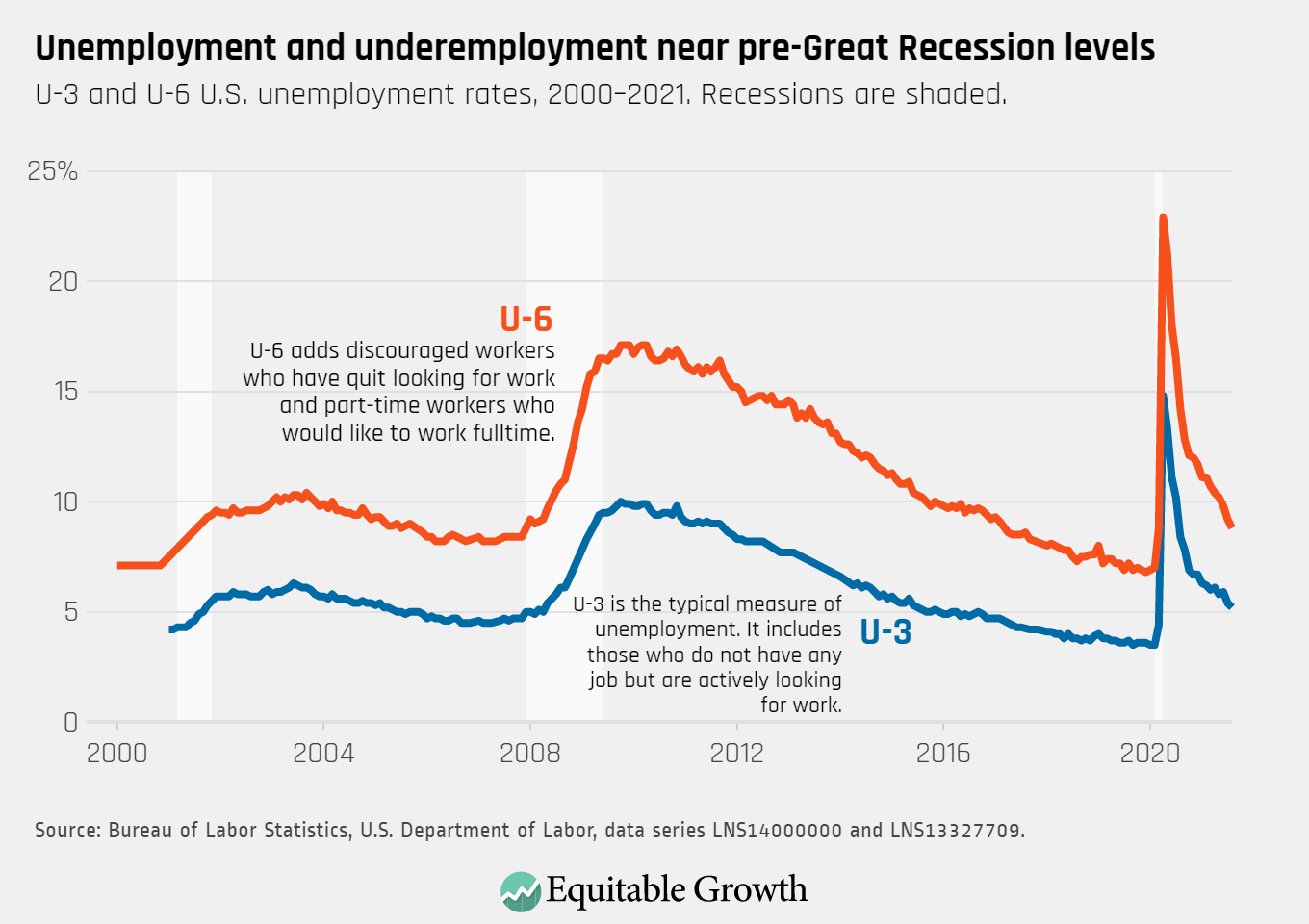
Unemployment and underemployment near pre-Great Recession levels
The share of unemployed workers who reentered the labor force continued to rise in August, while the share of those who lost their jobs declined. Employment is still elevated relative to pre-coronavirus recession levels.
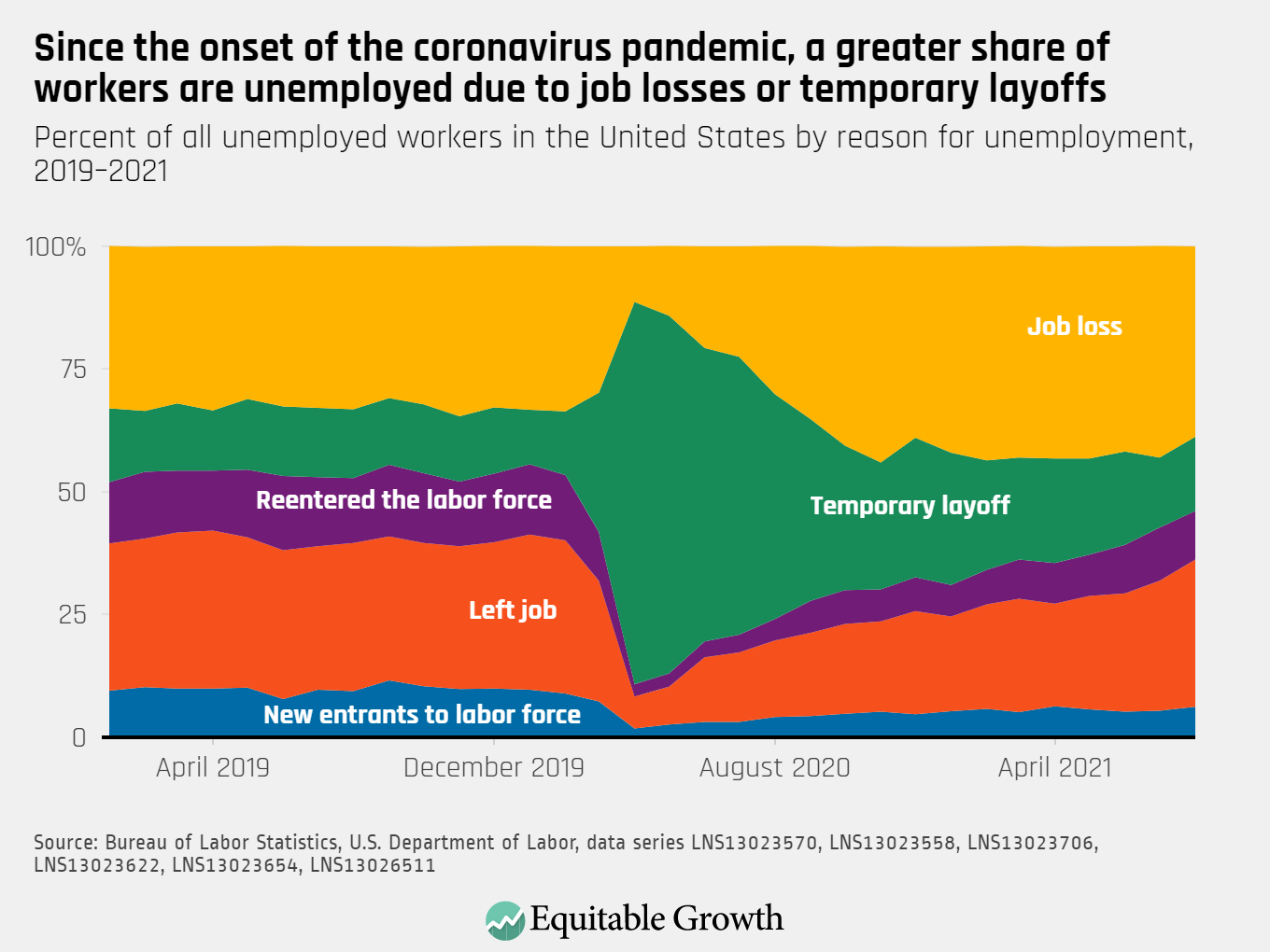
Percent of all unemployed workers in the United States by reason for unemployment, 2019–2021
Request for Proposals (RFPs) NOV 23, 2026
By: Equitable Growth

Reports NOV 23, 2026
By: Jacob Leibenluft, Gene Sperling

Essays NOV 20, 2026
By: Chris Clayton, Korin Davis
Get updates on our latest research, event announcements, and policy insights delivered straight to your inbox. Stay connected with the leading voices on equitable growth.


