



Academic
Request for Proposals: Research grants for early career scholars
Request for Proposals (RFPs) NOV 23, 2026
By: Equitable Growth
Economic Equity & Opportunity
 Browse All Resources
JUL 7, 2023

On July 7th, the U.S. Bureau of Labor Statistics released new data on the U.S. labor market during the month of June. Below are five graphs compiled by Equitable Growth staff highlighting important trends in the data.
The employment-rate for prime-age workers rose to 80.9 percent in June, it’s highest rate in more than two decades. The U.S. labor market added 209,000 jobs last month.
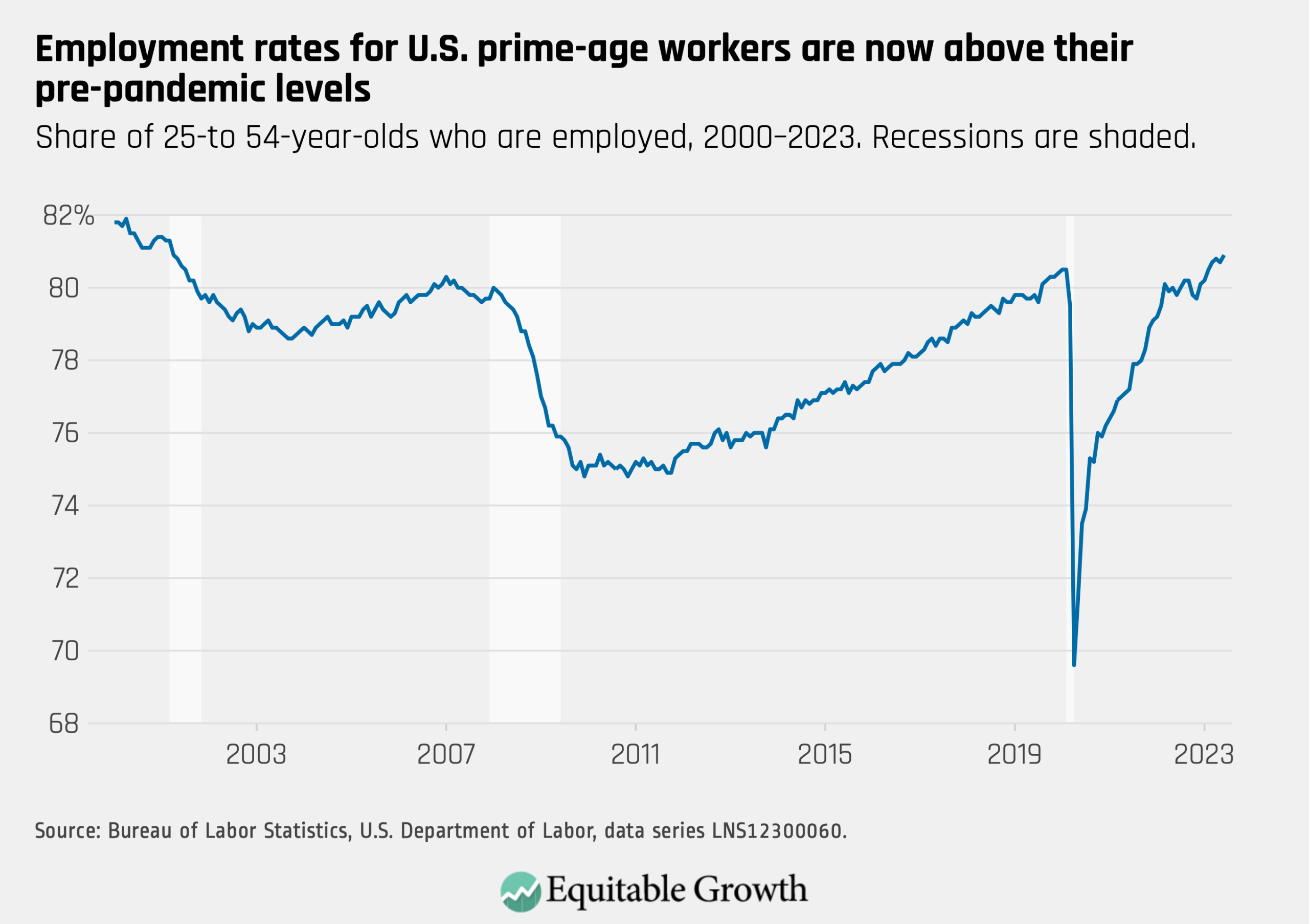
Employment rates for U.S. prime-age workers are now above their pre-pandemic levels
The national unemployment rate fell to 3.6 percent in June, with a decrease for White workers (3.1). Asian American workers (3.2), Black workers (6.0), and Latino workers (4.3) all experienced an uptick in their unemployment rate.
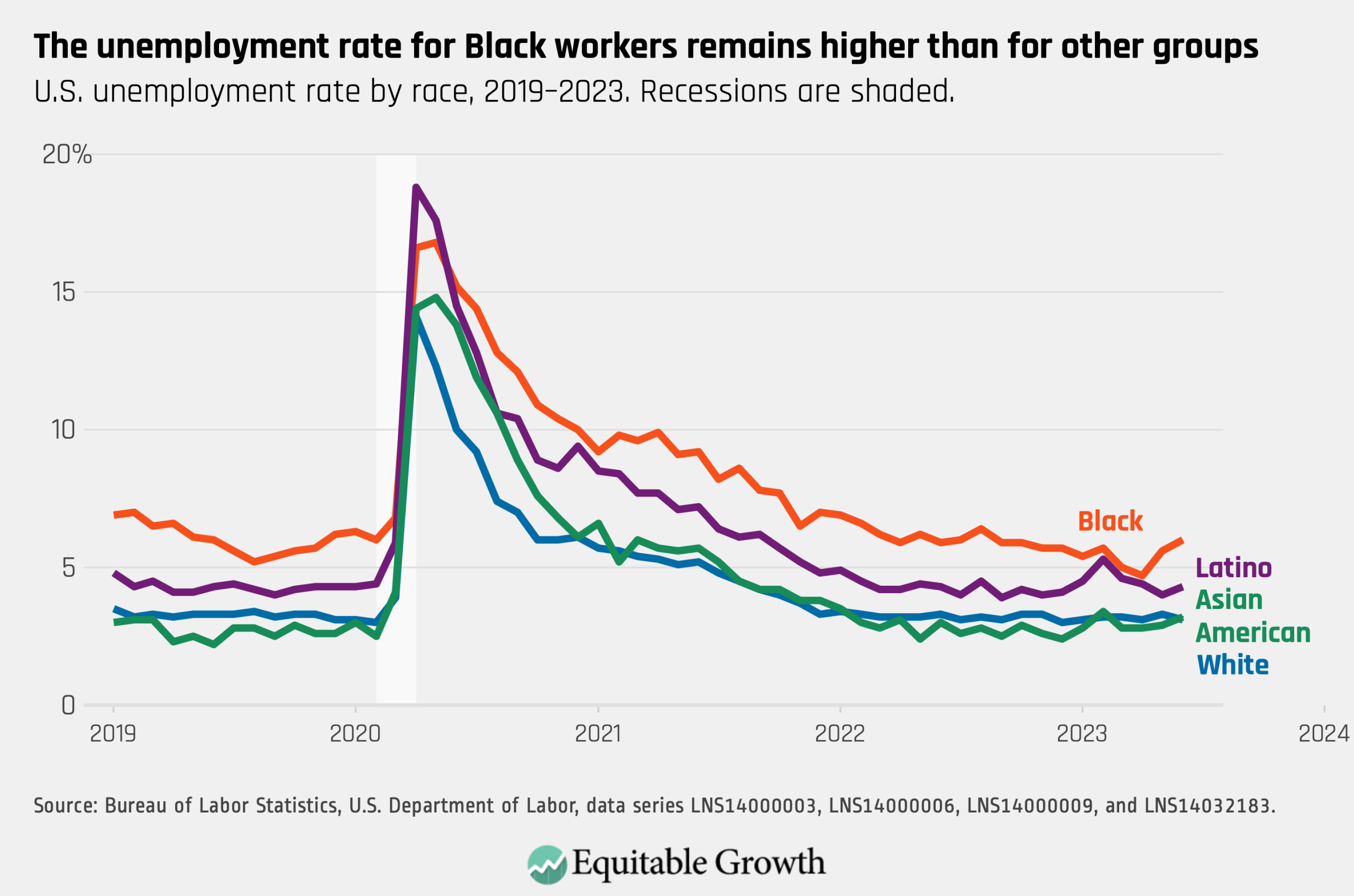
The unemployment rate for Black workers remains higher than for other groups
The U.S. economy experienced net employment losses in a few sectors, including retail and transportation and warehousing. Yet those losses were offset by important gains in industries such as construction, and the private education and health services sector, the latter of which added 73,000 jobs last month.
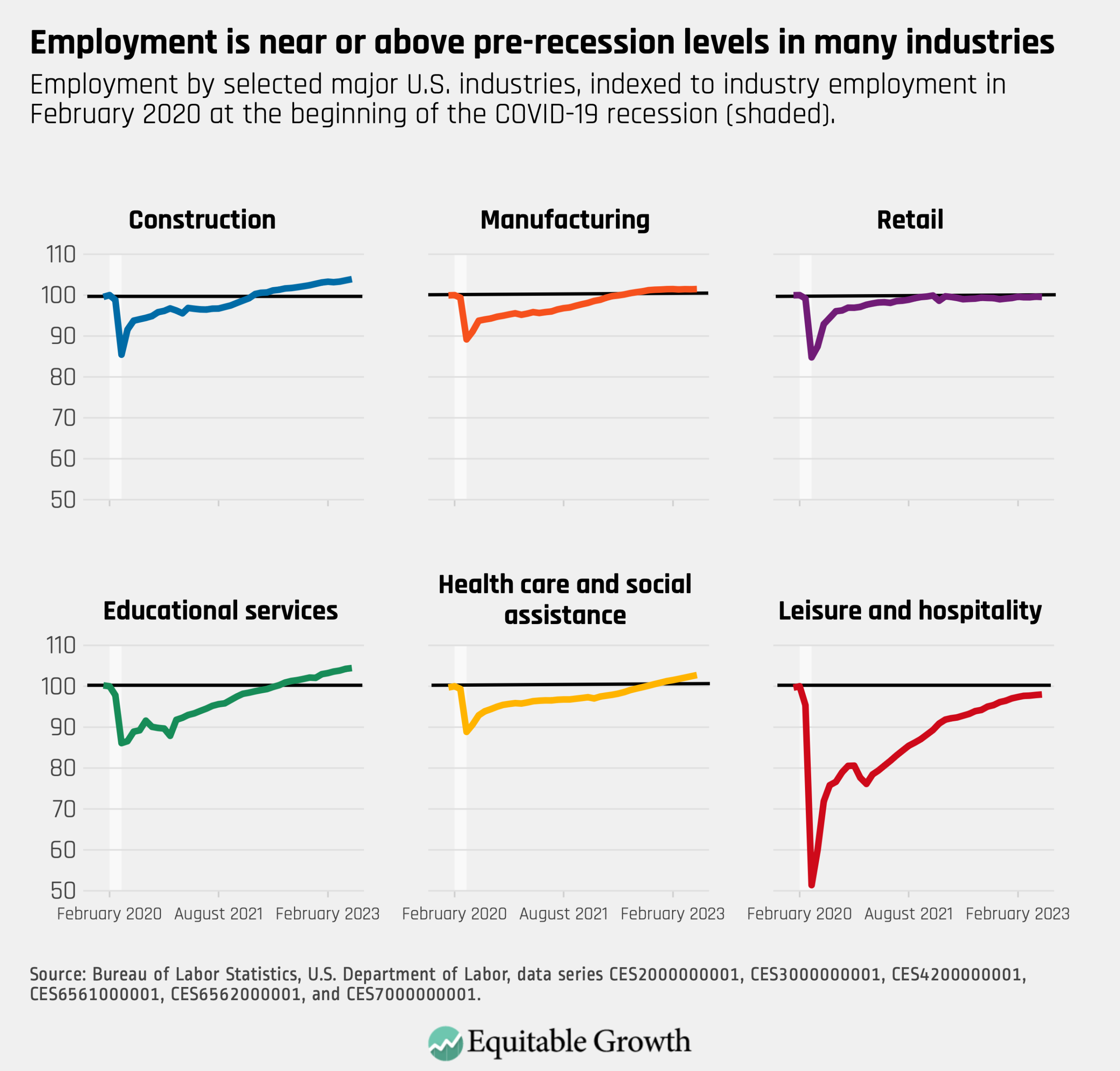
Employment is near or above pre-recession levels in many industries
Year-over-year nominal wage growth (not accounting for inflation) remained unchanged in June, with average hourly earnings growth at 4.4 percent over the past 12 months.
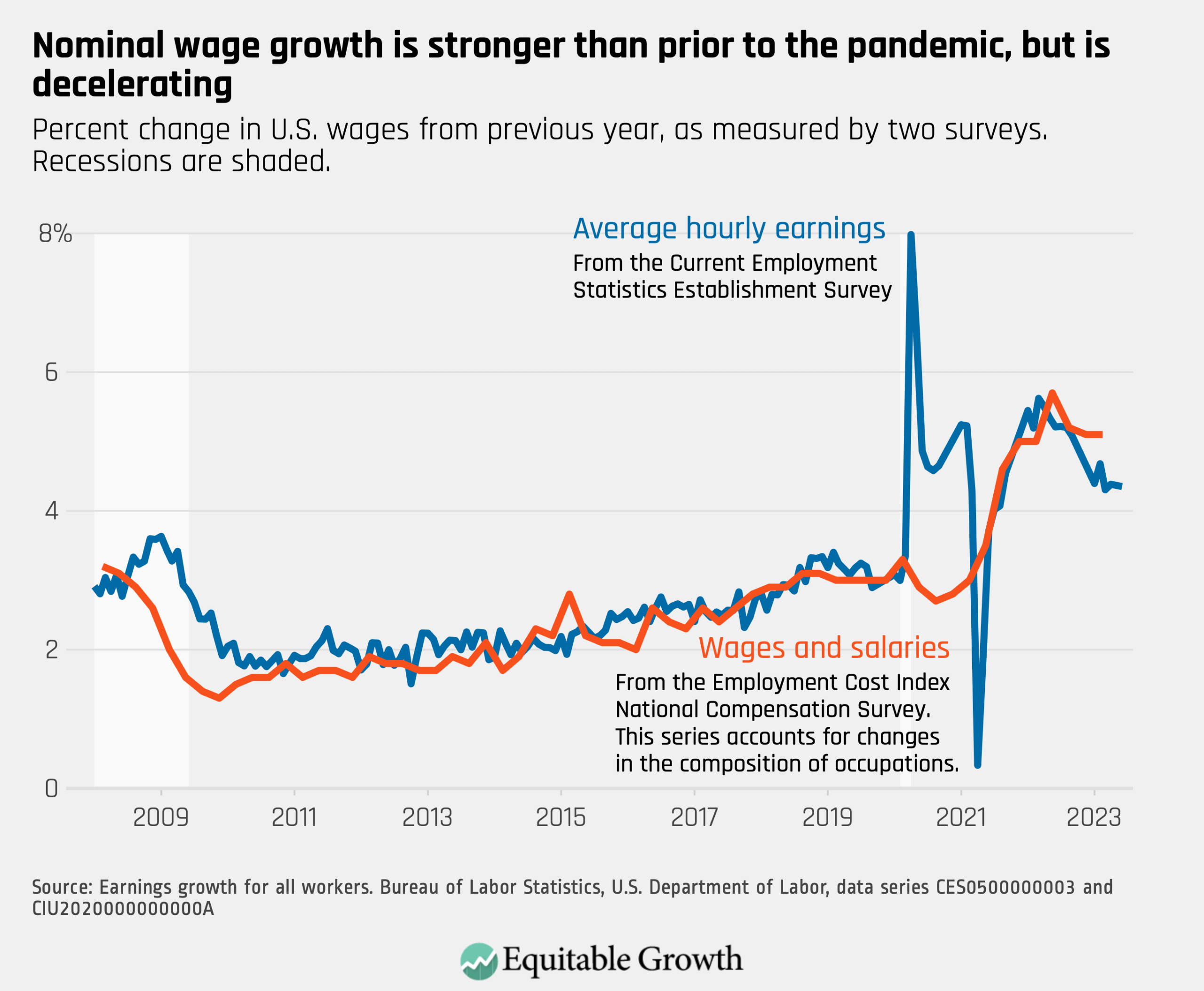
Nominal wage growth is stronger than prior to the pandemic, but is decelerating
The U.S. public sector added 60,000 jobs last month. Unlike the private sector, however, public-sector employment has yet to fully recover from the COVID-19 recession.
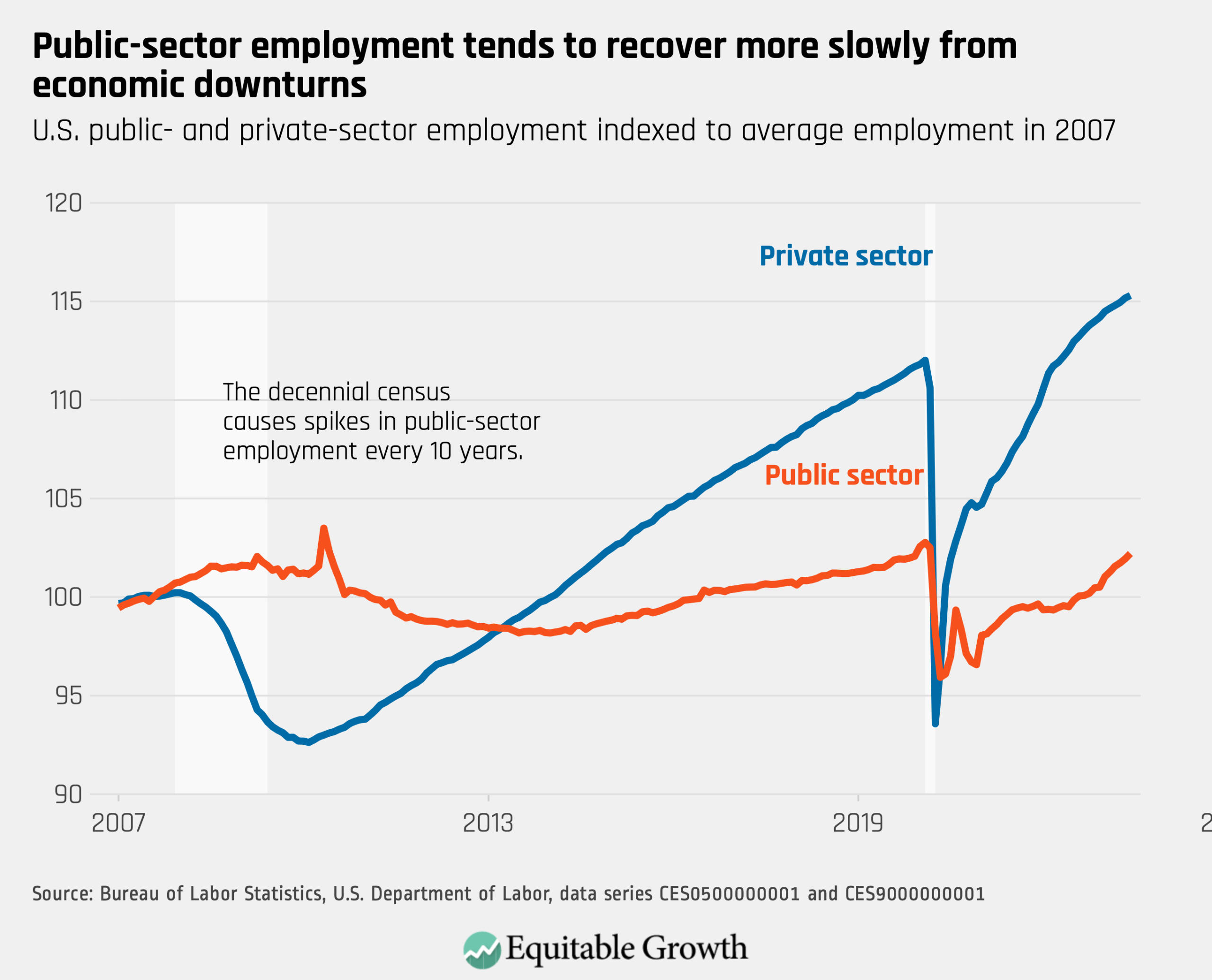
Public-sector employment tends to recover more slowly from economic downturns
Request for Proposals (RFPs) NOV 23, 2026
By: Equitable Growth

Reports NOV 23, 2026
By: Jacob Leibenluft, Gene Sperling

Essays NOV 20, 2026
By: Chris Clayton, Korin Davis
Get updates on our latest research, event announcements, and policy insights delivered straight to your inbox. Stay connected with the leading voices on equitable growth.


