


Equitable Growth’s “Econ 101” convening on Capitol Hill busts debt myths and charts a path ahead for the incoming 120th U.S. Congress
Blog NOV 24, 2026
By: Christopher Bangert-Drowns
JUN 14, 2021
Equitable Growth is committed to building a community of scholars working to understand how inequality affects broadly shared growth and stability. To that end, we have created the monthly series, “Expert Focus.” This series highlights scholars in the Equitable Growth network and beyond who are at the frontier of social science research. We encourage you to learn more about both the researchers featured below, those featured in prior installments, and our broader network of experts.
The Washington Center for Equitable Growth and Groundwork Collaborative will co-host an event titled “Data Infrastructure for the 21st Century: A Focus on Racial Equity” (register here (opens in a new tab)) on June 15. This latest installment of “Expert Focus” highlights the scholars who are participating in this virtual event and who are interested in racial equity and data disaggregation. Data are ever more urgent to address both scientific research and policy needs, exemplified by the establishment of the Equitable Data Working Group (opens in a new tab) in the Biden administration.
Scholars and organizations are also calling for a focus on racial and gender equity and the use of categories such as race, gender, and ethnicity, along with other social and demographic factors, to be central goals in disaggregating data and giving us a better picture of how our economy is doing. To learn more about the opportunities to better reflect diversity in the data, join us for the event (register here (opens in a new tab)). Among the panelists at tomorrow’s event are Rhonda Sharpe and Marie Mora, both of whom were featured in past installments of Expert Focus. Read on to see who else will be speaking at our event.
University of California, Los Angeles
Randall Akee (opens in a new tab) is an associate professor in the Department of Public Policy and American Indian Studies at the University of California, Los Angeles. He serves on the National Advisory Council on Race, Ethnic, and Other Populations at the U.S. Census Bureau. In 2019, Akee and colleagues launched the Association for Economic Research of Indigenous Peoples (opens in a new tab), and he was recently profiled (opens in a new tab) by the American Economic Association Committee on the Status of Minority Groups in the Economics Profession (opens in a new tab), which speaks to his longstanding commitment to support and advance underrepresented groups in economics. For the past decade, Akee has argued for the disaggregation of data. In 2021, Akee, along with Marcus Casey, another Equitable Growth grantee, highlighted the inadequate sample sizes in some federal surveys (opens in a new tab). Also, Akee and K.J. Ward of The Brookings Institution commented on how inadequate these surveys are at capturing hidden activities that are a result of systemic racism (opens in a new tab). Much of Akee’s own academic research uses administrative data or linked administrative or survey data to disaggregate economic outcomes and examine the current and historic examples of discrimination.
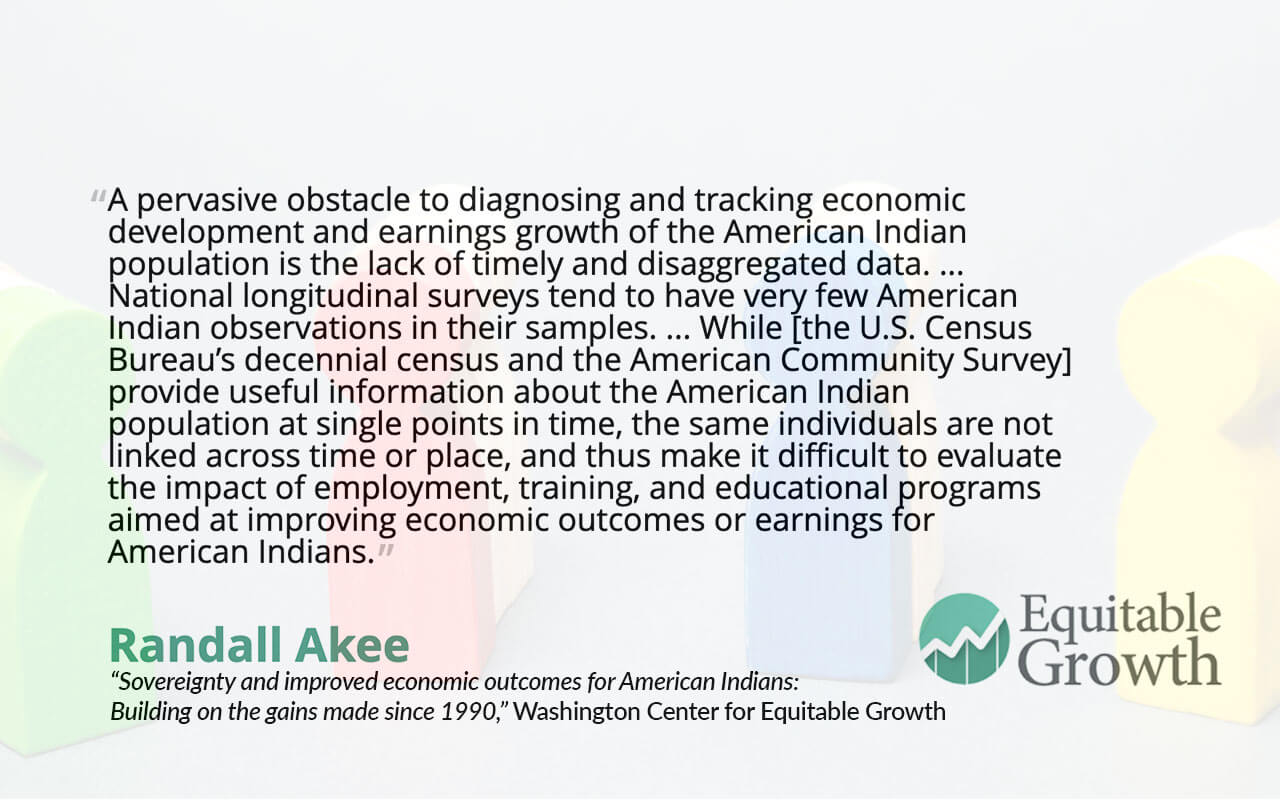
Quote from Randy Akee on the American Indian population and disaggregated data
Georgetown University
Corey Fields (opens in a new tab) is an associate professor and the Idol Family Chair of the Sociology Department at Georgetown University. Fields’ research centers on the role of identity at individual and collective levels and how these structure social life. By drawing on a cultural perspective, his work emphasizes the role of meaning and how identities are enacted in specific social contexts. In particular, Fields brings expertise about how methods and theories in sociology and in less structured or differently structured data collection can help to better capture the lived experiences of residents and families in the United States. Often, this information goes unnoticed in data research. For instance, Fields is part of a joint initiative of Stanford University and Princeton University called the American Voices Project (opens in a new tab), a national survey in the United States. He is currently using these data to examine racial differences in individuals’ experiences of the coronavirus pandemic and protests against police injustice. In a 2015 Social Currents article, Fields and other scholars (opens in a new tab) explore how variation within ethnoracial “groups” presents a challenge to researchers who must adapt ethnographic and survey research practices to better understand the landscape for individuals and their families in the United States and the implications for issues relative to a person’s identity.
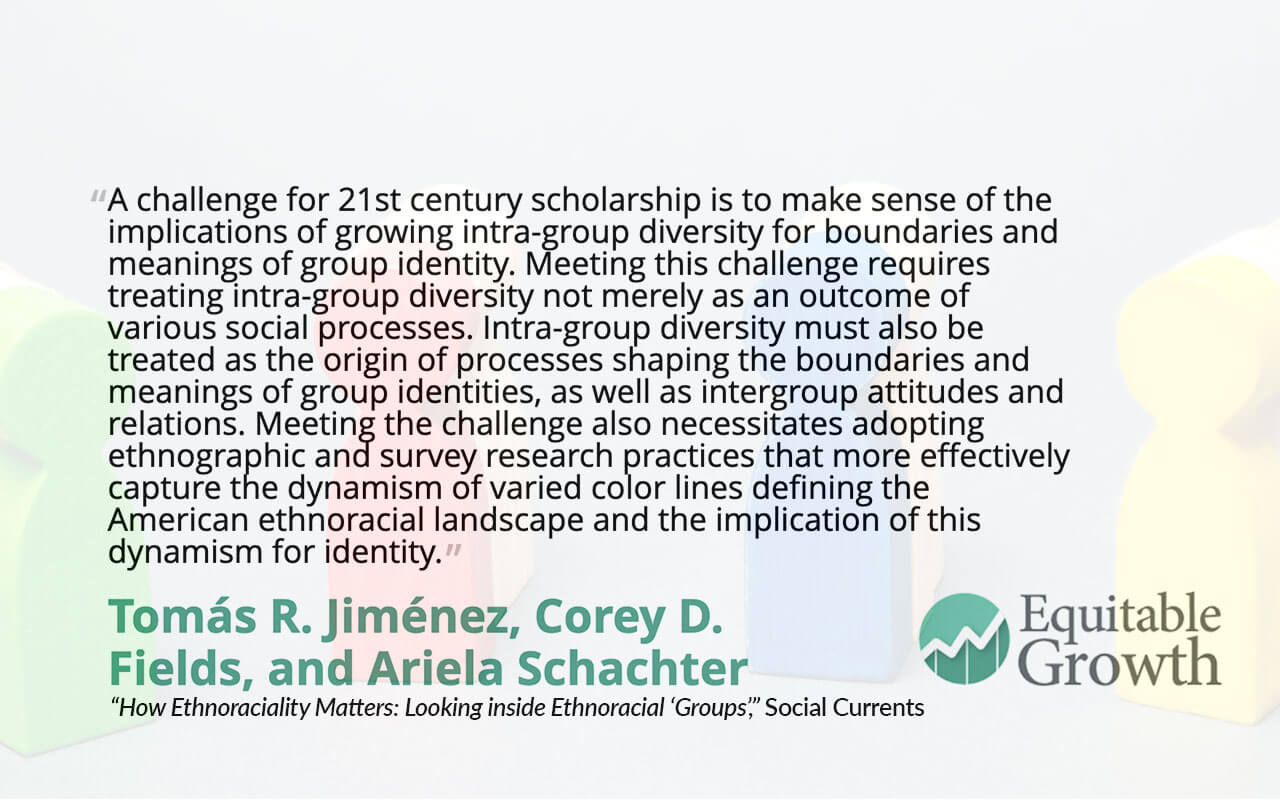
Quote from Corey Fields and co-authors on intra-group diversity and group identity
Groundwork Collaborative
Rakeen Mabud (opens in a new tab) is the managing director of policy and research and chief economist at the Groundwork Collaborative (opens in a new tab). Mabud is an expert on economic inequality and the 21st century workplace, with a particular focus on how structural factors such as racism and sexism perpetuate inequities. She has written extensively (opens in a new tab) about the need to use disaggregated data to guide policy decisions. Most recently, Mabud was the senior director of research and strategy at TIME’S UP Foundation, where she spearheaded the organization’s signature Time’s Up, Measure Up initiative (opens in a new tab), a 5-year initiative to study and report on the impact of gender and racial inequities. The initiative seeks to fill critical knowledge gaps, drawing on quantitative data, qualitative research, and personal stories to develop a fuller picture of the myriad experiences of women in the U.S. economy. Mabud’s recent research prioritizes the disaggregation of data by race and gender. In 2020, a national survey (opens in a new tab) she fielded, along with partners at the National Employment Law Project, Cornell University’s ILR School, and Color of Change, examined worker experiences with the coronavirus pandemic around the country, with a particular focus on underpaid and front-line workers, Black and Latino workers, and women workers. This survey oversampled Black and Latinx respondents to disaggregate data and capture demographic variation (for details, see the report’s findings (opens in a new tab)).
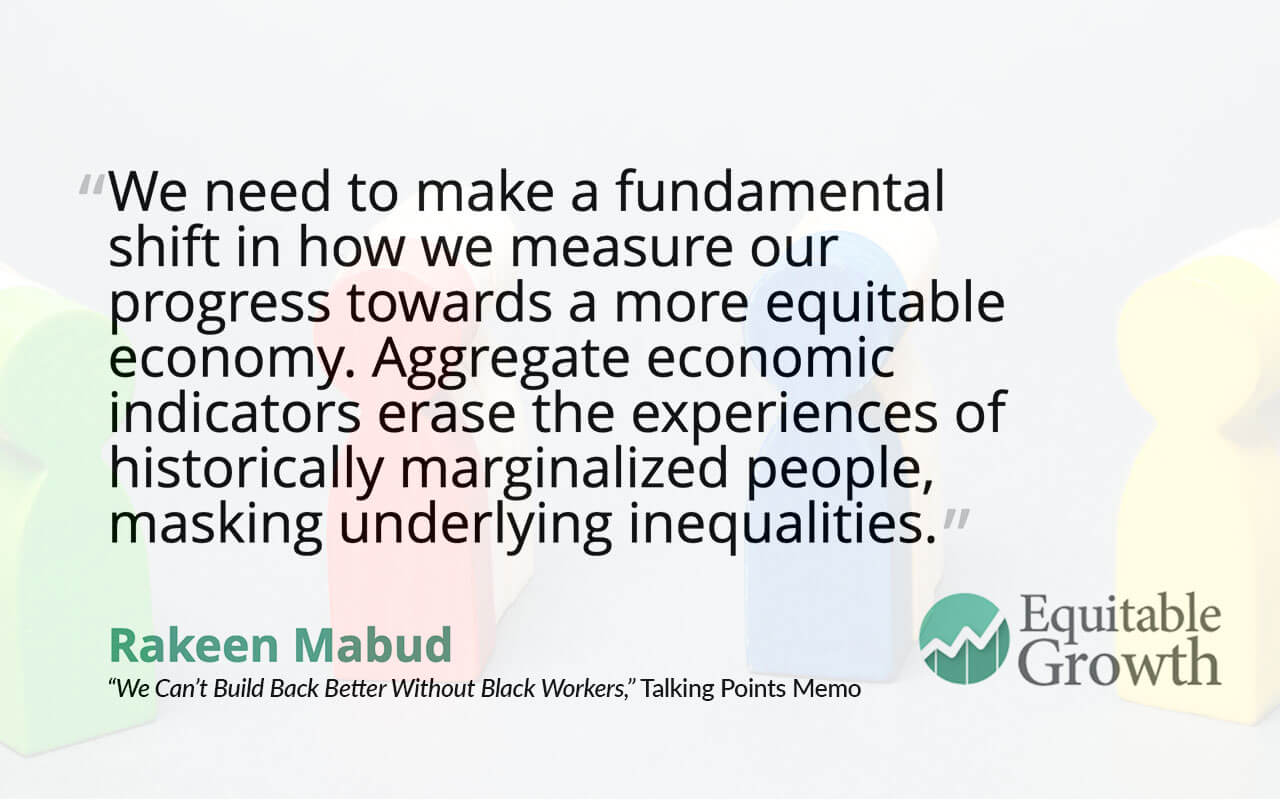
Quote from Rakeen Mabud on disaggregating data
PolicyLink
Tracey Ross (opens in a new tab) is the director for federal policy and narrative change at PolicyLink (opens in a new tab). With a focus on racial equity and placed-based strategies for economic inclusion, Ross led the organization’s All-in Cities (opens in a new tab) initiative, working with cities across the country to adopt policies and practices to ensure one’s ZIP code does not determine their life outcomes. Recently, PolicyLink released a report (opens in a new tab) detailing 10 priorities for advancing racial equity through the recently enacted American Rescue Plan. Two priorities in this report are to explicitly name racial equity as a goal, with specific targets to produce results at scale, and to track the disaggregation of data to ensure accountability to equity goals. In 2017, PolicyLink organized a series of convenings with support from the Robert Wood Johnson Foundation, which informed the report “Counting a Diverse Nation: Disaggregating Data on Race and Ethnicity to Advance a Culture of Health (opens in a new tab).” Prior to joining PolicyLink, Ross worked at the Center for American Progress and focused on urban poverty and environmental justice, and at Living Cities, where she focused on building a green economy. Ross began her career in the offices of former U.S. Sen. Hillary Rodham Clinton (D-NY) and former U.S. Sen. Ken Salazar (D-CO).
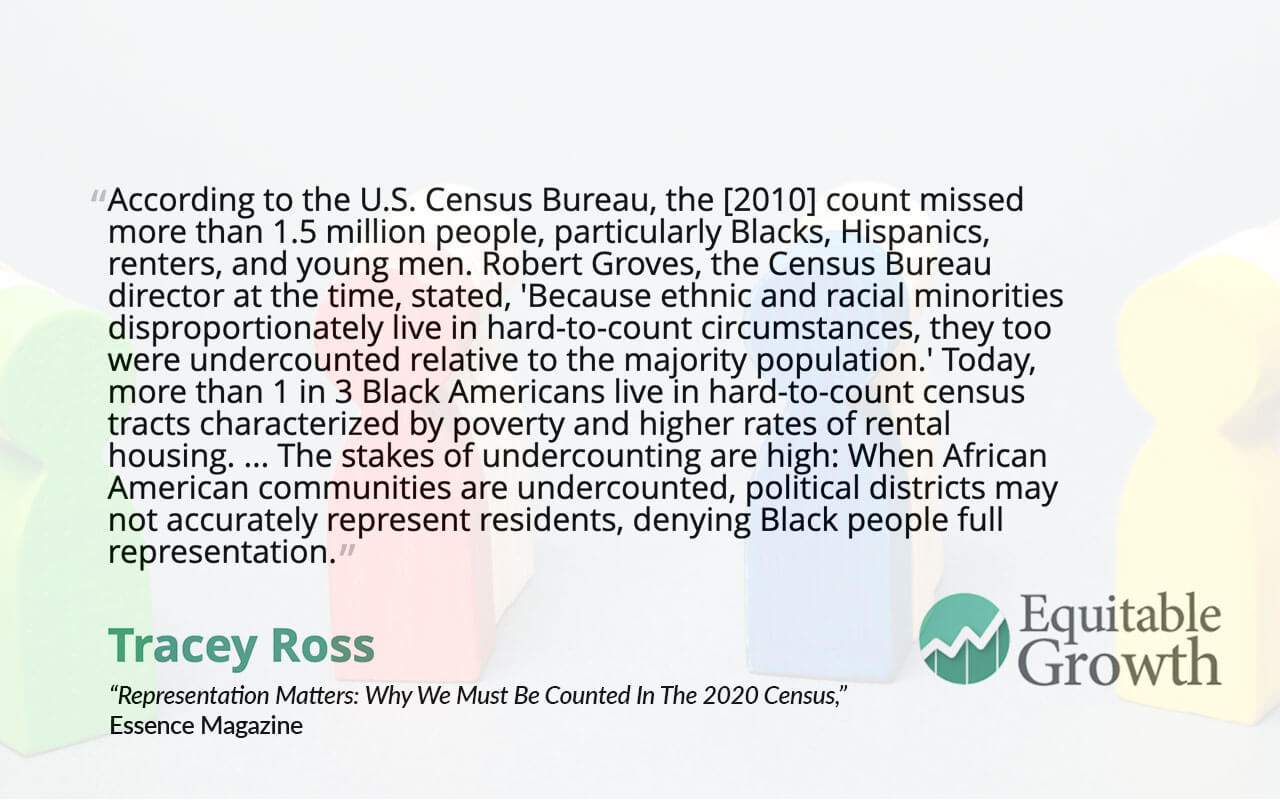
Quote from Tracey Ross on undercounting minority groups in the U.S. census
Chief Economist, Office of Management and Budget
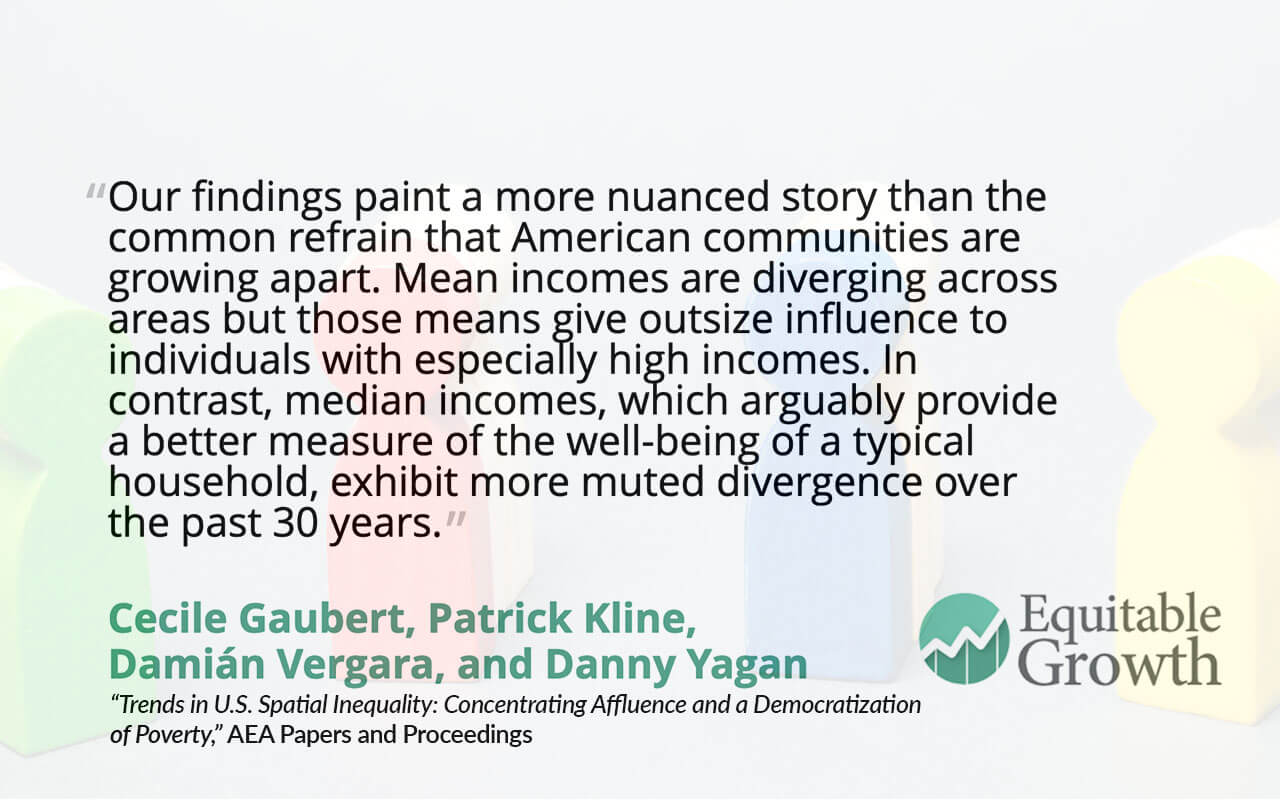
Danny Yagan (opens in a new tab) is the chief economist at the Office of Management and Budget and a participant in the Biden administration’s Equitable Data Working Group (opens in a new tab). Yagan is currently on leave from the University of California, Berkeley, where he is an associate professor (opens in a new tab) in the Department of Economics. Yagan’s research has focused on a variety of topics, including U.S. tax policy, business investment, recession recovery, income inequality, and upward mobility. In 2017, a research project looked at persistent lags in the workforce (opens in a new tab) after the Great Recession of 2007–2009. Over the years, Yagan has been awarded multiple grants from Equitable Growth related to wealth inequality and intergenerational mobility, including work done with former Equitable Growth Steering Committee members Raj Chetty and Emmanuel Saez.
Quote from Danny Yagan and co-authors on incomes in American communities
Equitable Growth is building a network of experts across disciplines and at various stages in their career who can exchange ideas and ensure that research on inequality and broadly shared growth is relevant, accessible, and informative to both the policymaking process and future research agendas. Explore the ways you can connect with our network or take advantage of the support we offer here.
Blog NOV 24, 2026
By: Christopher Bangert-Drowns
Request for Proposals (RFPs) NOV 23, 2026
By: Equitable Growth
Reports NOV 23, 2026
By: Jacob Leibenluft, Gene Sperling
Get updates on our latest research, event announcements, and policy insights delivered straight to your inbox. Stay connected with the leading voices on equitable growth.