



Academic
Request for Proposals: Research grants for early career scholars
Request for Proposals (RFPs) NOV 23, 2026
By: Equitable Growth
Economic Equity & Opportunity
 Browse All Resources
AUG 9, 2021

Every month the U.S. Bureau of Labor Statistics releases data on hiring, firing, and other labor market flows from the Job Openings and Labor Turnover Survey, better known as JOLTS. Today, the BLS released the latest data for June 2021. This report doesn’t get as much attention as the monthly Employment Situation Report, but it contains useful information about the state of the U.S. labor market. Below are a few key graphs using data from the report.
The quits rate rose to 2.7 percent in June as 3.9 million workers quit their jobs.
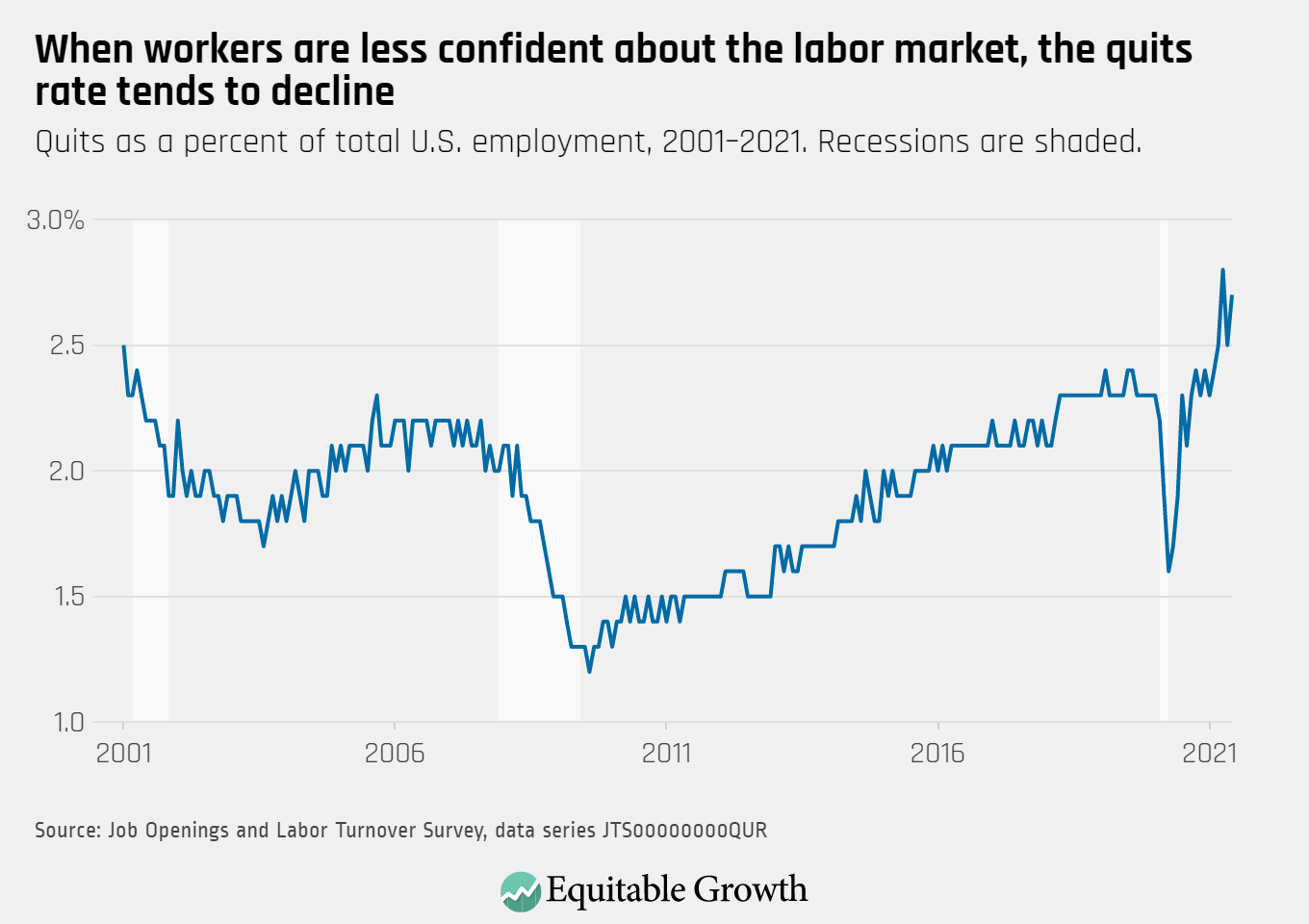
When workers are less confident about the labor market, the quits rate tends to decline
The vacancy yield increased slightly in June but remained low, as job openings reached a series high of 10.1 million and hires rose to 6.7 million.
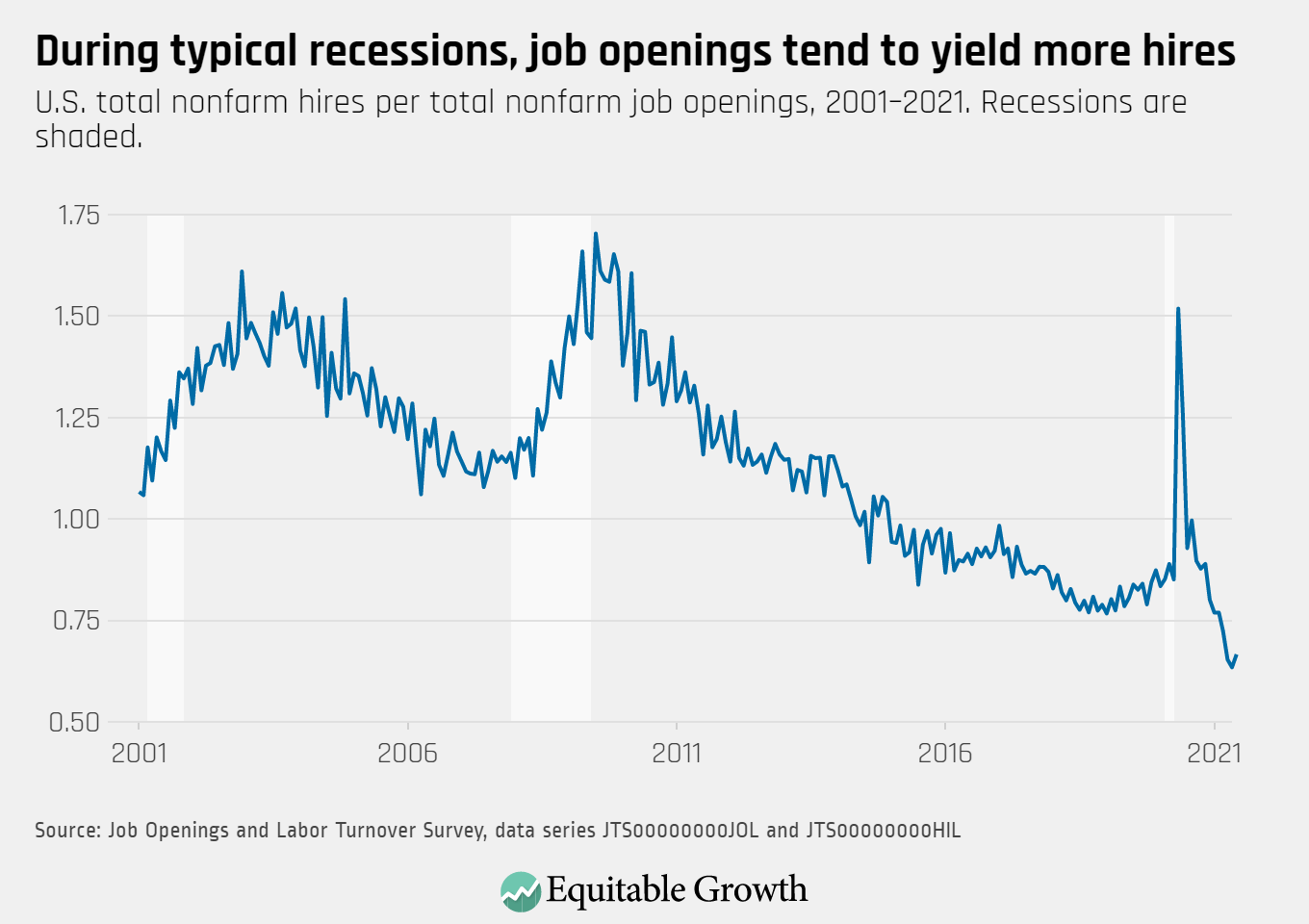
During typical recessions, job openings tend to yield more hires
The job openings rate increased to 6.5 percent in June, with job openings remaining particularly elevated for the manufacturing industry and for leisure and hospitality, but low for the financial activities sector.
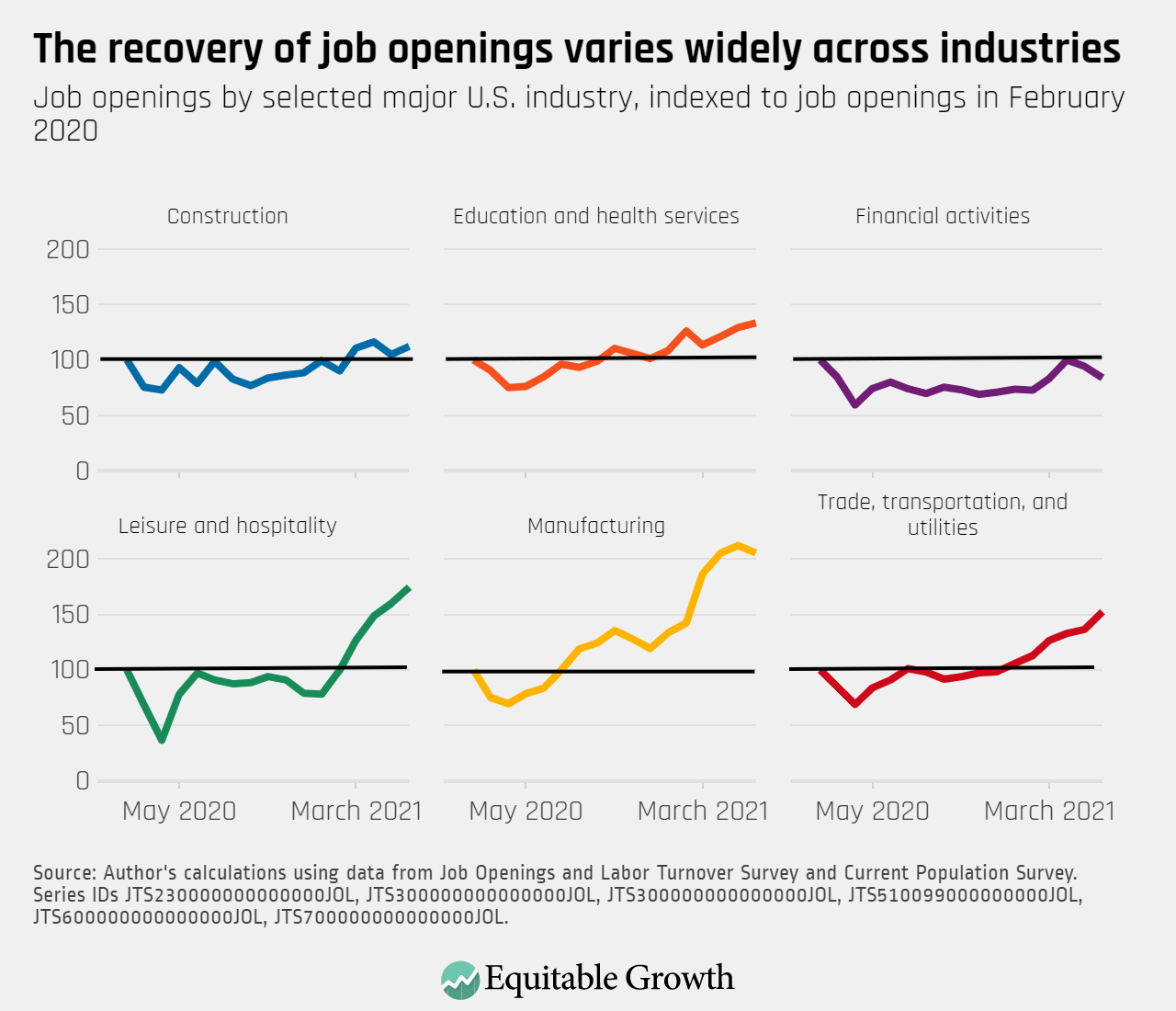
The recovery of job openings varies widely across industries
The ratio of unemployed workers to job openings decreased to 0.9 in June, approaching pre-coronavirus recession levels.
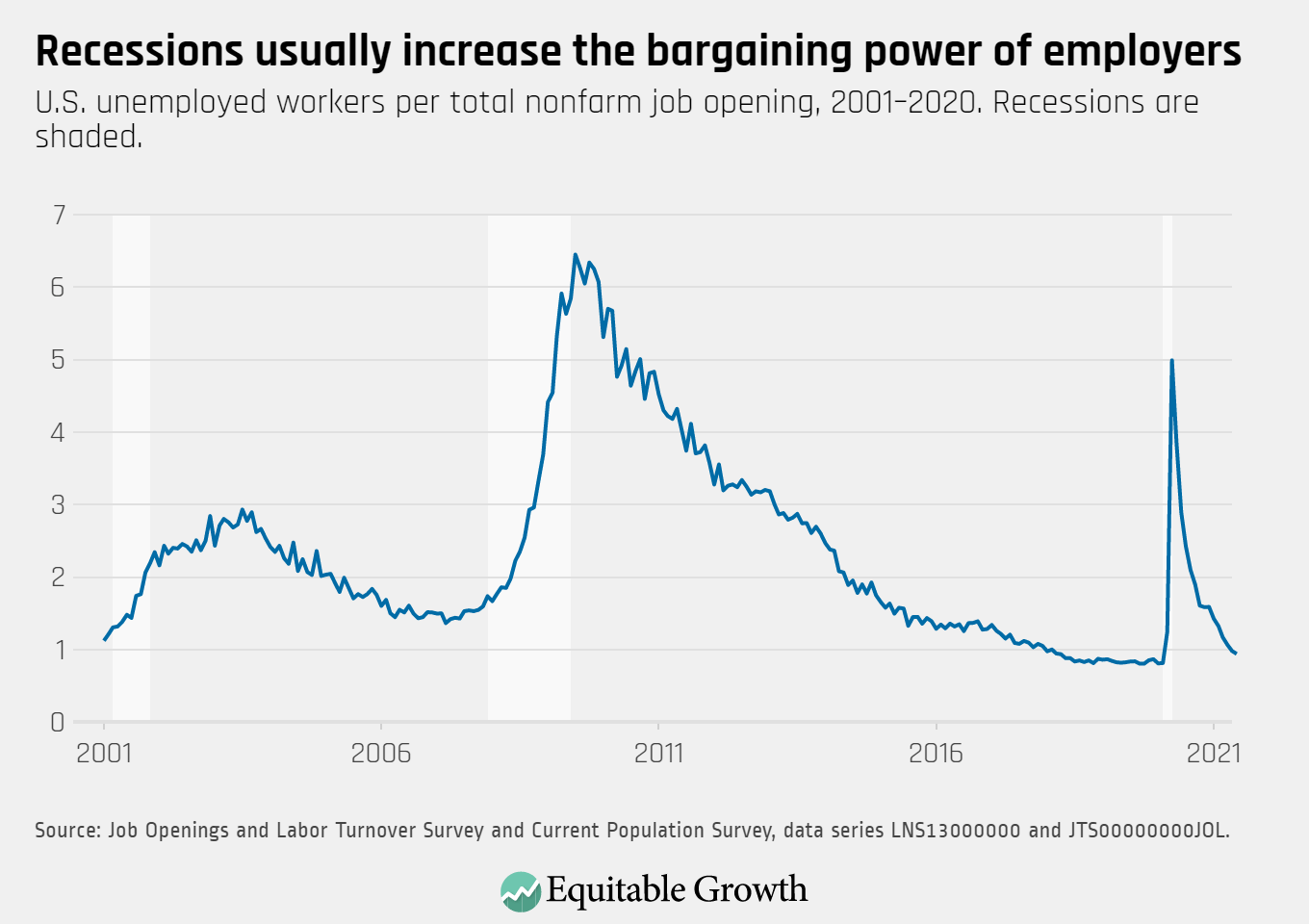
Recessions usually increase the bargaining power of employers
With a slight increase in the unemployment rate and the job openings rate rising to a series high, the Beveridge Curve continues to move in atypical territory, compared to previous business cycles.
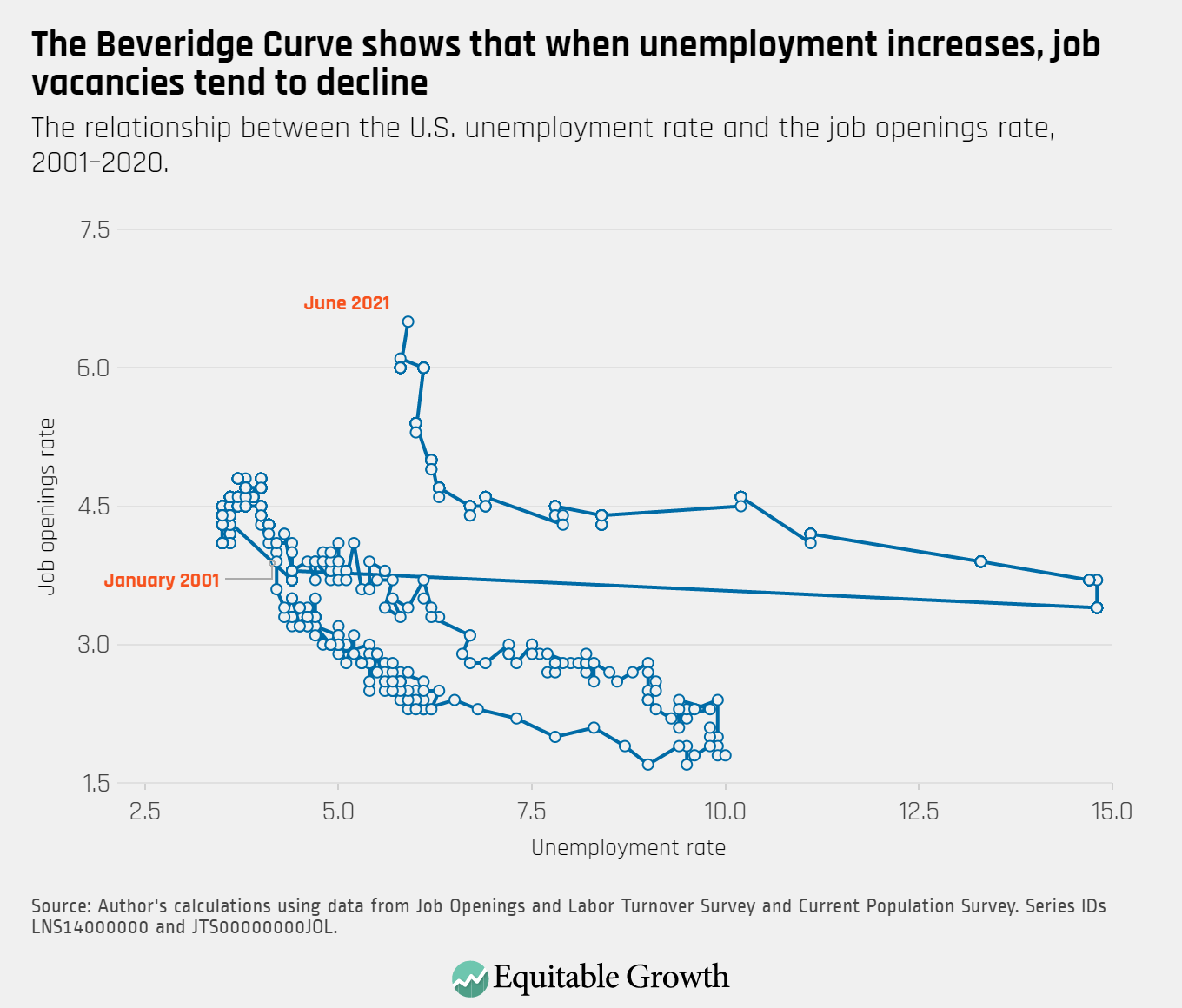
The Beveridge Curve shows that when unemployment increases, job vacancies tend to decline
Request for Proposals (RFPs) NOV 23, 2026
By: Equitable Growth

Reports NOV 23, 2026
By: Jacob Leibenluft, Gene Sperling

Essays NOV 20, 2026
By: Chris Clayton, Korin Davis
Get updates on our latest research, event announcements, and policy insights delivered straight to your inbox. Stay connected with the leading voices on equitable growth.


