



Academic
Request for Proposals: Research grants for early career scholars
Request for Proposals (RFPs) NOV 23, 2026
By: Equitable Growth
Economic Equity & Opportunity
 Browse All Resources
NOV 10, 2020
By: Kate Bahn and Carmen Sanchez Cumming

Every month the U.S. Bureau of Labor Statistics releases data on hiring, firing, and other labor market flows from the Job Openings and Labor Turnover Survey, better known as JOLTS. Today, the BLS released the latest data for September 2020. This report doesn’t get as much attention as the monthly Employment Situation Report, but it contains useful information about the state of the U.S. labor market. Below are a few key graphs using data from the report.
The quits rate increased slightly to 2.1 percent in September, signaling stalled prospects for workers.
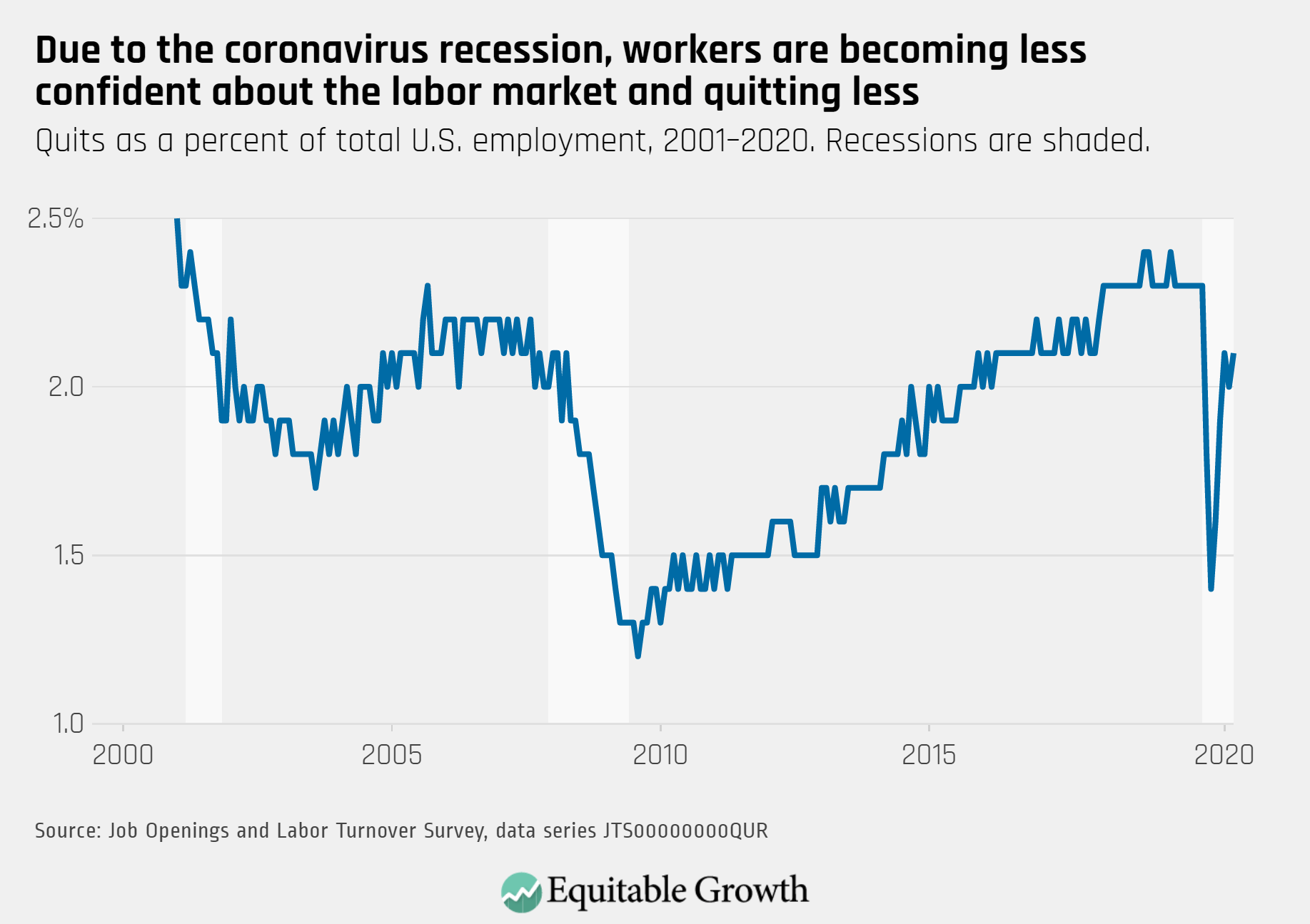
Due to the coronavirus recession, workers are becoming less confident about the labor market and quitting less
The vacancy yield was essentially unchanged in September, as the rate of job openings stayed at 4.3 percent and the rate of hires remained at 4.1 percent. Hires decreased significantly in the federal government due to a drop in demand for 2020 Census workers, but hires also fell in retail and educational services.
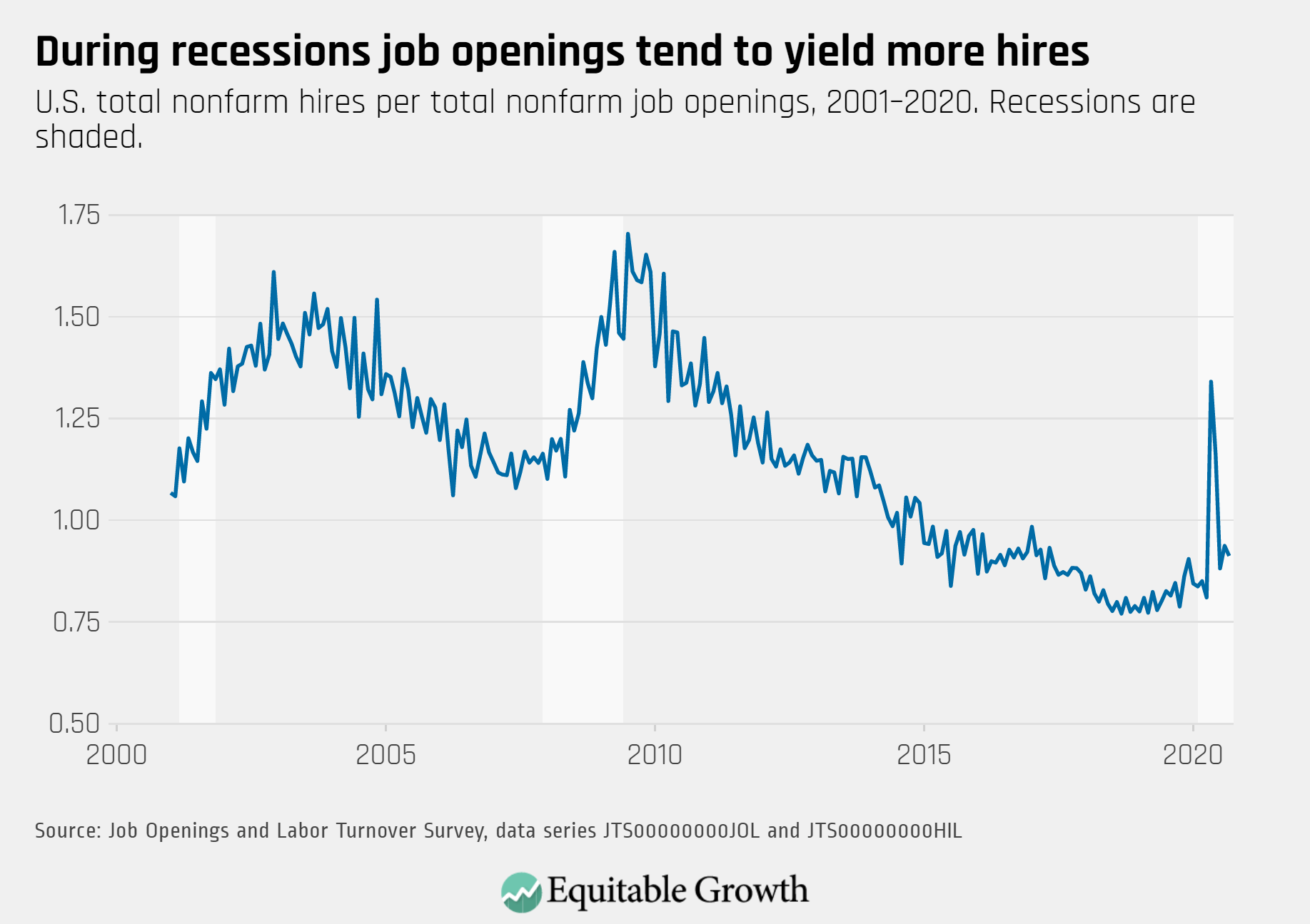
During recessions job openings tend to yield more hires
Since job openings remained unchanged and unemployment declined, the ratio of unemployed-worker-per-opening dropped slightly to 1.95.
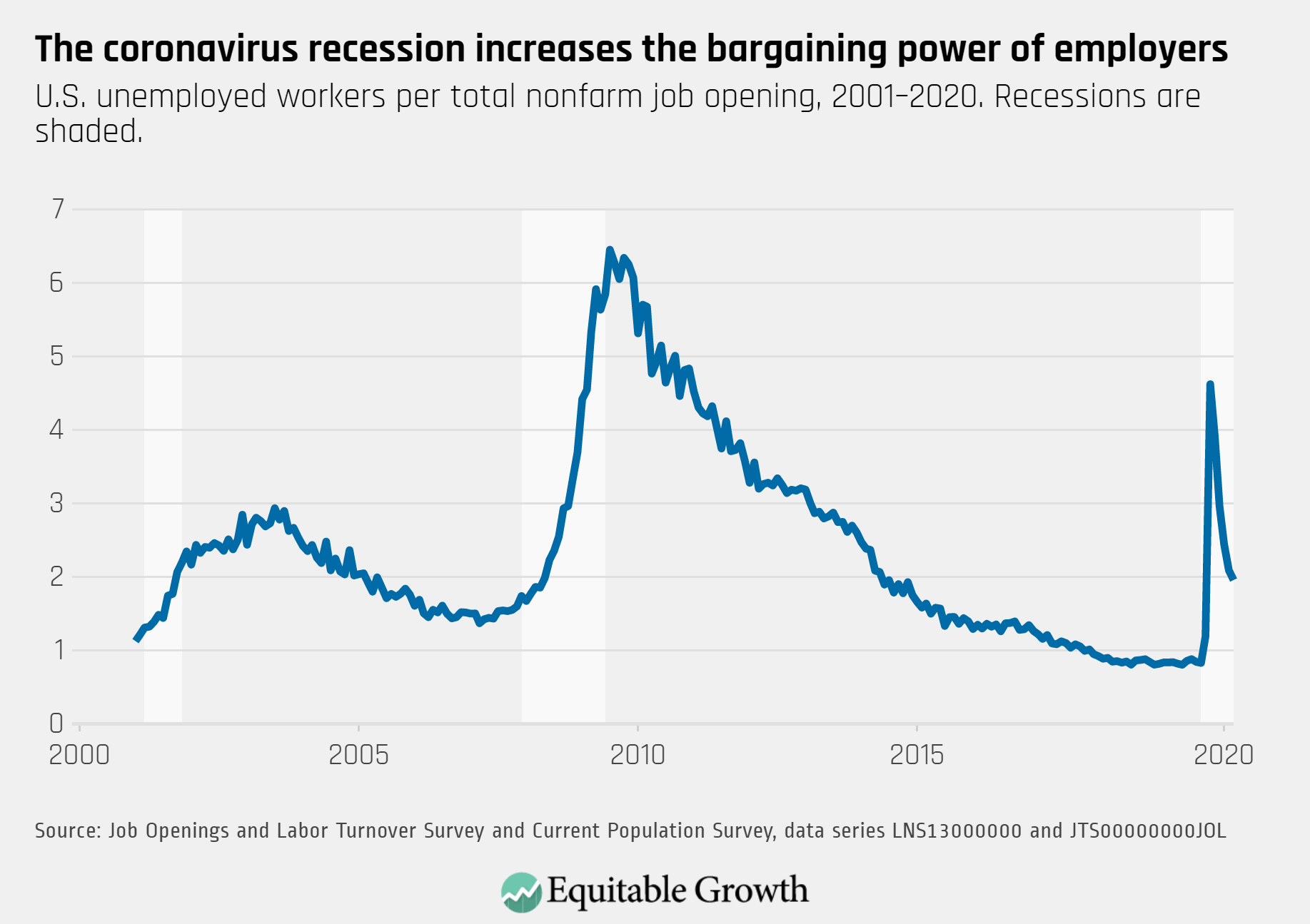
The coronavirus recession increases the bargaining power of employers
The Beveridge Curve continues to move closer to typical territory in September as unemployment declined, but job openings did not increase in the tenuous recovery.
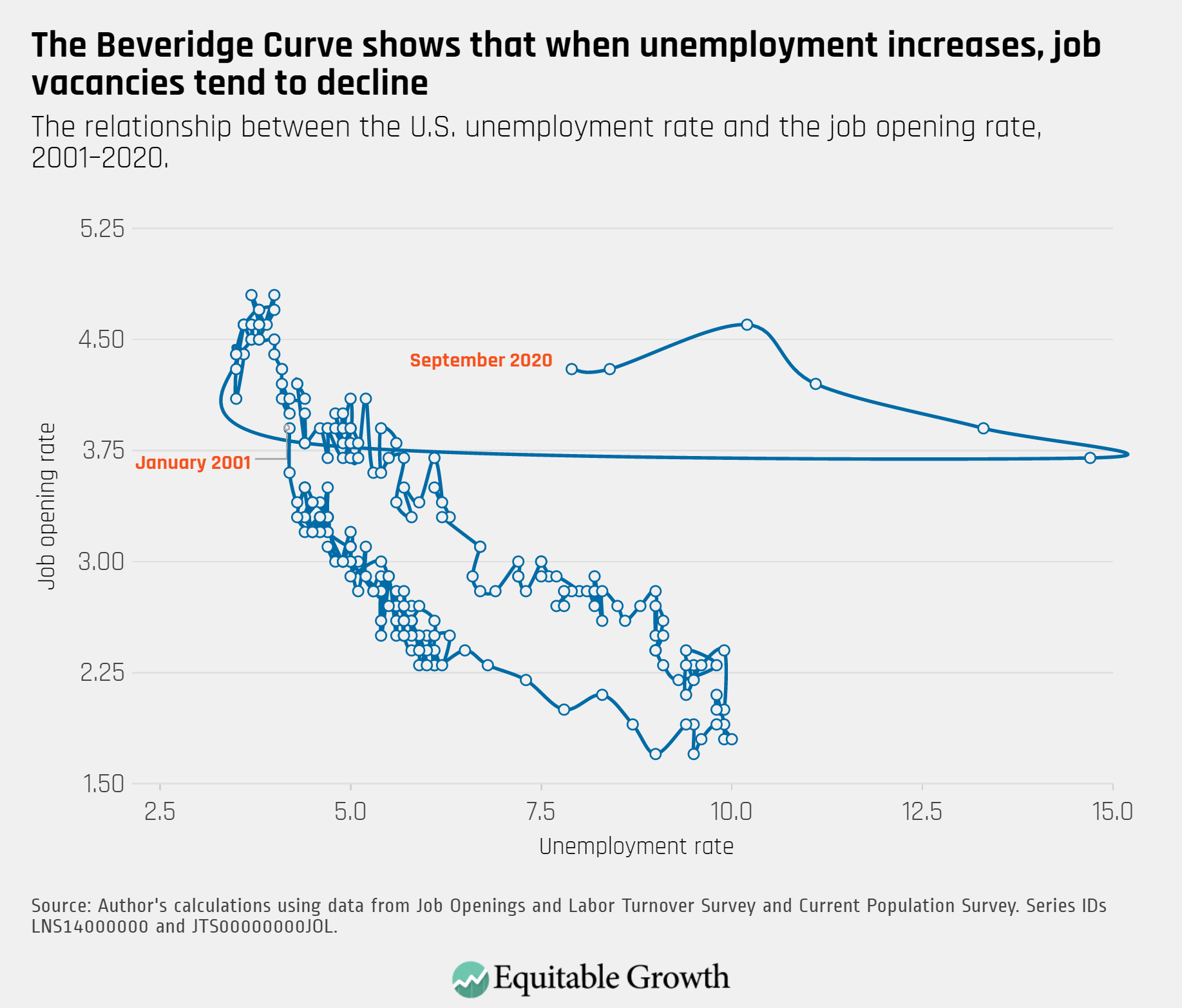
The Beveridge Curve shows that when unemployment increases, job vacancies tend to decline
Request for Proposals (RFPs) NOV 23, 2026
By: Equitable Growth

Reports NOV 23, 2026
By: Jacob Leibenluft, Gene Sperling

Essays NOV 20, 2026
By: Chris Clayton, Korin Davis
Get updates on our latest research, event announcements, and policy insights delivered straight to your inbox. Stay connected with the leading voices on equitable growth.


