


Five policy planks to prepare U.S. workers for dislocation caused by artificial intelligence
Reports NOV 23, 2026
By: Jacob Leibenluft, Gene Sperling
JAN 28, 2025


Shutterstock
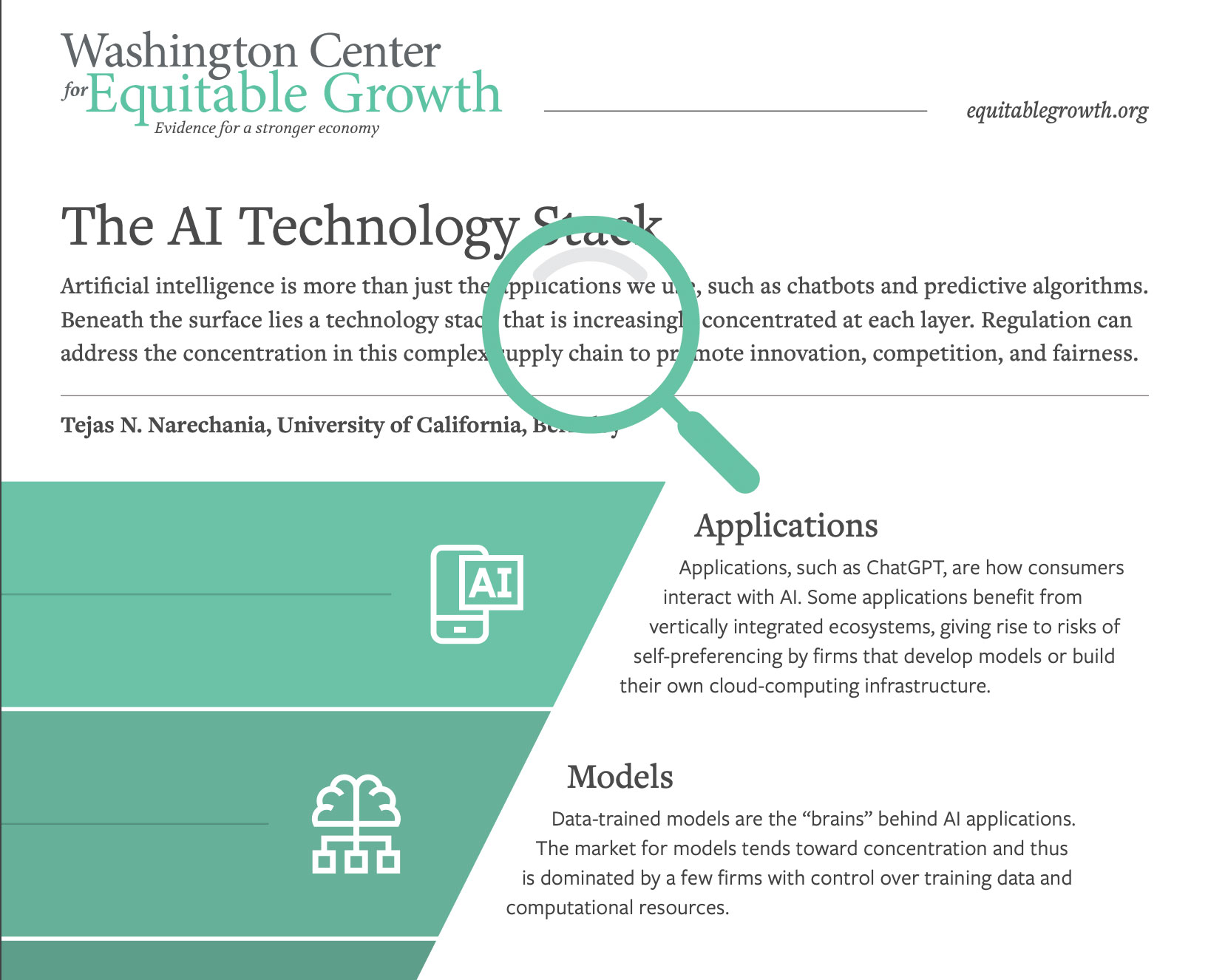
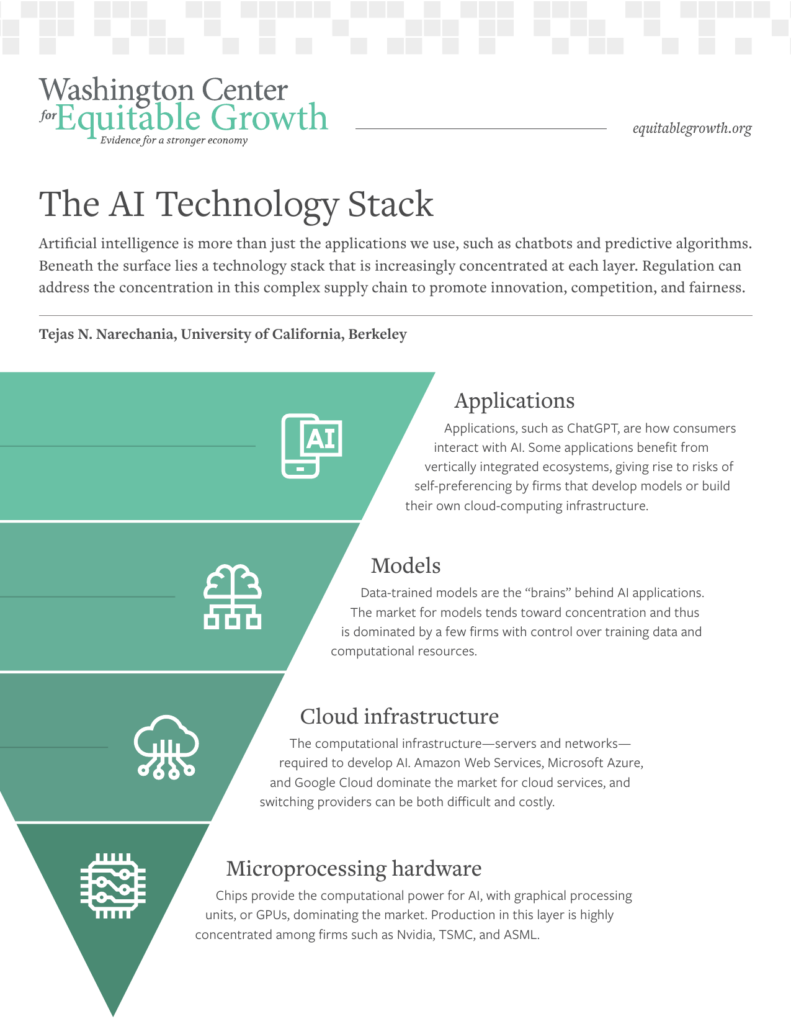
Artificial intelligence is more than just the applications we use, such as chatbots and predictive algorithms. Beneath the surface of AI lies a technology stack that is increasingly concentrated at each layer. (Click on the graphic below (opens in a new tab).)
Government regulation can address the concentration in this complex supply chain to promote innovation, competition, and fairness. Key considerations for policymakers include:
The AI Technology Stack (PDF)
Download (opens in a new tab)Tejas N. Narechania is a professor of law at the University of California, Berkeley, School of Law and a faculty co-director of the Berkeley Center for Law & Technology. His scholarly focus is on the institutions of technology law and policy, among other subjects. Before joining Berkeley Law, Narechania clerked for Justice Stephen G. Breyer of the U.S. Supreme Court and for Judge Diane P. Wood of the U.S. Court of Appeals for the Seventh Circuit. He also has advised the Federal Communications Commission on network neutrality matters and served as special counsel at the FCC from 2012–2013.
Reports NOV 23, 2026
By: Jacob Leibenluft, Gene Sperling
Essays NOV 20, 2026
By: Chris Clayton, Korin Davis
Essays NOV 18, 2026
By: Christopher Bangert-Drowns
Get updates on our latest research, event announcements, and policy insights delivered straight to your inbox. Stay connected with the leading voices on equitable growth.